
1-805-484-2992
Quotes - Engineering - SalesSample before sizing
Why a product sample gets tested before sizing
Viscosity is the number that decides most tube-in-tube designs, and it is the one most often guessed. A thick product runs laminar, so its pressure drop rises in step with viscosity, and its film coefficient shifts with the difference between viscosity in the bulk and at the wall. Get that figure wrong by a factor of three and the exchanger is either far longer than it needs to be or short of its outlet temperature, with a pump that cannot push the product through.
Food, personal care and industrial products rarely behave like oil or water. Many thin out as they are sheared, many thicken sharply as they cool, some need a minimum stress before they move at all, and some take minutes to rebuild their structure after a pump has broken it down. A single viscosity from a data sheet captures none of that. Each test in this section measures one of those behaviors at the temperatures and shear rates the exchanger will impose.
We test a sample when the product is non-Newtonian, when its viscosity is known at only one temperature, or when the design sits close to a pressure or temperature limit. The results feed straight into tube diameter, length, number of sections, corrugated or smooth tube, and pump duty.
- A sample taken from production, not a lab batch
- Viscosity measured across the full heating or cooling range
- Shear behavior at the wall shear rates the tube imposes
- Results used directly in the thermal and hydraulic design
Four tests and what each one feeds
Each test answers a different sizing question. Most viscous products need the first two; time-dependent and unusual products add the others.
| TEST | WHAT IT MEASURES | WHAT IT DECIDES IN THE DESIGN |
| Viscosity testing | Viscosity at several temperatures | Film coefficient and pressure drop along the heating or cooling curve, section by section |
| Rheology testing | Shear dependence and yield stress | Apparent viscosity at the tube wall and the flow model for laminar heat transfer |
| Reverse sweep testing | Thixotropy and structure recovery | Start-up pressure after a stop, pump margin and behavior after shear |
| Custom testing | Fouling, gelling, pieces, extremes | A test plan agreed before sizing for products the standard tests do not cover |
When a test pays for itself
A sample test is cheap insurance next to an exchanger that misses its duty. It earns its keep on thick, shear-thinning or heat-sensitive products, on any duty where pressure drop is close to the pump's limit, and on first-time products nobody has run before. It also settles arguments: when two viscosity figures disagree, a measured curve ends the discussion.
- Product thicker than a light syrup at its coldest point
- Viscosity known only at room temperature
- Cooling duties where the product thickens toward the outlet
- New formulations with no production history
When published data is enough
Not every duty needs a sample. Water, glycol solutions, light oils and many clean process fluids have well-documented properties, and thin products that stay turbulent forgive small errors in viscosity. For those, sizing proceeds from published data and your process figures, and we will tell you when a test is unlikely to change the design.
- Water-thin products that stay turbulent
- Glycol, brine and thermal oil service sides
- Fluids with reliable viscosity-temperature tables
- Repeat duties on a product already tested
How test results become an exchanger
From a measured curve to a tube size
Viscosity at the wall matters as much as in the bulk. In a heater the wall is hotter than the product, so the product is thinner there; in a cooler it is colder and thicker. Test data let the design use the right value in each part of the exchanger instead of one average. The same data give the wall shear rate at the proposed velocity, which shows whether a shear-thinning product will flow more easily than its bench viscosity suggests.
Testing alongside the quote
A sample test need not hold up a project. We can issue a budget quote from your best viscosity estimate, then confirm or adjust length and section count once results arrive. If the measured curve matches the estimate, the quote stands; if it does not, you learn that before the order rather than at start-up.
Call and talk it through with an engineer: 1-805-484-2992
Sample testing before sizing
Enough to run every agreed test with some to spare - usually a modest quantity in sealed containers, not a drum. The exact amount depends on the tests and on whether particulates call for a larger volume to give a representative result. We confirm quantity, containers and shipping conditions when the test plan is agreed, so the sample arrives fit to measure.
Use it as a starting point, not a design value. Specification viscosities are usually a quality-control check at one temperature and one instrument speed, chosen to catch batch variation rather than describe flow in a tube. A product that reads 5,000 cP at room temperature on that check can be very different at the wall of a cooler or at the shear rate in the tube.
It can move either way. Measured data often show that a shear-thinning product is easier to pump than a single-point viscosity implied, which shortens the exchanger or allows a smaller pump. Sometimes the opposite appears - a product that thickens steeply as it cools - and that is far cheaper to find before the order than by adding sections after start-up.
Viscosity at temperature and a rheology test across the shear rates in the tube, as a minimum. If the sauce sits in the line during breaks or must restart against a full exchanger, add a reverse sweep to show how much structure it rebuilds while stopped. Products with pieces, starch that sets, or a fouling history may also need a custom test.
Related
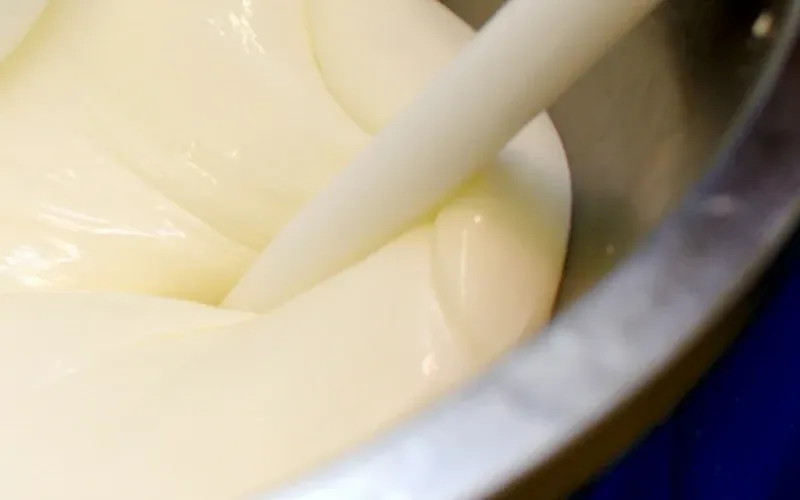
Sizing & Selection
Viscosity
Viscosity testing across the heating or cooling range, so a tube-in-tube heat exchanger is sized on measured data instead of one room-temperature figure.
+ Learn More
Sizing & Selection
Rheology
Rheology testing for tube-in-tube sizing: shear-thinning flow behavior, power-law constants, yield stress and the apparant viscosity at the tube wall.
+ Learn More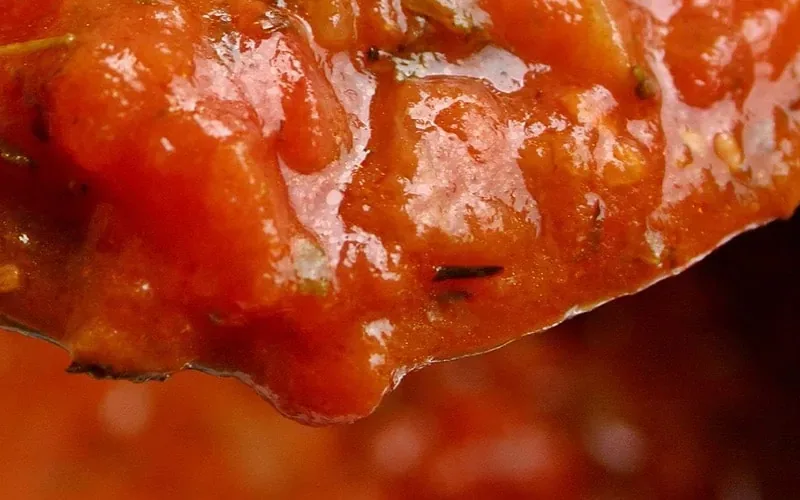
Sizing & Selection
Reverse Sweep
Reverse sweep testing ramps shear up and back down to measure thixotropy and recovery, so start-up pressure and pump sizing reflect a product at rest.
+ Learn More