
1-805-484-2992
Quotes - Engineering - SalesOne open bore carries what others cannot
The single-tube design is the plainest form of the geometry and the one most duties start from. Product runs through one straight tube with nothing inside it. A larger jacket tube surrounds it, and steam, hot water, cooling water, glycol or thermal oil flows through the annular space in the opposite direction. Straight runs are joined by U-bend returns into a stacked serpentine bank, so a long thermal path fits in a compact frame and the product never meets a header, a baffle or a contact point.
It is the right choice when the product carries something you can see: diced vegetables in a soup base, fruit pieces in a preparation, beans in chili, fibrous pulp, or industrial solids that would bridge a narrow channel. The bore is sized to the largest piece, and pieces up to a large fraction of that bore travel through without being cut, crushed or held back. Fully drainable sanitary builds clean in place; industrial builds take flanged ends and higher pressure.
The trade-off is surface per foot. One tube offers less heat transfer area per length of exchanger than a bundle of smaller tubes, so a smooth product with no pieces can often be handled in a shorter multi-tube unit. Large-bore tubes also run viscous products in laminar flow, which lowers the film coefficient. Good sizing finds the smallest bore that still passes every piece reliably.
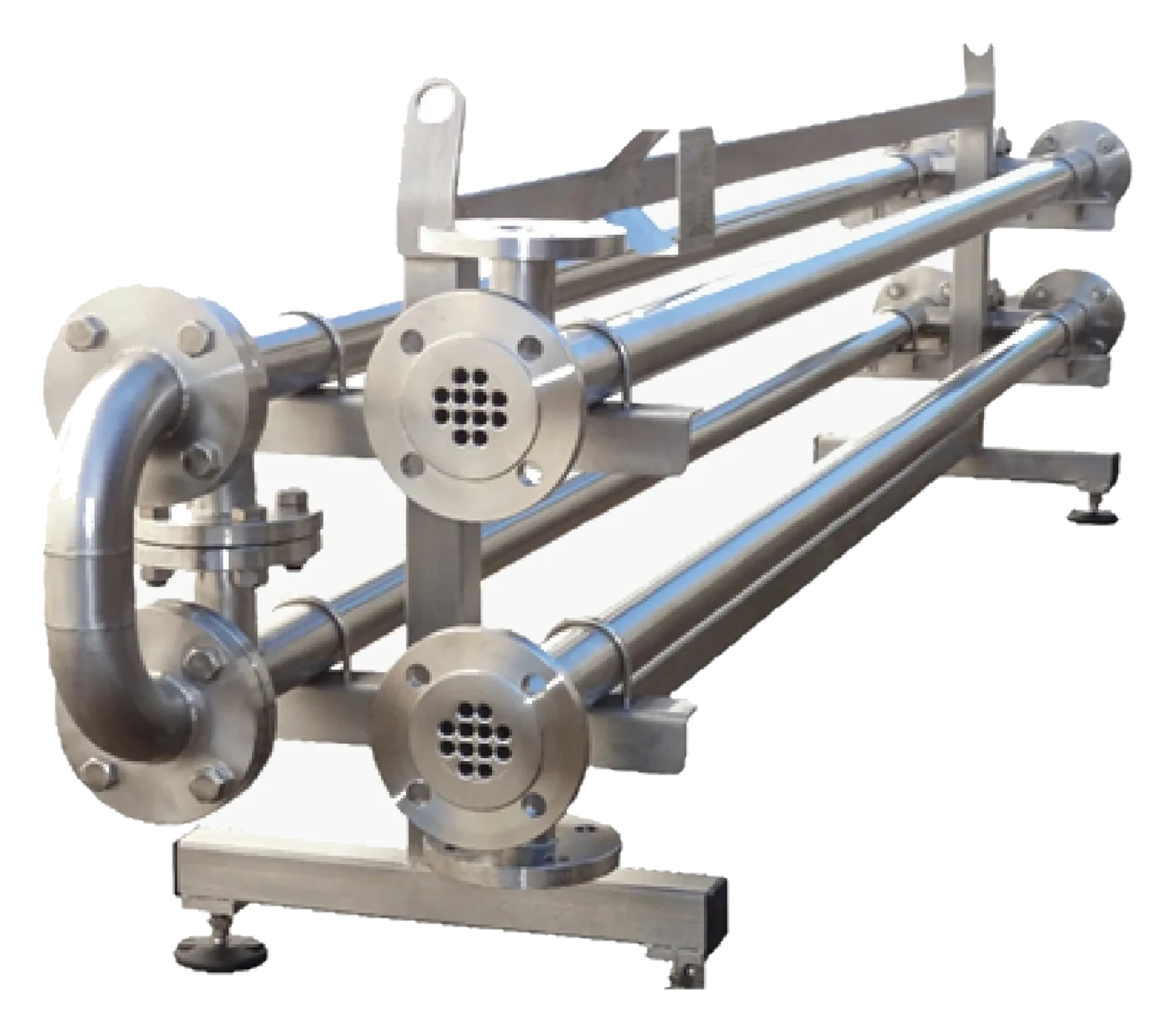
If a piece fits through the bore at the inlet, it fits through the whole exchanger - no narrower passage is waiting further down the line.
U-bend returns keep the path open from inlet to outlet
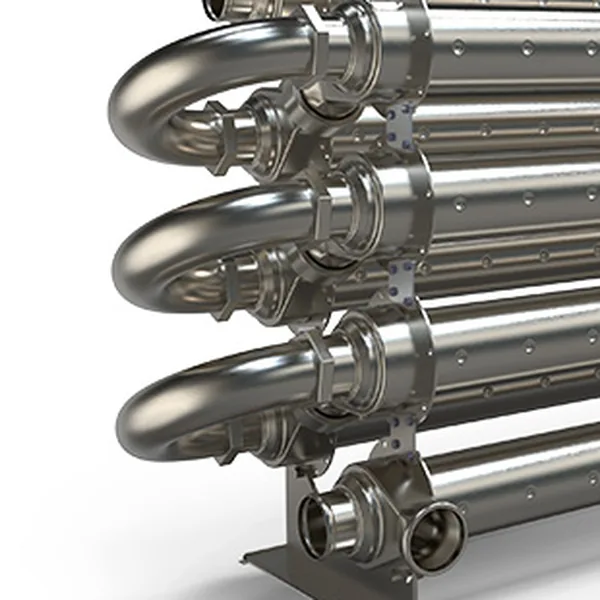
Pieces arrive whole
- No baffles, headers or contact points
- Bore sized to the largest piece
- Low shear for fragile fruit and vegetables
- Fibers have no edge to wrap around
- Returns with no sharp internal corners
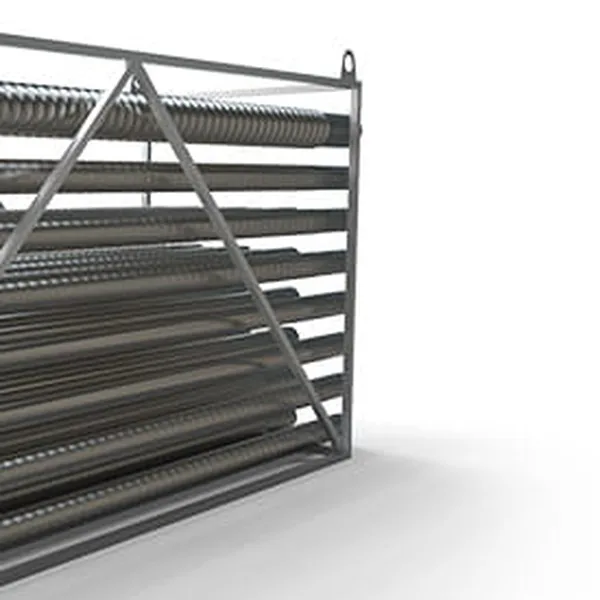
Clean, drain and verify
- Fully drainable sanitary layout
- CIP and SIP on the product side
- Polished or electropolished 316L
- Tri-clamp ends for quick inspection
- No gaskets in the welded product path
Build Options




Single-tube design at a glance
The values below describe the design as it is usually quoted. Each one is adjusted to the product, the utility on site and the code the duty calls for.
| Feature | Detail |
| Product path | One full-bore inner tube, open end to end |
| Service path | Annulus around the product tube; steam, water, glycol or thermal oil |
| Flow pattern | True counterflow, single or multi-pass |
| Arrangement | Straight runs joined by U-bend returns into a serpentine bank |
| Largest piece | A large fraction of the bore, confirmed during sizing |
| Sanitary build | 316L standard or 304L, tri-clamp ends, built to 3-A |
| Industrial build | Carbon steel to titanium and high-nickel alloys, flanged or threaded |
| Ratings | Industrial builds to 1500+ psi and above 600 F |
| Codes | ASME Section VIII with U stamp; National Board registration where required |
Sizing a single-tube unit for your product
Bore first, then length
The first number we settle is the product tube diameter, and it comes from the solids. Measure the largest piece in its worst orientation, allow for clusters, and the minimum bore follows. Only then does the thermal design begin: the duty, the temperature approach and the viscosity at each point along the path set the length, which is built up from straight sections and returns. Doing it in the other order, sizing for heat transfer and then checking the pieces, is how undersized bores reach the field.
Velocity: enough to carry, not enough to damage
Pieces denser than the carrier liquid settle at low velocity and can collect along the bottom of a horizontal run, where they overcook against a hot wall or hold up during changeover. Too much velocity breaks fragile pieces and raises pressure drop. The workable window depends on carrier viscosity, the density difference and the piece size, which is why the same soup base can need a different bore when the recipe changes from diced carrot to whole bean.
- Dense pieces settle out of thin carriers at low flow
- Thick carriers suspend pieces but raise pressure drop
- Fragile fruit sets an upper limit on velocity
- Changeover water must still sweep the bore clean
Sanitary and industrial forms of one design
The geometry is the same in both families; the build differs. Sanitary units are 316L with polished or electropolished product surfaces, tri-clamp connections, a drainable slope and CIP and SIP capability, built to 3-A. Industrial units move to carbon steel, duplex, AL-6XN, titanium or high-nickel alloys with flanged or threaded ends and much higher ratings. A pulp-mill fiber stream and a fruit preparation can share this design page and still need very different exchangers.
Before you order a single-tube unit
It depends on the bore we select, and the bore is chosen around your largest piece rather than the other way around. Because the tube is open end to end with no internal edges, pieces up to a large fraction of that bore pass reliably. Tell us the maximum dimension and whether the pieces are firm or fragile, and the bore follows.
Usually, yes. Length is the sizing variable, so added duty is met by adding straight sections and returns in series, or a second bank in parallel for more flow. Plan the frame and the utility piping with that in mind. Extra sections add pressure drop, so check that the product pump has margin before assuming an extension is simple.
A properly sized return keeps the full bore through the turn, so pieces change direction without meeting an edge. Damage in practice comes from excessive velocity or from a bore that is too small for the piece, not from the bend itself. Soft products such as ripe fruit are sized for a lower velocity, which we set during the thermal design.
Steam heats fastest but gives the hottest wall, which can burn sensitive product onto the tube. Hot water allows gentler, closely controlled heating. Cooling water, chilled water or glycol handle cooling, and thermal oil reaches temperatures water cannot. The choice depends on the product's sensitivity and the utility already on site, and we size around what you have.
It is the safe choice for pieces, but not always the economical one. For a smooth product with only fine pulp, a multi-tube unit delivers the same duty in less length, and for a clean, thin fluid a plate pack may cost less. We quote the single tube where the solids demand it, not as a default.
Related
Heat Exchangers
Multi-Tube
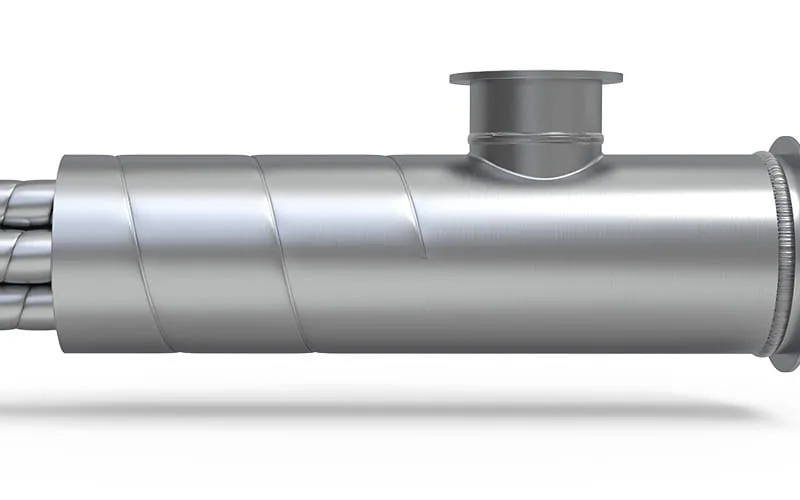
Multi tube heat exchanger with several product tubes in one jacket: more surface per foot for juices with pulp, creams and smooth sauces, sized to duty.
+ Learn More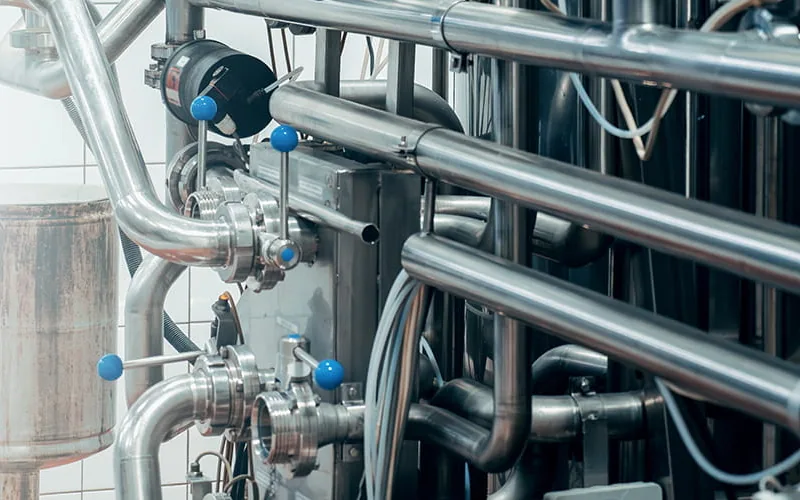
Heat Exchangers
Triple-Tube
Triple tube heat exchanger with product in the middle annulus, heated or cooled from both sides. For purees, pastes and fillings too thick for one tube.
+ Learn More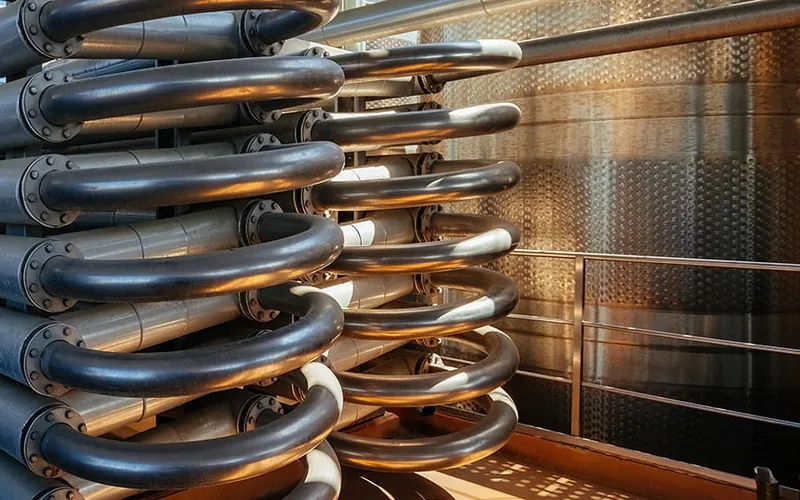
Heat Exchangers
Double Pipe
Double pipe heat exchanger in pipe sizes with flanged or threaded ends for high-pressure, small-to-medium duties, in carbon steel through titanium.
+ Learn More