
1-805-484-2992
Quotes - Engineering - SalesClimb the material ladder only as far as the fluid demands
Material choice on a tube-in-tube is mostly a question about the product tube, the one surface that touches the process. The jacket carries steam, water, glycol or thermal oil and can often be a plainer grade. Each step up the ladder - 304L, 316L, 2205 duplex, AL-6XN, titanium - buys resistance to a specific form of attack, chiefly chloride pitting, crevice corrosion and stress-corrosion cracking, at a higher price per foot of tube. On a sanitary unit the product tube must also polish and weld to hygienic standards, which narrows the field further.
Three facts about the fluid set the rung: chloride content, pH and temperature, and they act together. A brine that 316L handles cold can pit it hot. A dilute acid that duplex shrugs off at ambient can attack it near the boil. Cleaning chemistry counts as well: a sanitary unit sees caustic, acid and often a chlorinated sanitizer every day, and the metal has to survive those as surely as it survives the product.
Outside the 300-series stainless family, carbon steel remains the economical choice for hydrocarbons, thermal oil, steam and other non-corrosive industrial fluids, and it is the usual jacket on industrial units. At the far end, high-nickel alloys cover hot reducing acids and mixed chemistries beyond titanium's reach. Overspecifying wastes money and underspecifying fails in service, so the grade is chosen from the chemistry, not from habit.
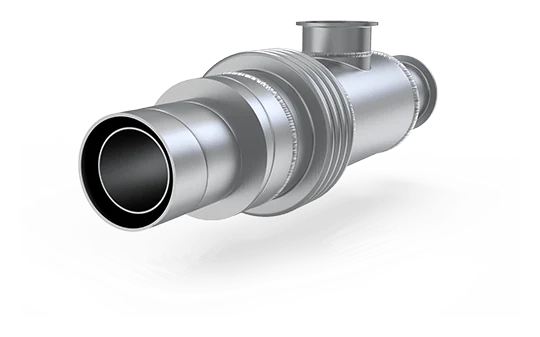
300-Series Stainless
- Standard for food, beverage and pharma
- Low cost, wide range of sanitary tube sizes
- Limited by hot chlorides and low pH
Upgrade Alloys
- Duplex, AL-6XN, titanium, nickel alloys
- Chosen for brines, seawater and acids
- Higher cost repaid in service life
Five alloys and the duty each one covers
Start at the top row and move down only when the chlorides, acidity or temperature of the fluid rule out the row above.
| MATERIAL | WHAT IT ADDS | TYPICAL TUBE-IN-TUBE DUTY |
| 304L stainless | Lowest-cost sanitary grade | Salt-free foods, sugar syrups, hot water and jackets carrying clean utilities |
| 316L stainless | Molybdenum against pitting | The sanitary standard for sauces, dairy products, juices, CIP chemistry and mild process streams |
| 2205 duplex | Strength and cracking resistance | Hot brines, produced water and chloride streams at pressure, with thinner walls than 316L |
| AL-6XN | Super-austenitic, high molybdenum | Seawater, concentrated brines and acidic chloride streams too severe for duplex, sanitary or industrial |
| Titanium | Self-healing oxide film | Seawater, wet chlorine, hypochlorite and oxidizing acids, but never reducing acids or fluorides |
Reading your fluid against the ladder
Chlorides and temperature set the first limit
Chloride ions break down the passive chromium-oxide film on stainless steel at local weak points, starting pits on open surfaces and crevice attack under gaskets and deposits. The pitting resistance equivalent number, PREN, ranks grades by their chromium, molybdenum and nitrogen: roughly high teens for 304L, mid twenties for 316L, mid thirties for 2205 and mid-to-high forties for AL-6XN. Temperature multiplies the risk, and in austenitic grades hot chlorides under tensile stress add stress-corrosion cracking, which is the reason the duplex and super-austenitic rungs exist.
Oxidizing acids, reducing acids and caustic
Acid service splits on whether the acid is oxidizing or reducing. Oxidizing media such as nitric acid, wet chlorine and hypochlorite help keep a passive film intact, and titanium is outstanding in them. Reducing acids such as hydrochloric and hot sulfuric strip the film away; titanium can fail quickly there, and the usual answer is a high-nickel alloy. Organic food acids are mild by comparison, and 316L handles them well until salt enters the recipe.
- Nitric acid, chlorine dioxide, hypochlorite: titanium is the usual answer
- Hot hydrochloric or sulfuric acid: a high-nickel alloy, chosen case by case
- Acidic food with salt: 316L or AL-6XN, by chloride level and temperature
- Caustic: 304L or 316L at moderate temperature; nickel alloys when hot and strong
Cost, wall thickness and the jacket side
Price per foot rises steeply up the ladder, but two things soften the jump. Stronger grades such as 2205 carry the same pressure with thinner walls, and the jacket rarely needs the same alloy as the product tube when the annulus carries clean utility water or steam. A titanium product tube inside a stainless jacket, or a duplex tube inside carbon steel, puts the expensive metal only where the corrosive fluid runs. Send us the chloride level, pH and temperature range with the duty, and we will propose the grade.
Call and talk it through with an engineer: 1-805-484-2992
Choosing the wetted alloy
Not necessarily. The jacket only has to resist the service fluid, so clean steam or treated cooling water can run in a 304L, 316L or carbon steel jacket around a higher-alloy product tube. Match the two when the service fluid is itself aggressive, such as seawater or brine, or when the sanitary specification calls for stainless on every exterior surface.
There is no single number, because temperature, pH, crevices and deposits move the threshold a long way. A chloride content that 316L tolerates at chiller temperature can pit it near boiling. Give us the chloride range, the pH and the maximum wall temperature, including during CIP and SIP, and we will judge it against the whole ladder rather than one cutoff.
Yes, on industrial duties where the fluid does not corrode steel: crude, fuel and lube oils, thermal oil, many resins and hydrocarbons, and treated condensate. A corrosion allowance is added to the wall thickness. It is never used on a sanitary product surface, and water-bearing, salty or acidic streams usually rule it out quickly.
No. Each grade has its own weak spot: titanium fails in reducing acids and fluorides, duplex loses toughness after long exposure above its temperature limit, and nickel alloys can be the wrong pick in some oxidizing media. The safest material is the one matched to the real chemistry, which is why we ask for the full composition, trace components and cleaning chemicals included.
Related
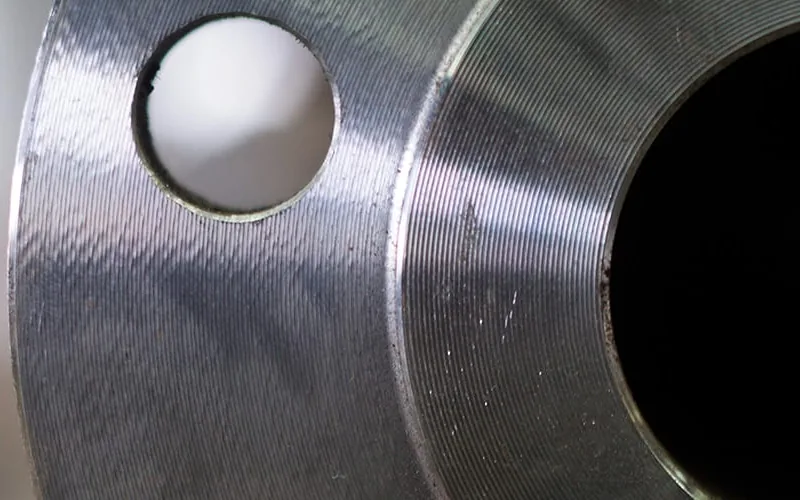
Heat Exchangers
316L Stainless
316L stainless tube-in-tube heat exchangers: the sanitary standard, with molybdenum for chloride pitting resistance, low carbon for welds, polished finish.
+ Learn More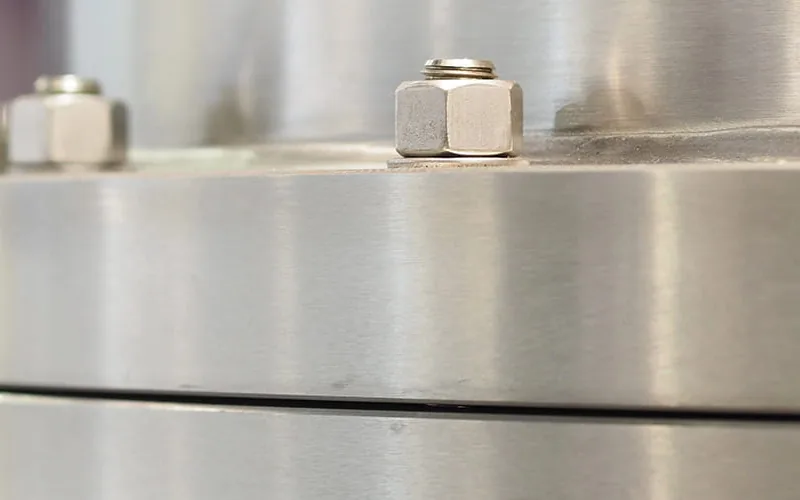
Heat Exchangers
304L Stainless
304L stainless tube-in-tube heat exchangers: the lower-cost sanitary grade for low-chloride foods and hot water service, and where 316L is the safer buy.
+ Learn More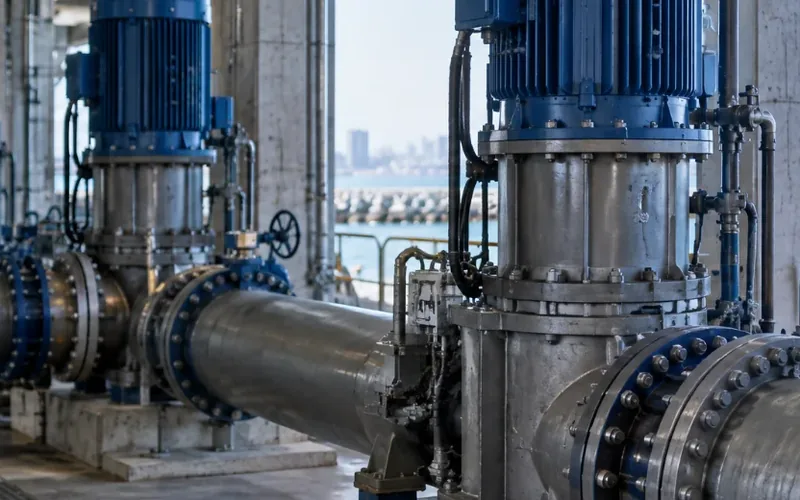
Heat Exchangers
2205 Duplex
2205 duplex tube-in-tube heat exchangers: about twice the yield strength of 316L and strong chloride cracking resistance for brines and produced water.
+ Learn More