
1-805-484-2992
Quotes - Engineering - SalesRound tubes carry pressure that flat plates cannot
Why the concentric geometry is the high-pressure choice
Pressure stresses a cylinder in proportion to its diameter divided by its wall thickness. A small tube therefore holds a great deal of pressure on a modest wall, while a large shell needs heavy plate, thick flanges and long bolts to do the same job. A tube-in-tube unit keeps every pressure boundary small in diameter, which is why the industrial versions run to 1500+ psi and why the double pipe form has been the standard answer for small-to-medium duties at high pressure for decades.
Temperature adds a second load. Metal loses allowable stress as it heats, the inner and outer tubes grow by different amounts, and gaskets that seal well at ambient creep and leak when hot. The industrial line is built for service above 600 F with welded joints on the pressure side, flanged closures where access is needed, and U-bend returns that let each leg expand without fighting its neighbor.
This section groups the duties where pressure, temperature or both decide the design: oil and gas streams, heat recovery from hot effluent, hot pulp mill liquors and heavy viscous products heated with thermal oil. Each page below covers its own stream; this one covers the mechanical reasons they all land on the same geometry.
Request a Quote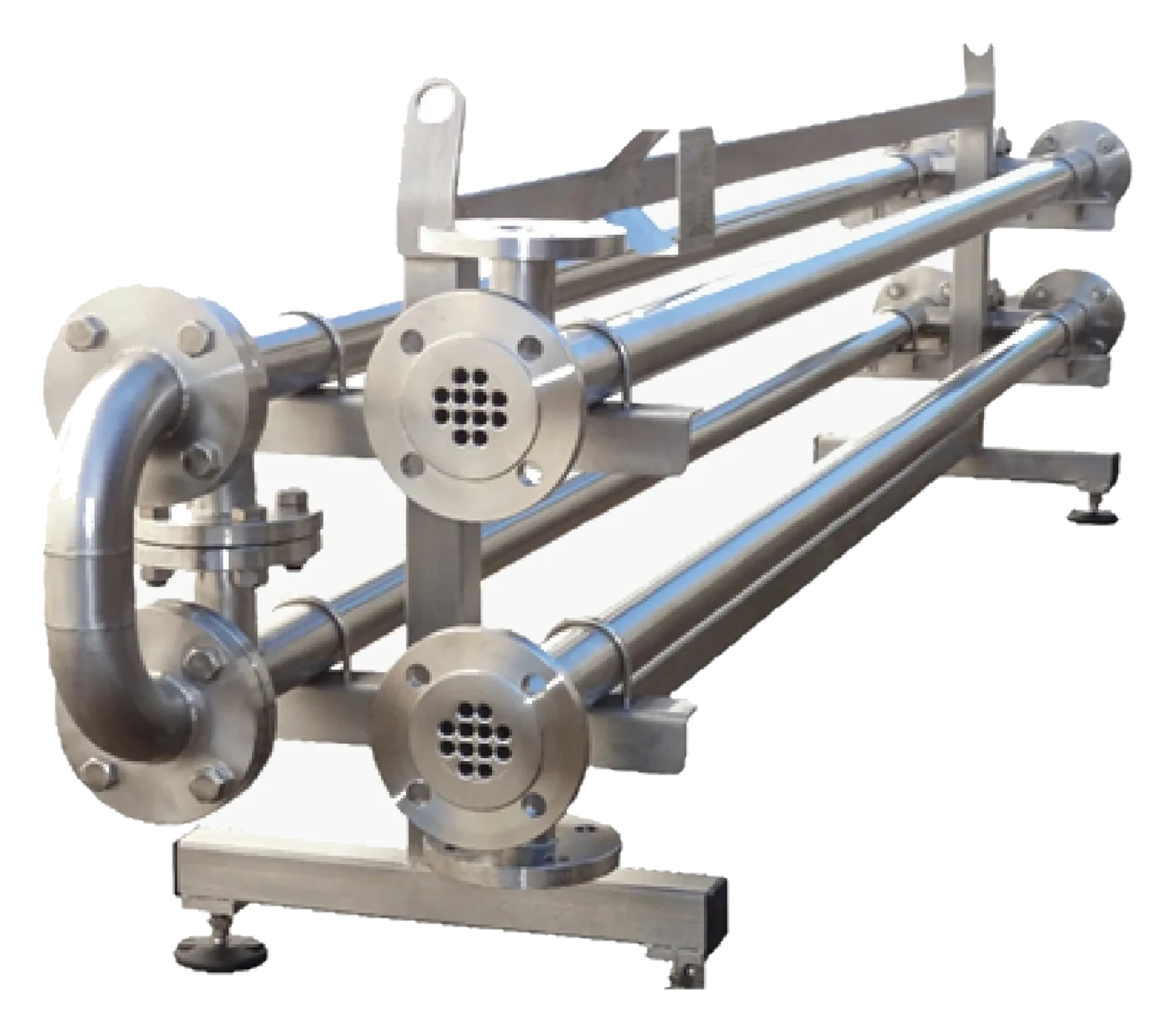
Small diameter, welded joints and free expansion carry the load
- Hoop stress scales with diameter over wall thickness
- The high-pressure fluid belongs in the inner tube
- U-bend legs grow freely as temperatures change
High temperature and pressure duties by stream
Pick the stream closest to yours. Each page covers the fluid, the failure it usually causes elsewhere and the design that answers it.
| DUTY | TYPICAL STREAM | WHAT DRIVES THE DESIGN |
| Oil and gas | Produced water, crude, amine | Wellstream pressure, chlorides and sour service decide wall and material |
| Hot effluent heat recovery | Dirty hot process water | Close approach on a fouling stream, with the dirty side kept cleanable |
| Pulp mill liquors | Black, green, white liquor | Hot caustic liquor, carbonate scaling and digester circulation pressure |
| Resins and heavy viscous | Resins, greases, emulsions | Thermal oil at high temperature and laminar flow at high pressure drop |
| High-pressure fluids | Gas, CO2, hydraulic fluid | Process pressures where wall thickness and code design come first |
| Double pipe design | Flanged pipe-size sections | The industrial form for high pressure, opened for mechanical cleaning |
Four checks on every hot duty
Pressure
- Design pressure and temperature on each side
- Which fluid sits in the inner tube
- Surge and pump shut-off head
Temperature
- Allowable stress at the metal temperature
- Gasket and flange rating when hot
- Coking or bake-on risk at the wall
Expansion
- Inner and outer tubes at different temperatures
- Hot start-up and cold shutdown cycles
- Supports that let legs slide
Code
- ASME Section VIII and U stamp
- National Board registration where required
- Hydrostatic test above design pressure
How high pressure and temperature shape the unit
Put the pressure on the smallest diameter
The inner tube is the strongest part of the exchanger. Because it is the smallest diameter, it holds the highest pressure on the thinnest wall, so the high-pressure fluid normally goes inside and the lower-pressure service runs in the annulus. That keeps the jacket wall reasonable and the unit light enough to support on a skid or a rack. Where both sides are at high pressure, the jacket is designed to its own rating and the closures at each end become the critical detail. Plate exchangers are limited by gaskets and frame bolting long before tube-in-tube reaches its limit.
Allowable stress, expansion and thermal cycling
Allowable stress falls as metal temperature rises, and for carbon steel the drop gets steep near the top of its range, so a wall that is adequate at ambient may not be adequate hot; the code calculation is done at the design metal temperature, not room temperature. The inner tube usually runs hotter or colder than the jacket, and the difference in growth over a long straight section is real. Hairpin and serpentine layouts absorb it at the U-bends, and supports are detailed so each section can slide. Units that cycle hot and cold every batch get attention at welds and closures, where fatigue starts.
Code design and what we need from you
Pressure units are built to ASME Section VIII, stamped and, where the jurisdiction calls for it, registered with the National Board, with a hydrostatic test above design pressure before shipment. For a quote, send design pressure and temperature for both sides, the fluids, flows and temperatures, any surge or upset conditions and the jurisdiction where the unit will be installed.
Call and talk it through with an engineer: 1-805-484-2992
Hot, high-pressure duty questions
Inside the inner tube in nearly every case. The small diameter holds pressure on a thin wall, and the jacket only has to be rated for the service fluid. Putting a high-pressure fluid in the annulus forces a heavy jacket and heavier end closures, adds weight and cost, and gains nothing thermally unless the fluid itself needs the annular gap.
Yes, and many duties need both, such as crude preheat or digester circulation heating. The wall is sized at the design metal temperature, so the hotter the duty, the more wall a given pressure needs. Material, flange class and closure design are all checked at that temperature rather than at ambient, which is where an underspecified unit usually gets caught out.
A true counterflow tube-in-tube can heat the cold fluid above the hot fluid's outlet temperature, which a single shell-pass exchanger cannot do efficiently. On high-temperature heat recovery that cross is often where most of the value sits. It costs length, so we size the bank to the cross you actually need and show the surface each extra degree adds.
Mostly by proceedure and layout. Bringing the hot side on gradually, or warming the unit with the cold fluid first, limits the temperature difference accross welds and closures. The U-bend layout lets each leg grow without restraint, which removes the fixed-tubesheet stress that cracks rigid designs. Tell us how the unit will start and stop, and we design around that cycle.
Related
Industrial
Oil & Gas
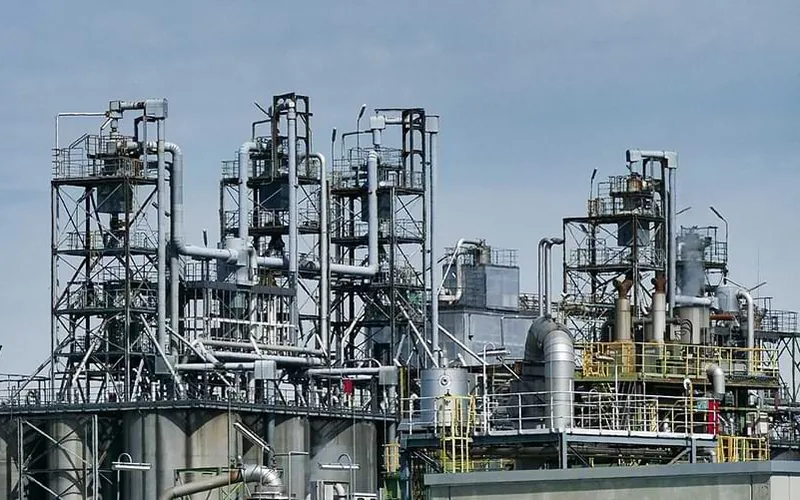
Tube-in-tube and double pipe heat exchangers for produced water, crude preheat, amine and glycol loops and condensate, in carbon steel to 2205 duplex.
+ Learn More
Industrial
Hot Effluent Heat Recovery
Recover heat from hot, dirty effluent to preheat clean water: tube-in-tube heat recovery exchangers with a cleanable dirty side and true counterflow.
+ Learn More
Industrial
Pulp Mill Liquors
Tube-in-tube heat exchangers for black, green and white liquor and digester circulation heating: hot caustic service, scaling and duplex materials.
+ Learn More