
1-805-484-2992
Quotes - Engineering - SalesChoose the exchanger by the product, not the price list
A gasketed plate exchanger, a shell-and-tube and a tube-in-tube can all move the same number of BTUs. What separates them is what the product does inside. Plates force fluid through thin pressed channels with metal-to-metal contact points every few millimeters. A shell-and-tube splits the flow across dozens or hundreds of small tubes behind a tubesheet. A tube-in-tube sends the product down one open bore, or a few, from inlet to outlet, with no contact points and no header dividing it.
That difference decides most selections. Clean, thin, low-pressure fluids reward the plate: its turbulent channels give a high overall coefficient in very little floor space. Large, clean, steady duties favor the shell-and-tube on cost per square foot of surface. Thick, particulate, fibrous, fouling or high-pressure streams are where tube-in-tube earns its place, because nothing in the flow path is narrow enough to bridge, and round tubes carry pressure efficiently.
On space and first cost the comparison runs the other way. A tube-in-tube needs more floor or wall area per square foot of surface than a plate pack, and on a water-to-water duty it will rarely be the lowest number on the bid sheet. We will tell you when that is the case. Where tube-in-tube wins is the total cost of running a product that would plug, foul or tear a plate pack, or maldistribute across a tube bundle.
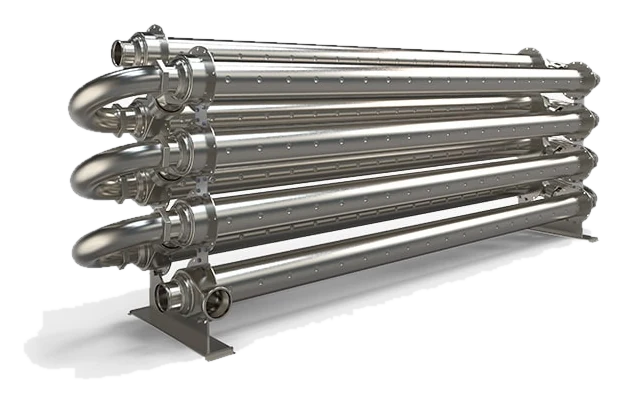
A plate is the cheapest way to heat clean water and the most expensive way to discover that your product has pieces in it.
Price the exchanger against the product you actually run
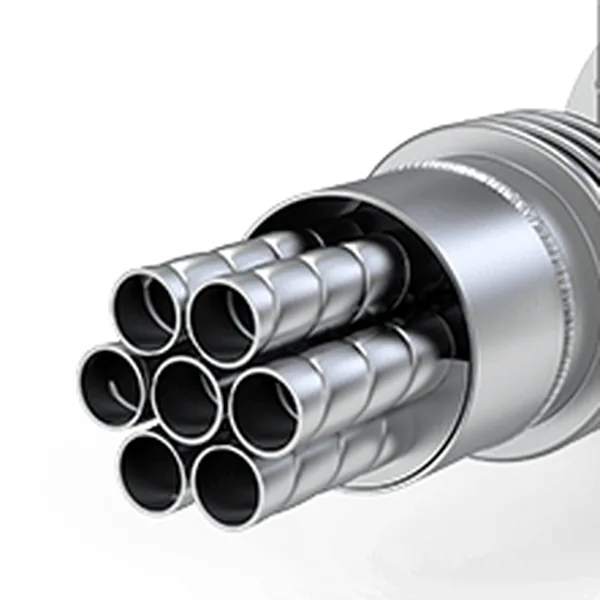
Where tube-in-tube wins outright
- Particles and fibers pass a full open bore
- No contact points where pulp can bridge
- No gaskets in the product path on welded units
- Round tubes carry high pressure efficiently
- True counterflow allows a temperature cross
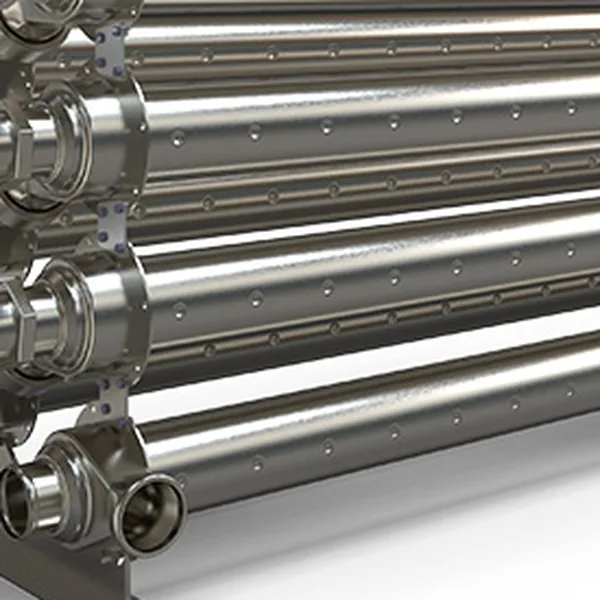
Where it honestly gives ground
- More floor area per square foot of surface
- Higher first cost on clean, water-like duties
- Large clean duties cost less in a tube bundle
- Surface added in sections, not plate by plate
- Lower coefficient than a plate on thin liquids
Compare On These




Three designs, criterion by criterion
One line per selection criterion, read across the three designs. Where the plate or the shell-and-tube is the better buy, the table says so.
| Criterion | Detail |
| Thin, clean liquids | Plate usually best: high coefficient, small footprint, lowest cost |
| Viscous products | Tube-in-tube: one bore keeps velocity up; plates and bundles lose distribution |
| Particles and fibers | Tube-in-tube: open bore passes pieces; plate contact points and tube ends bridge |
| Heavy fouling | Tube-in-tube holds velocity and opens for cleaning; plate channels foul first |
| Design pressure | Plate frames limited by gaskets; shell-and-tube and double pipe go far higher |
| Temperature cross | Plate and tube-in-tube run true counterflow; multi-pass bundles need care |
| Cleaning | Plate opens for hand cleaning; tube-in-tube by CIP or rodding; bundles pulled |
| Footprint | Plate smallest; shell-and-tube compact when large; tube-in-tube needs most length |
| First cost | Plate lowest on clean duty; shell-and-tube lowest per square foot at large size |
Where each design fails, and why
What goes wrong in a plate pack
Plates fail by bridging and by gaskets. The channel gap in a gasketed plate is only a few millimeters, and the pressed pattern puts neighboring plates in contact at hundreds of points so the pack can hold pressure. Pulp, fruit cells and fibers hang on those points, a mat forms, and pressure drop climbs until the frame is opened and cleaned by hand. Thick products add a second problem: the port feeds many parallel channels, and a viscous fluid takes the easiest ones while others go stagnant. The gaskets then cap the temperature, the pressure and the cleaning chemistry the unit will tolerate.
What goes wrong in a tube bundle
A shell-and-tube does well on large, clean flows, but it divides the product among many small tubes at the tubesheet face. A particle that catches on a tube end becomes the start of a blockage, and once one tube plugs its flow moves to the others and the bundle quietly loses surface. Viscous product compounds this: each tube carries a small share of the flow, velocity falls, the flow goes deeply laminar and the film coefficient collapses. The usual outcome is an oversized bundle that still underperforms.
- Tubesheet face catches pieces and fibers at the tube ends
- Plugged tubes shift flow to the others and hide lost surface
- Low velocity per tube when the product is thick
- Mechanical cleaning needs the head off and room to rod
When tube-in-tube is the wrong buy
If the fluid is water, a clean glycol solution or a thin, particle-free beverage at modest pressure, a plate exchanger does the job in less space for less money, and recommending a tube-in-tube would be a mistake. Very large clean duties, such as utility water or condensate at high flow, are usually cheaper as a shell-and-tube. Tube-in-tube is the right buy when the product is the problem: thick, particulate, fibrous, fouling, abrasive, corrosive, or at a pressure that gaskets will not hold. Tell us the duty and we will say plainly which geometry suits it.
Call and talk it through with an engineer: 1-805-484-2992
Choosing between the three
On clean, thin liquids, yes: per square foot, a plate's turbulent channels give a higher overall coefficient. On viscous or particulate products the comparison changes, because the plate's advantage depends on turbulence and even distribution, and both disappear with thick or lumpy product. The fair comparison is the surface needed for your product at your flow, plus the cleaning and downtime that follow.
Fine, soft pulp in a thin juice can run on a wide-gap plate for a while. The trouble starts as particles grow, fibers lengthen or solids rise, because they hang on the contact points and build a mat. The usual sign is a steady climb in pressure drop between cleanings. If that is the symptom on your line today, an open-bore tube-in-tube removes the cause.
A larger bundle adds tubes, which divides the product further and lowers the velocity in each one. For a viscous or particulate stream that makes laminar flow, settling and plugging worse, not better. Tube-in-tube adds surface by adding length in series, so velocity, and with it the film coefficient and the scouring of the wall, stays where the sizing put it.
It takes more floor or wall area for the same surface, and the piping runs are longer, so allow for that in the layout. Against that, there is no frame to open, no gasket set to replace in the product path on welded units and no bundle to pull. On a fouling or particulate duty, cleaning labor and lost production often outweigh the cost of the extra footprint.
A temperature cross, where the cold outlet ends up hotter than the hot outlet, needs true counterflow. Plates and tube-in-tube both provide it; a multi-pass shell-and-tube does not without several shells in series. For a regeneration section or a heat-recovery duty with a tight approach on a difficult product, tube-in-tube gives the counterflow and the open bore together.
Related
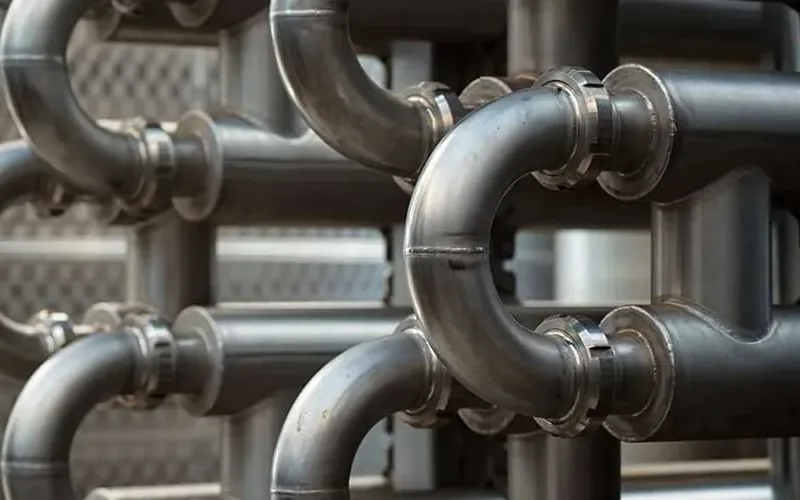
Heat Exchangers
Tube-in-Tube
Tube in tube heat exchanger with one full-bore product tube in a jacket, so pieces and fibers pass intact. Sanitary or industrial builds, sized to duty.
+ Learn More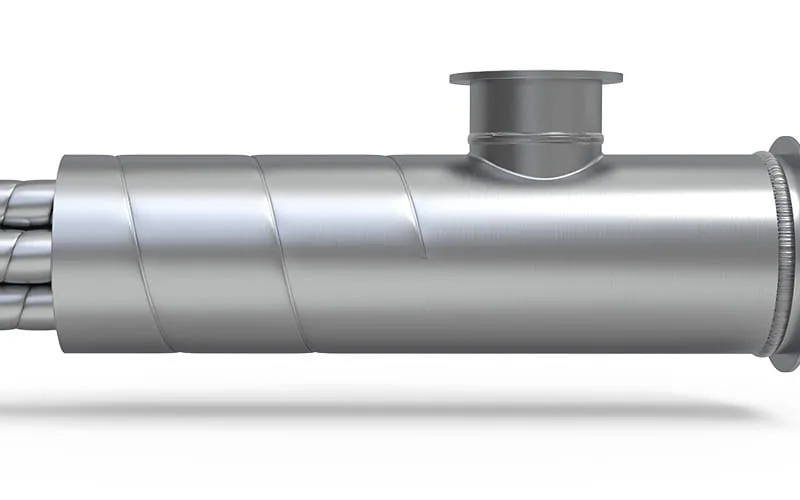
Heat Exchangers
Multi-Tube
Multi tube heat exchanger with several product tubes in one jacket: more surface per foot for juices with pulp, creams and smooth sauces, sized to duty.
+ Learn More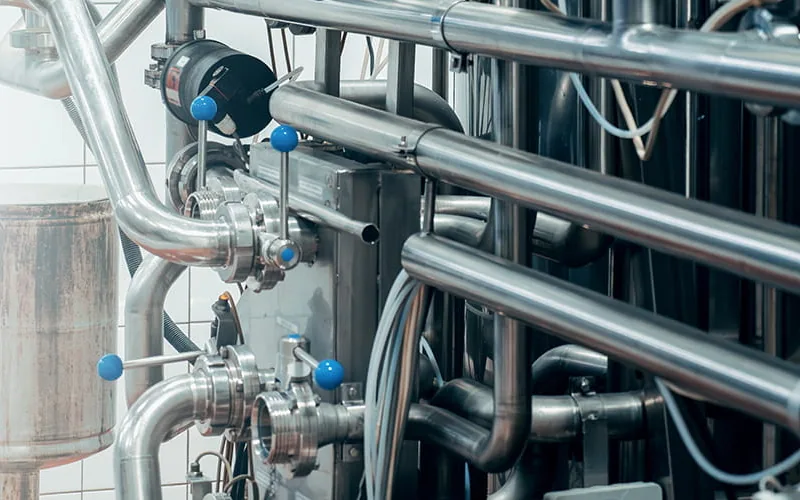
Heat Exchangers
Triple-Tube
Triple tube heat exchanger with product in the middle annulus, heated or cooled from both sides. For purees, pastes and fillings to thick for one tube.
+ Learn More