
1-805-484-2992
Quotes - Engineering - SalesFood, Beverage, Pharma
Hygienic tube-in-tube for products a plate pack cannot run
A sanitary tube-in-tube puts the product in a smooth, round, full-bore tube and the hot water, steam, chilled water or glycol in the jacket around it. A welded unit has no plates, no contact points and no gaskets in the product path between its end clamps, so pulp, fiber, seeds and soft pieces leave the way they arrived. That is why sauces, purees, pulpy juices, cultured dairy, soups and lotions so often end up on this geometry after a plate has bridged with fiber or a shell-and-tube has plugged at its tubesheet.
Every unit in the sanitary family follows the same construction rules. Product surfaces are 316L stainless as standard, with 304L as the lower-cost option where the chemistry is mild. Bores are polished or electropolished, ends are sanitary clamp fittings, and the bank is laid out to drain completely with the pump off. Units are built to 3-A where the plant or its customer asks for it, and they can be steamed in place for aseptic service.
The people who call us usually hold one awkward product: a process engineer whose new recipe has pieces, a maintenance lead opening a plate frame every other shift, or a skid builder who needs a drainable exchanger that fits a frame. Send us the product, the flow and the temperatures, and we will size it.
- 316L product surfaces standard, 304L option, polished or electropolished
- Tri-clamp ends, no gaskets inside a welded product path
- Fully drainable layout with no dead zones or dead legs
- Built to 3-A on request, CIP capable, SIP for aseptic lines
Request a QuoteIf a fiber can wrap a plate contact point or a piece can lodge at a tubesheet, a smooth full-bore tube is the hygienic answer.
Sanitary tube-in-tube from HeatX, sized on your product data
Hygienic Processing
Products with pieces, pulp and fiber that must be heated, pasteurized, held or cooled without damage: stirred yogurt after the break, chili and soups with vegetables, fruit preparations, tomato products, pulpy juices and smoothies, and low-acid foods bound for aseptic packaging. On these lines the concern is piece integrity, time at temperature and a fast clean between products, and the design choice usually turns on the largest particle against the bore.
- Dairy: cultured products, puddings, concentrates
- Soups, chili and prepared foods with pieces
- Fruit, vegetable and tomato products
- Pulpy beverages and aseptic low-acid foods
Viscous Products
Smooth but heavy products where flow stays laminar and the film coefficient is low: ketchup, mustard and barbecue sauce, dressings and mayonnaise, syrups and honey, lotions, creams and gels. The limit here is pressure drop rather than plugging. Viscosity can change several-fold between the inlet and outlet temperatures, so sizing on a measured viscosity curve matters more than any other input on the duty sheet.
- Thick sauces and condiments
- Salad dressings and emulsions
- Sweeteners, syrups and sugars
- Cosmetics and personal care
What makes a tubular exchanger sanitary
Sanitary is a set of details, not a label. Welds on product surfaces are made and finished smooth so nothing lodges in them. Product surfaces are finished, commonly to 32 Ra or better, and electropolishing takes the peaks off further for sticky or high-protein products. U-bend returns are formed with a radius that cleaning solution sweeps at full velocity, and the bank is pitched so it empties without help. Clamp gaskets are FDA-compliant elastomers chosen for the product and the cleaning chemistry together.
The honest trade-off is space. A tube-in-tube carries less surface per square foot of floor than a plate pack, so for a thin, clean product such as filtered water or a clear syrup at low pressure, a plate is usually the cheaper buy, and we will tell you so. Once pieces, pulp, fiber or real viscosity enter the duty, the extra length pays for itself in longer runs, less stops and cleans that reach every inch of the product path.
The inputs that move a sanitary design are particle size and type, viscosity at both the inlet and outlet temperatures, the utility available on site, and whether the line runs CIP only or CIP followed by SIP. Have those ready and the first sizing pass rarely needs a second round of questions.
Related
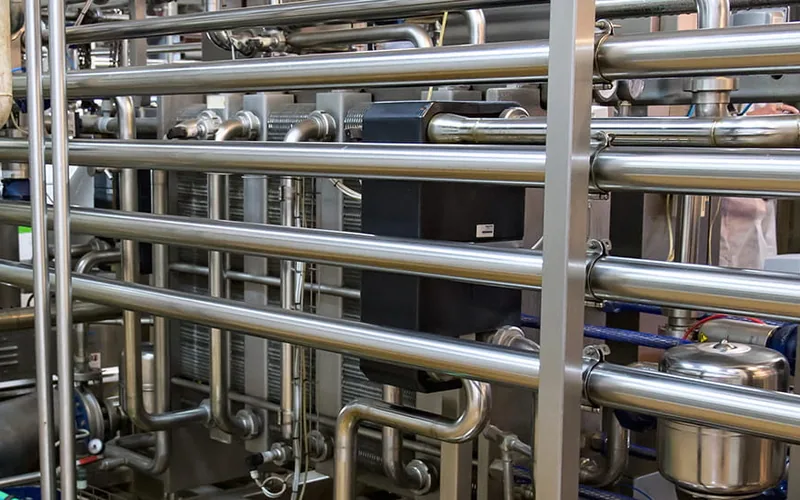
Sanitary
Hygienic Processing
Hygienic tube-in-tube heat exchangers for food with pieces, pulp and fiber: heated, pasteurized and cooled in drainable, CIP-capable 316L units.
+ Learn More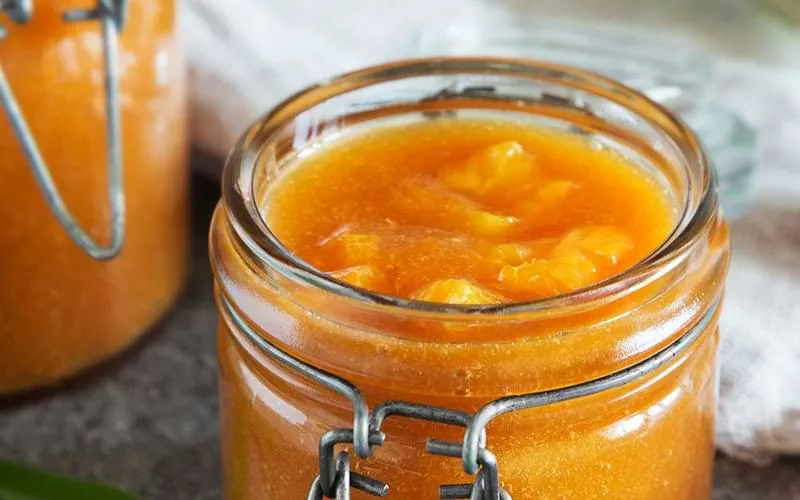
Sanitary
Viscous Products
Tube-in-tube heat exchangers for viscous products, sized for laminar flow, shear-thinning behavior and pressure drop from measured sample data.
+ Learn More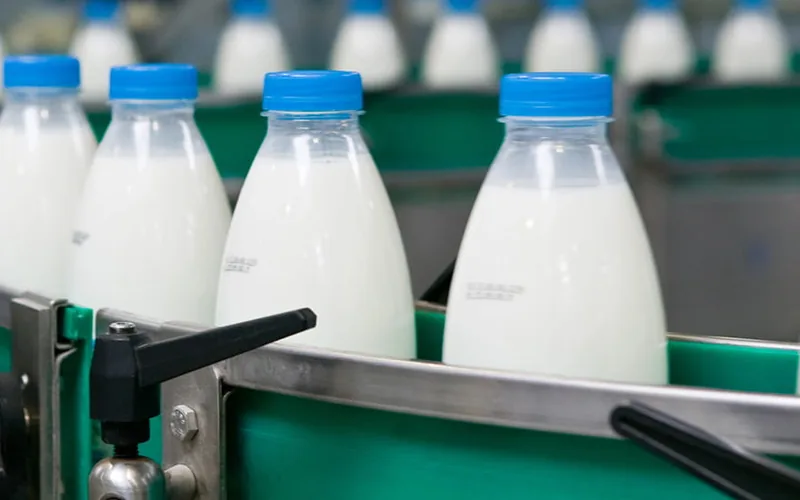
Sanitary
Dairy
Tube-in-tube heat exchangers for dairy: stirred yogurt after the break, puddings, cheese sauce, fruit preparations and high-solids milk concentrates.
+ Learn More
