
1-805-484-2992
Quotes - Engineering - SalesHeating and cooling soups without breaking the pieces
Vegetables, beans, pasta and meat riding in a moving gravy
A soup or stew is two products at once: a broth or gravy that carries the heat, and pieces that take it in slowly and fall apart if handled roughly. Diced carrot, potato cubes, kidney beans, pasta, ground beef and chicken chunks all have to leave the exchanger looking the way they went in, and the person opening the container can tell when they do not. Kettles treat pieces gently but slowly; a continuous tube-in-tube is faster and still keeps them whole.
The duties on these lines are cooking or heating to a target, holding long enough for the biggest piece to reach temperature, and then cooling quickly enough to meet food-safety rules for cooked foods. That last step is where many plants first look at a tubular unit. A large kettle batch cools slowly in a blast chiller or a jacketed tank, while a continuous cooler brings it down on the way to the filler.
Units on these lines are sanitary 316L, which matters with salted broths and tomato-based chili, with clamp ends and a bank that drains completely between recipes. Smooth, thick sauces and condiments without pieces are a viscosity problem rather than a particle problem, and they have their own page under Viscous Products.
Request a Quote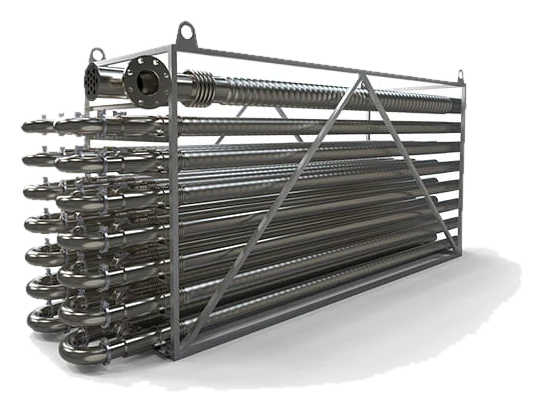
Cooling a cooked soup fast is a food-safety duty
Cooked foods must pass quickly through the warm range where bacteria multiply, and a kettle batch cooled in a chiller does it slowly. A continuous counterflow cooler takes product from cook temperature to fill temperature in one pass.
Prepared food lines we size for
Soups and chowders
- Vegetable and minestrone with diced pieces
- Clam and corn chowders with potato
- Chicken noodle and other pasta soups
- Cream soups with broccoli florets
Chili and stews
- Bean chili and meat chili
- Beef stew with root vegetables
- Curries with chickpeas or paneer
- Lentil and bean dishes
Ready meal parts
- Pasta sauces with vegetable dice
- Fillings for burritos and pot pies
- Cooked rice and grain components
- Pet food gravies with chunks
Picking a design for soups and meals
Pieces decide the bore before anything else; after that, the thickness of the gravy and the floor space available decide the rest of the design.
| PRODUCT / DUTY | DESIGN | WHY IT FITS |
| Chili with beans and meat | Tube-in-Tube | Whole beans and ground meat pass one open bore without bridging or being sheared into paste |
| Beef stew with large chunks | Tube-in-Tube | Large-diameter product tubes and long-radius returns keep big pieces moving without catching an edge |
| Soup base before pieces go in | Multi-Tube | A base with no pieces can use smaller bores, which add surface and shorten the bank |
| Thick gravy with small dice | Triple-Tube | Two heat-transfer surfaces on a thin layer, provided the annulus gap clears the largest dice comfortably |
| Smooth base cook-chill on a skid | Ultra-Coil | A coiled layout fits a skid where floor space is short; pieces go to a straight bore |
Residence time, piece integrity and the cook-chill step
Hold time belongs to the slowest piece. The gravy reaches temperature almost as soon as it enters the heater, but the center of a large potato cube or a chunk of beef lags well behind. A continuous line therefore needs enough length at temperature, or a separate hold section, for the biggest piece to cook through before cooling starts. We size that hold on the largest piece in the recipe and on the quickest path through the section, not on average flow.
Pieces break where the flow changes. Most damage happens at pumps, valves and abrupt fittings rather than inside a straight tube. Long-radius U-bend returns and matched bores between sections avoid the steps that catch the edge of a piece, and a slow positive displacement pump with moderate line velocity does the rest. Velocity still has to stay high enough to keep beans and dice off the bottom of a level tube, so the design sits inside a window rather than at a minimum.
Cooling is the step plants underestimate. The usual food-safety guidance for cooked foods is to get from 135 F to 70 F within two hours and on to 41 F within four hours more. A continuous counterflow cooler covers that first stage in a single pass, often with chilled water followed by glycol, so product reaches the filler or bulk tote already cold. The cold end of the cooler sees the thickest gravy, and that end sets the pressure drop.
Call and talk it through with an engineer: 1-805-484-2992
Practical points on a soup line
Starch gravies and burn-on
Flour-thickened gravies and cream soups build a film on a hot wall. Hot water in the jacket at a controlled margin above the product keeps the wall from scorching, and counterflow lets that margin stay small for the whole length. Direct steam on a starch product heats quickly but leaves brown deposits that show up as dark specks in the finished bowl.
Salt, tomato and 316L
Chili, tomato soups and salted broths combine acidity with chloride, the conditions that pit lower grades of stainless steel. 316L is the standard here for that reason, and electropolished bores release tomato and cheese residue more readily during cleaning. Strong pickling brines can push toward higher alloys, but ordinary soup and stew recipes do not.
Changeovers between recipes
Plants running several soups in a shift need to clear one recipe and start the next quickly. A drainable bank pushed out with water recovers most of the batch, and the smooth bore leaves no pockets where diced vegetables hide. A short rinse is often enough between compatible recipes, with full CIP at the end of the day or at an allergen change.
Adding pieces after the exchanger
Some lines heat or cool only the base and fold fragile pieces in downstream. That lets the base run through a multi-tube with more surface per foot. It works when the pieces are already safe and cold. When they need the same heat treatment as the gravy, they have to travel through the exchanger with it.
Before you size a soup cooler
It can replace the cooling step and, for many recipes, the heating step, but kettles still do jobs a continuous line does not, such as browning meat or reducing a sauce. A common arrangement keeps the kettle for the cook and sends each batch through a continuous cooler on its way to filling, which frees the kettle for the next batch sooner.
Inside the tube they generally do; the risk lies at the pump and at fittings. Pasta softens as it cooks and breaks more easily late in the line, so the cooler is often the gentlest place in the system. When piece integrity is the main concern, we look at the whole loop, including pump type and speed, not only the exchanger.
That depends on how the product is packed. Chilled ready meals are usually cooled to refrigeration temperature before they leave the line, while hot-filled pouches and cups skip the cooler and are cooled after sealing. Tell us the packaging and the shelf-life route, and the outlet temperature follows from them.
For a recipe with real pieces it is worthwhile. The viscosity of the gravy at cook and fill temperatures, the largest piece and how firm the pieces stay after cooking all change the design. A measured viscosity curve avoids the common mistake of sizing on a cold-room figure that makes the cooler far longer than it needs to be.
Yes. The cooler only needs a steady flow and a known back pressure at its outlet. Lines that alternate between a filler and bulk totes for further processing often add a diverting valve after the cooler, sized so it does not become the step where pieces break or lodge.
Related
Sanitary
Foods with Solids
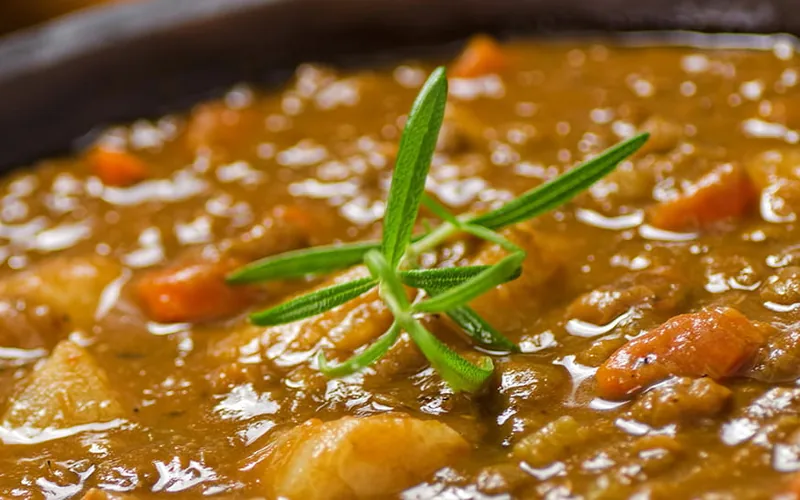
Heat exchangers for particulates in food: particle size against the bore, solids fraction, settling, fragile pieces and heat reaching the core of a piece.
+ Learn More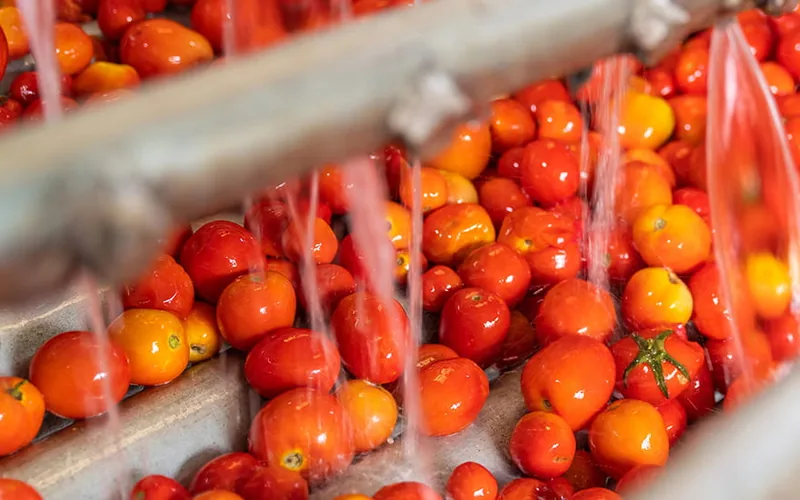
Sanitary
Fruit & Vegetable
Fruit puree heat exchangers in tube-in-tube form for purees, fruit preparations, tomato hot break and vegetable purees: pulp passes, 316L takes the acid.
+ Learn More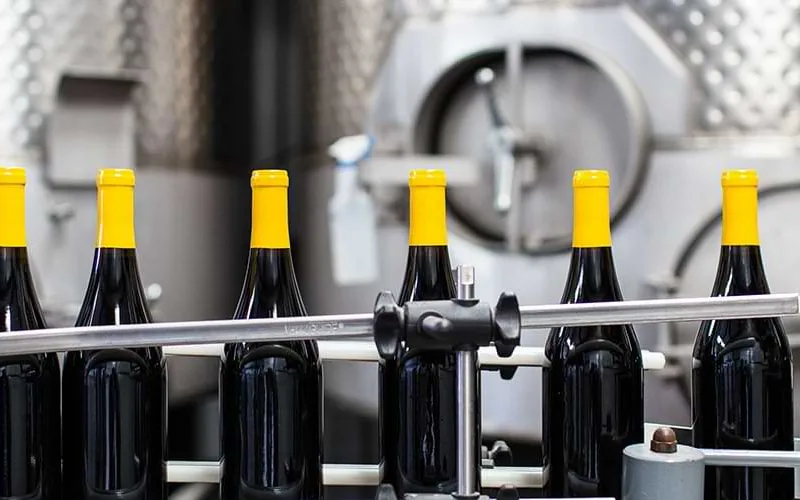
Sanitary
Beverages
Beverage heat exchangers in tube-in-tube form for pulpy juice, juice with sacs, smoothies, oat and plant-based drinks and concentrates, hot fill included.
+ Learn More