
1-805-484-2992
Quotes - Engineering - SalesSmooth, heavy and hard to push
Ketchup, mustard, barbecue and steak sauces, cheese sauce, mayonnaise
The products on this page are smooth but heavy: ketchup, mustard, barbecue and steak sauces, cheese sauce, mayonnaise and aioli. Most sit in the thousands to tens of thousands of cP, and nearly all are shear-thinning, so they pour when pushed and stand up on a spoon. A plate exchanger copes with the thinner end, but its narrow gaps and many contact points drive pressure drop up fast and leave sauce in corners that cleaning struggles to reach.
In a round, open tube the same sauce runs as a steady laminar stream. Heating for hot fill, cooling after the kettle and holding for pasteurization all happen with no gasket in the product path, and the unit drains empty at the end of the run. The trade is length: a heavy sauce needs more tube than a thin one for the same temperature change, and every extra section adds pressure the pump must supply.
Getting that balance right is most of the design. Tube diameter, the number of parallel paths, a triple-tube section for the heaviest products and corrugation for a smooth one are all available, and the right mix depends on how your sauce thins under shear and stiffens as it cools. We size from measured product data, not from a recipe card.
Request a Quote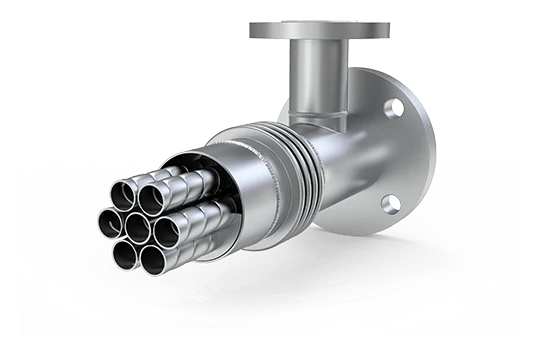
Pressure drop, not surface area, sets a sauce design
A ketchup that flows easily at fill temperature can be many times thicker at the cold end of a cooler, so the outlet sections carry most of the pressure drop and decide the pump.
What decides a sauce exchanger
The sauce
- Viscosity at inlet and outlet temperatures, not at room
- How strongly it thins under shear
- Starch, gum or egg that thickens on heating
- Size of any seed, spice or pulp fragments
The process step
- Hot fill: heat to fill temperature and hold
- Cooling after the kettle before cold fill
- In-line pasteurizing with a hold section
- Hours of running between cleaning cycles
The plant
- Pump type and the pressure it can deliver
- Utility on hand: hot water, steam, tower water, glycol
- Wall or floor space for stacked sections
- CIP supply flow and cleaning chemistry
Which design suits which sauce
Most sauce lines use one of the designs below, and some combine two: a single-tube heater feeding a triple-tube cooler, for example.
| PRODUCT / DUTY | DESIGN | WHY IT FITS |
| Ketchup and tomato sauces | Tube-in-Tube | A full-bore tube passes fine tomato fiber and seed, with length and diameter set by cold-end viscosity. |
| Cheese sauce and heavy fillings | Triple-Tube | Very thick product in a thin annulus, heated or cooled from both sides, needs far less length. |
| Smooth mustard and barbecue sauce | Multi-Tube | Several smaller tubes add surface per foot for a smooth sauce with no pieces to bridge. |
| Cooling mayonnaise after the mill | Concentric Tube | A wide annular channel keeps wall shear low on a fragile oil-in-water emulsion. |
| Thin hot sauces, short runs | Ultra-Coil | A compact coil with low hold-up volume suits a thinner sauce on a skid with frequent changeovers. |
Hot fill, cooling and the cold-end problem
Hot fill puts the risk at the wall. Shelf-stable sauces are commonly heated to around 185 F or higher for filling. In laminar flow the sauce touching the heated wall moves slowest, so it sees the highest temperature for the longest time. Cheese sauce proteins and modified starches bake onto that surface first. The symptoms are brown flecks in the jar and a heater pressure drop that climbs through the shift. Hot water at a moderate temperature difference, rather than steam, keeps the wall below the point where this starts.
Cooling is where pressure drop builds. As a cooked sauce loses heat its viscosity climbs, and the last sections of the cooler carry far more pressure drop than the first. Staging the cooling, tower water for the bulk of the heat and glycol only for the final few degrees, limits how much of the bank runs with a very cold wall. Running glycol too cold can gel the starch phase against the tube and form an insulating skin that shows up as a rising outlet temperature.
Triple-tube or corrugated? For a smooth sauce in laminar flow, a corrugated inner tube disturbs the slow wall layer and shortens the unit, at the cost of extra pressure drop. For the heaviest products, a triple-tube section heats or cools the sauce from both sides of a thin annulus. The annulus gap must still clear any seed or spice fragment, and both surfaces must be reachable by the cleaning flow.
Neither choice can be made well without real data for your sauce. Send the product type, flow rate, inlet and outlet temperatures and any viscosity figures you have, or send a sample and we will measure it across your temperature range before we size it.
Call and talk it through with an engineer: 1-805-484-2992
Sauce details that change the sizing
Emulsions in the line
Mayonnaise, aioli and creamy emulsified sauces tolerate a straight tube well; the damage usually comes from pumps, throttling valves and tight fittings. Keeping velocity moderate through the bends and avoiding sudden cold walls protects the oil droplets. A sauce that weeps oil weeks after packing is often an exchanger-and-piping problem rather than a recipe problem.
Starch that sets on heating
Starch-thickened sauces can get thicker partway through a heater as the starch gelatinizes, then thin again as they get hotter. The middle sections may therefore carry the highest viscosity, not the outlet. Sizing only on inlet and outlet values misses this, which is why we test across the full temperature range.
Acid, salt and material
Ketchup, mustard and most barbecue sauces combine acidity with salt, and chlorides in an acid product attack 304L far sooner than 316L. That makes 316L the normal choice for the product tube, with polished or electropolished surfaces that release sauce more easily during the rinse.
Changeovers and cleaning
Sauce lines often run several flavors in a day. A drainable unit, a water push to recover product, then CIP at full cleaning velocity gets the line back quickly. Sanitary clamp ends let a section be opened for inspection after a new recipe or a burn-on event.
Sauce exchanger questions
The straight tube itself is gentle: laminar flow in a round bore applies low, even shear. Texture damage on mayonnaise lines usually comes from pumps, partly closed valves and short-radius fittings. We keep the product velocity moderate, use long sweeping returns where the layout allows, and check that the coolant is not cold enough to stiffen the emulsion against the wall.
Almost always the wall is too hot. Cheese proteins and starch bake onto a surface that runs well above the bulk sauce temperature, and steam makes that worse. Switching to hot water, lowering the temperature difference and adding length to recover the duty usually stretches the run between cleanings. The pressure drop trend shows the improvement within a few days.
Yes, if it is sized for the hardest case on each count: pressure drop on the thickest product and outlet temperature on the one that is hardest to heat or cool. The thin sauce will run at a different velocity and may overshoot, so temperature control on the utility side needs enough range for both.
Often it is. In the laminar range a corrugated tube disturbs the wall layer and raises heat transfer, which can shorten the unit by a useful amount. It adds pressure drop and lowers the particle size the tube will pass, so it suits smooth sauces with only fine spice. Cleanability is good as long as CIP reaches full velocity.
There is no single figure; it depends on flow, outlet temperature and the pump you have. We design so the inlet pressure stays inside the pump capacity and the connection ratings with margin to spare, and we check the cold-start case, when the whole unit is full of sauce at its thickest, not just normal running.
Related
Sanitary
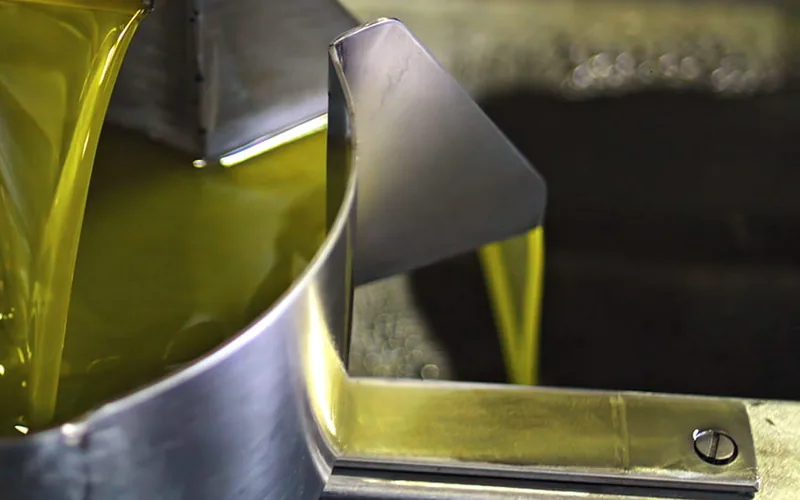
Salad Dressings
Tube-in-tube heat exchangers for salad dressings: low-shear cooling after the mixer, 316L for vinegar and salt, and herbs and spices passed intact.
+ Learn More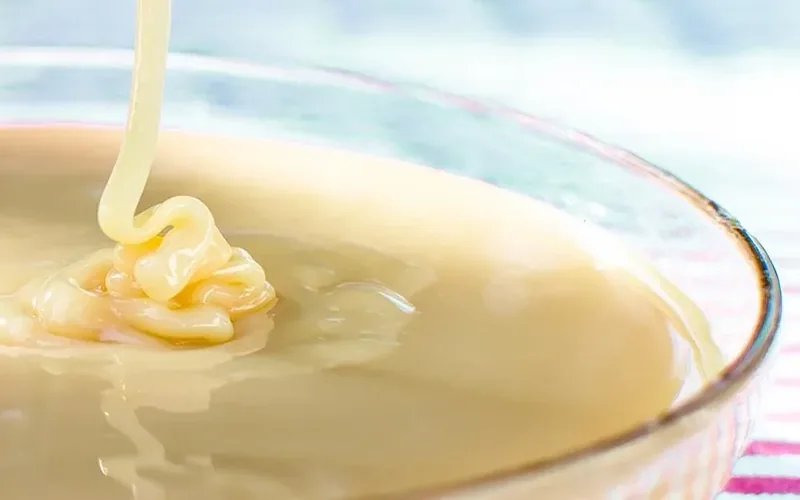
Sanitary
Sweeteners & Sugars
Tube-in-tube heat exchangers for honey, glucose and corn syrup, liquid sugar and molasses: heating to pump, cooling after evaporation, no crystal buildup.
+ Learn More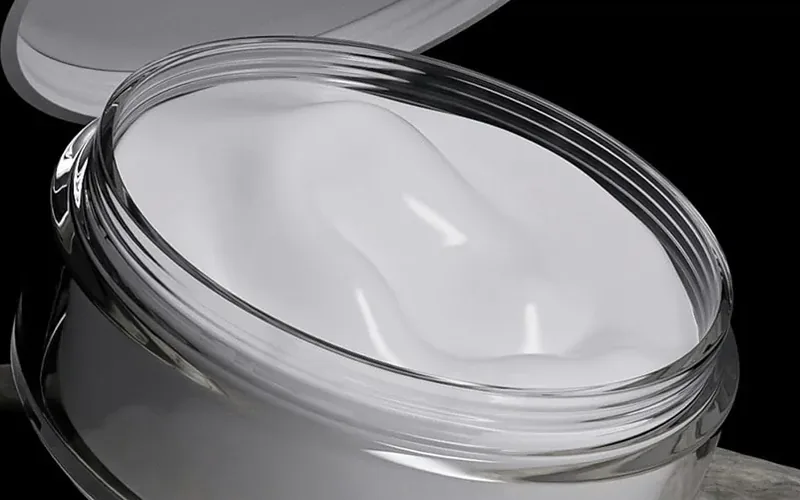
Sanitary
Cosmetics & Personal Care
Tube-in-tube heat exchangers for lotions, creams, shampoos and gels: low-shear cooling after emulsification in sanitary 316L built for CIP between batches.
+ Learn More