
1-805-484-2992
Quotes - Engineering - SalesHeavy products are sized on viscosity, not flow
Resins, adhesives, printing inks, lubricants, greases and bitumen emulsions share a property that dominates every heat transfer decision: they are thick, and how thick depends heavily on temperature. A polyester resin that pours freely at its process temperature can barely move once it has cooled toward ambient. Most duties on these products are either heating to make them pumpable or cooling them after a reaction or blend without letting them set up in the line. Both are laminar-flow duties where surface, pressure drop and wall temperature have to be traded against each other.
Tube-in-tube suits these products because the flow path is simple and predictable. One product path in series means every pound of product sees the same history, with no parallel tubes for a thickening product to starve. Thermal oil or steam runs in the annulus, and true counterflow lets a heating duty reach a close approach without an excessive wall temperature. Corrugated inner tubes or a triple-tube layout add heat transfer where the plain tube runs out of it.
The limit is pressure drop. A heavy product moving slowly through a long bank needs pump pressure, and the bank can only be so long before that pressure becomes the design constraint. Getting the viscosity right across the temperature range, rather than at one convenient point, is what keeps the design honest.
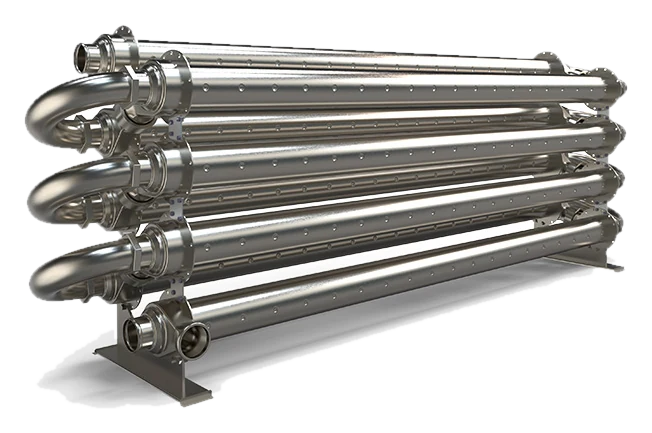
Tube-in-tube
- One product path, no flow maldistribution
- Thermal oil in the annulus, no hot spots
- Corrugation or triple-tube adds surface
Shell-and-tube
- Viscous flow splits unevenly among tubes
- Cooled tubes thicken and starve
- Stagnant pockets behind shell baffles
Heavy product design reference
These factors set the length, bore and heating medium for a viscous industrial product. Most of them depend on data measured on your product.
| Factor | Detail |
| Viscosity data | Measured at several temperatures across the heating or cooling range |
| Flow regime | Laminar; film coefficient set by conduction across a thick boundary layer |
| Heating medium | Thermal oil, steam or hot water in the annulus |
| Wall temperature | Held below the point where the product cures, scorches or breaks |
| Pressure drop | Usually the limit on bank length and tube bore |
| Enhancement | Corrugated inner tube or triple-tube for more surface per length |
| Products | Resins, adhesives, inks, lubricants, greases, bitumen emulsions |
| Materials | Carbon steel or 316L by product chemistry and cleaning |
Heating to pump
Heating a heavy product is the easier direction. The hot wall thins the product right where the flow is slowest, so the boundary layer moves more freely and both heat transfer and pressure drop improve along the bank. The danger is wall temperature: resins advance their cure, adhesives skin and emulsions break if the wall is much hotter than the bulk. Counterflow with a moderate medium temperature avoids that.
- Thermal oil where steam pressure would run too high
- Medium temperature set by product limits
- Close approach possible in counterflow
- Gradual warm-up for cold-start product
Cooling without a wall layer
Cooling is the harder direction. The product next to the cold wall thickens first, slows down and insulates the fast-moving core, so heat transfer falls and pressure drop rises along the bank. Too cold a coolant makes this worse and can freeze a layer of product in place. Tempered water at a controlled temperature, rather than the coldest water available, usually gives the better result.
- Tempered coolant, not the coldest available
- Check pressure drop at the outlet viscosity
- Corrugation breaks up the cold wall layer
Laminar design for heavy industrial products
Why film coefficients are low and how to raise them
In laminar flow, heat moves by conduction across the product. With Reynolds numbers far below 2,100, there is no turbulence to carry heat from the wall into the core, and the film coefficient is a small fraction of what water would give. Three levers help: a smaller bore, which shortens the conduction path but raises pressure drop; a corrugated inner tube, which disturbs the boundary layer most effectively in exactly this regime; and a triple-tube design, which heats or cools the product from both sides of a thin annulus. Which lever wins depends on how much pressure the pump can deliver.
Thermal oil in the annulus
Many resin and grease plants heat with thermal oil because it reaches high temperatures at low pressure, where steam would need a heavily rated system. Thermal oil has a lower film coefficient than condensing steam, so the annulus is sized for oil velocity as carefully as the product side is sized for pressure drop. The industrial line handles service above 600 F, which covers the hot oil systems these plants normally run, and the oil side is designed and tested to the same code as the product side.
Reactive, emulsion and solvent products
Reactive resins keep curing while hot, so residence time and wall temperature together set how far the product advances in the exchanger. Bitumen and wax emulsions break under high shear or if the water phase boils at a hot wall. Solvent-borne inks and adhesives need a closed, pressure-tight path and attention to flash point. For sizing, send viscosity at three or more temperatures, density, flow, inlet and outlet temperatures, the heating or cooling medium and any temperature or shear limits.
Call and talk it through with an engineer: 1-805-484-2992
Heavy-product sizing questions
Because these products change viscosity by orders of magnitude across a typical heating or cooling range. A figure taken at room temperature overstates the viscosity at process temperature on a heating duty and understates it wherever a cooling duty runs colder than the room. Either way the bank length and pressure drop come out wrong. Viscosity at several temperatures, measured on the product, fixes that.
Often, yes. Corrugation does the most good in laminar and transitional flow, which is where these products run. It raises the film coefficient by disturbing the boundary layer, at the cost of some extra pressure drop. For products with fillers or pigments it is checked against particle size and abrasion before it is specified, since corrugation narrows the effective bore.
Warm it before you push it. Running the heating medium through the annulus with the product stationary softens the product in the tube, so the pump is not asked to move a near-solid plug. Greases and some resins also have a yield stress that must be overcome at start-up. Tell us your restart pattern and we check pump pressure for the cold case.
It can, with switched media or two banks in series: a heating section on thermal oil followed by a cooling section on tempered water. One bank switched between duties is simpler on paper but slower in practice, because the metal and the oil in the annulus must change temperature each time. Two sections sized for their own duty usualy control better.
Related
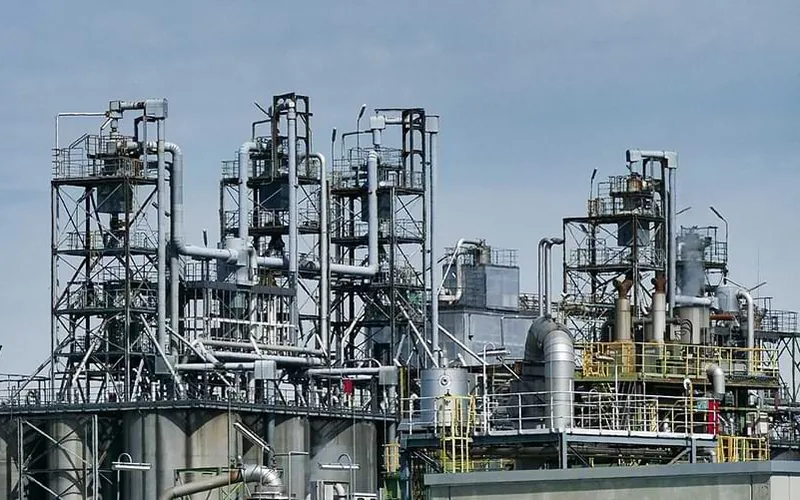
Industrial
Oil & Gas
Tube-in-tube and double pipe heat exchangers for produced water, crude preheat, amine and glycol loops and condensate, in carbon steel to 2205 duplex.
+ Learn More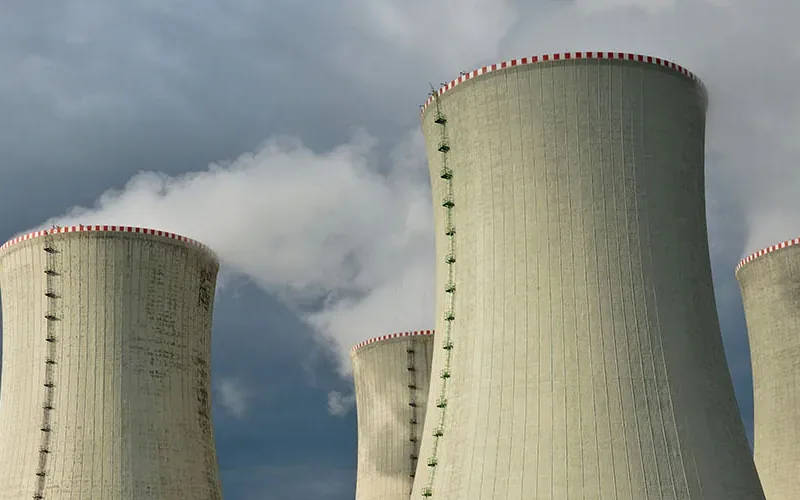
Industrial
Hot Effluent Heat Recovery
Recover heat from hot, dirty effluent to preheat clean water: tube-in-tube heat recovery exchangers with a cleanable dirty side and true counterflow.
+ Learn More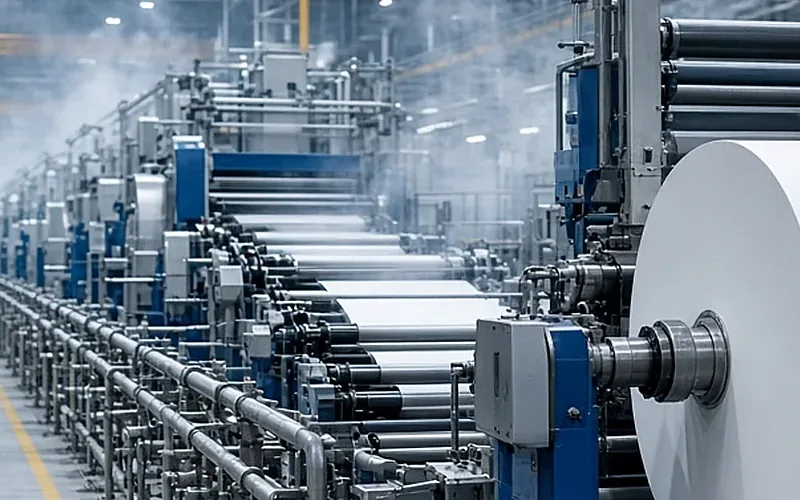
Industrial
Pulp Mill Liquors
Tube-in-tube heat exchangers for black, green and white liquor and digester circulation heating: hot caustic service, scaling and duplex materials.
+ Learn More
