
1-805-484-2992
Quotes - Engineering - SalesFind the tubular design for your fluid
Six geometries share one principle: one fluid in a round channel, the other in an annular channel around it, the two flowing in opposite directions. The single full-bore tube passes the largest pieces. Several smaller tubes in one jacket add surface for smooth product. A third tube turns the product path into an annulus heated from both faces, which suits paste. A coil packs the same counterflow into a skid-sized footprint. The Designs section compares them by fluid.
The wetted alloy is picked from the chemistry of the product and the cleaning program, not from habit. 304L covers low-chloride food work and hot water. 316L is the sanitary default because its molybdenum holds off chloride pitting. 2205 duplex adds strength and resistance to chloride stress cracking for brines and produced water. AL-6XN and titanium take seawater, hot brine and bleach-plant chemistry, and carbon steel or high-nickel alloys are quoted where a stream calls for them.
The core design: one product tube with nothing inside it, a jacket tube around it, and U-bend returns that stack the straight runs into a serpentine bank. Because the bore is open end to end, diced vegetables, fruit pieces and fibrous pulp travel through without meeting an edge to hang on. It is the first geometry to look at whenever the product carries something you can see.
Several smaller product tubes share one jacket, so each foot of exchanger carries more surface. That suits smooth or fine-particle products such as pulpy juice, cream or a sauce without chunks. The price of that surface is passage size: a piece close to the diameter of a small tube can lodge at the inlet and start a bridge, and an uneven split between tubes spoils the outlet temperature.
The industrial form of the same idea, built from pipe with flanged or threaded ends and usually arranged as hairpins. Round pipe carries pressure efficiently, which makes this the design for small-to-medium duties at 1500+ psi and for hot oils above 600 F, in carbon steel through high alloys. Ends that open allow the dirty side to be rodded clean.
A tubular unit takes more floor space per square foot of surface than a plate pack, and for a clean, water-thin fluid at low pressure the plate is usually the cheaper buy. The comparison page sets out where each type wins on viscosity, particles, fouling, pressure, cleaning and footprint, so you can tell whether your duty truly needs a tube.
Every unit here is a tube inside a tube. What changes is how many product tubes there are, which channel carries the product and what the walls are made of, so start with the branch that matches your question.
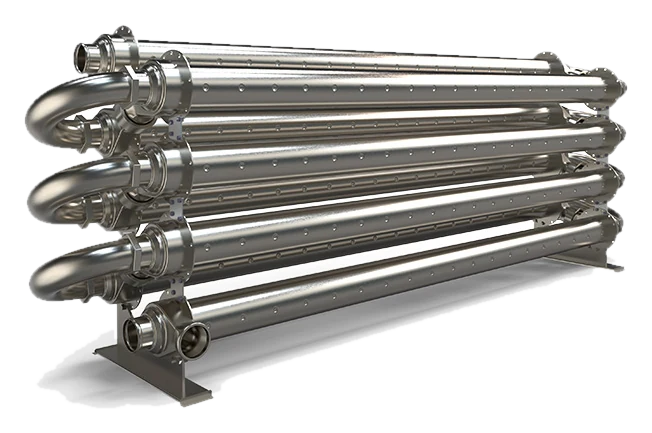




Standard section or custom-engineered
Most quotes start from a standard section and change only what the duty demands.
Length is the sizing variable
Surface is added by adding straight runs, in series for more temperature change or in parallel for more flow. That makes a tubular unit easy to resize on paper and, later, easy to extend when a line speeds up or a new product arrives with a longer cooling curve.
Diameter follows the product
Bore size is set by the largest piece and by the pressure drop the pump can deliver. A thick product in too small a tube needs a pump the line does not have; the same product in too large a tube runs slow and laminar with a poor film coefficient. The right diameter balances both.
Options that change the price
Corrugated tubes, electropolished surfaces, higher alloys, the ASME stamp and National Board registration each add cost, and each solves a real problem. We add them when the duty calls for them and leave them off when it does not, so the quote reflects your fluid rather than a catalog maximum.
How to pick quickly
Name the product and what is in it, the flow, the temperatures in and out and the utility on hand. Particle size points to the geometry, chemistry points to the alloy, and viscosity at temperature sets the length. Send those and we will size the unit; a sample test settles any doubt about the fluid.
Related

Heat Exchangers
Designs
Compare tube-in-tube heat exchanger designs: single tube, multi-tube, triple-tube, double pipe, concentric and coil, matched to pieces and viscosity.
+ Learn More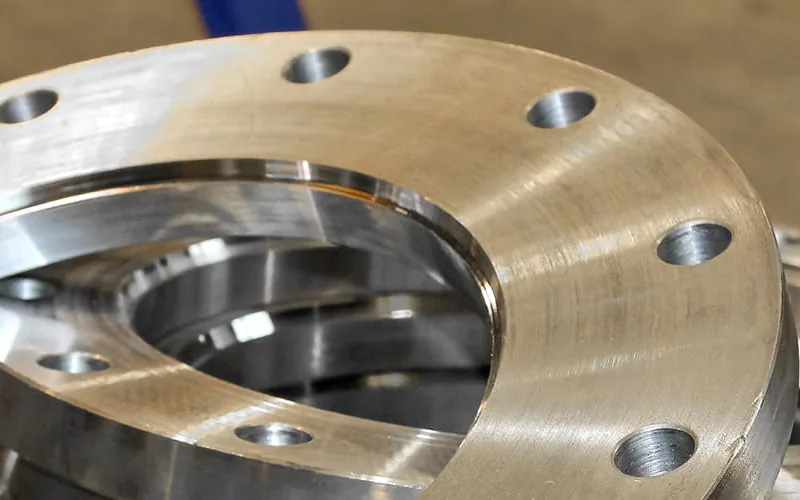
Heat Exchangers
Materials
Heat exchanger material selection for tube-in-tube units: 304L, 316L, 2205 duplex, AL-6XN and titanium matched to chlorides, acids and temperature.
+ Learn More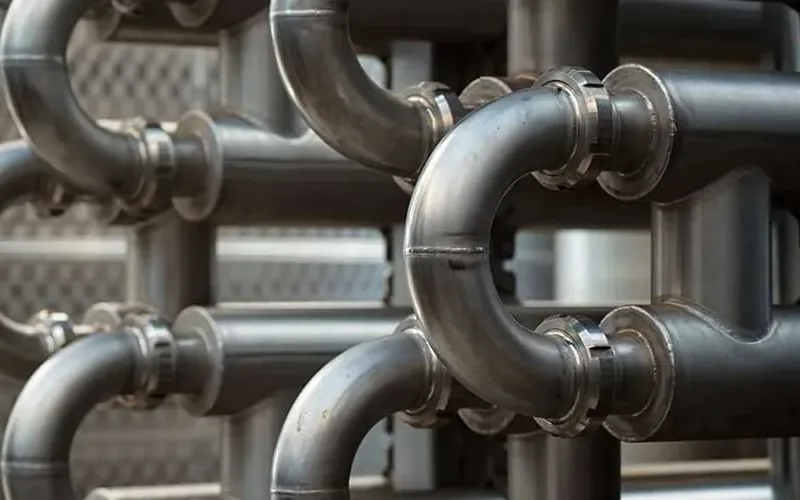
Heat Exchangers
Tube-in-Tube
Tube in tube heat exchanger with one full-bore product tube in a jacket, so pieces and fibers pass intact. Sanitary or industrial builds, sized to duty.
+ Learn More