
1-805-484-2992
Quotes - Engineering - SalesThe alloy is chosen by the chemistry, not the catalog
Acids, chlorides, caustic and grit each attack a tube differently
A corrosive stream rarely arrives as one chemical. Plant effluent carries acid and chloride together, a digester loop carries sulfide and grit, and a bleach line carries an oxidizer at temperature. Each combination has its own failure mode - general thinning, pitting, crevice attack, stress-corrosion cracking or erosion - and the tube wall has to survive the worst of them for years. A tube-in-tube puts that wall in one place: the product tube. Only that tube, its return bends and its connections need the corrosion-resistant alloy, which keeps the price of an exotic material in proportion.
Abrasion adds a second variable. Sand, lime, catalyst fines and mineral solids scour the passive film that protects stainless steels and nickel alloys, and the bare metal then corrodes far faster than either mechanism alone would predict. That combined loss, erosion-corrosion, is why velocity and bend radius belong in the same conversation as the alloy. An open round tube with no contact points and no narrow gaps gives solids nowhere to lodge and wear a hole, and a heavier wall buys the years a thin plate cannot.
This section covers three corrosive duties that keep coming back to us: acidic and caustic plant effluent, the acid, caustic and bleach chemistry of chemical and pulp plants, and the warm, sulfide-bearing sludge of anaerobic digesters. The material pages behind them explain each rung of the alloy ladder. Hot liquor recovery and heavy mineral slurries have their own pages in the other industrial sections.
Request a Quote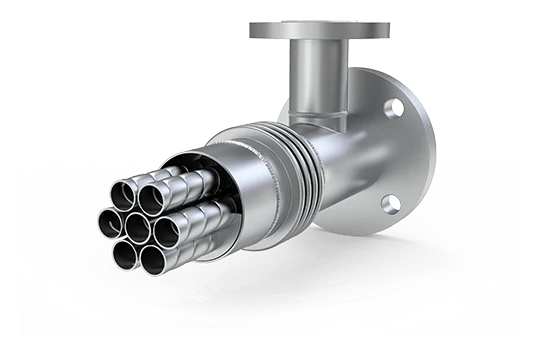
The wrong alloy is the most expensive line on the order
- Alloy only on the wetted tube; the jacket can be carbon steel
- No gaskets in the corrosive stream on welded designs
- Wall thickness chosen for erosion, not only for pressure
Corrosive duties and the alloys behind them
Start with the stream you have. Each row links to the page that treats that chemistry, or to the alloy most often specified once 316L is no longer enough.
| DUTY OR ALLOY | TYPICAL STREAM | WHAT DECIDES THE DESIGN |
| Acidic effluent | Low-pH plant wastewater | Acid, chlorides and carried solids together, in neutralization loops that swing between acid and caustic |
| Acids, caustics and bleach | Sulfuric, hydrochloric, caustic, chlorine dioxide | Concentration and temperature set the alloy; oxidizing bleach chemistry usually points to titanium |
| Digester sludge and biomass | Sludge, digestate, broths | Sulfide, struvite scale and fiber at digester temperature, with the wall kept cool enough to stop caking |
| 2205 duplex | Brines, produced water, chloride effluent | Resists chloride stress-corrosion cracking and carries pressure with a thinner wall |
| AL-6XN | High-chloride and acidic brines | Six percent molybdenum super-austenitic grade for pitting and crevice attack beyond duplex |
| Titanium | Seawater, hypochlorite, wet chlorine | Close to immune to chlorides and oxidizers; never for fluorides or hot reducing acids |
Four ways a corrosive stream fails a tube
Pitting
- Chlorides break the passive film at one point
- Worst under deposits and in slow flow
- Answered by molybdenum: 316L, duplex, AL-6XN
Stress-corrosion cracking
- Warm chlorides plus tensile stress crack austenitic stainless
- Duplex and titanium resist it; 316L does not
- Hot caustic cracks stressed carbon steel welds
Erosion-corrosion
- Solids strip the film and corrosion follows
- Fastest at bend outer radius and inlets
- Answered by velocity limits, wall and bend radius
General attack
- Even thinning in strong acid or caustic
- Predictable, so a corrosion allowance covers it
- Rate climbs steeply as temperature rises
Matching the material to the chemistry
Send the whole analysis, not the main chemical
Most corrosion surprises come from the minor constituent. A sulfuric rinse that picks up chlorides from a pickling line behaves nothing like clean sulfuric acid. A reused caustic wash carries dissolved metals, and a brine left warm in a holding tank grows sulfide-producing bacteria. Temperature matters as much as concentration: plenty of alloys that are comfortable in a fluid at ambient fail in the same fluid once it runs hot. A complete picture of the stream is what lets the alloy be chosen once instead of twice.
- Chloride level and the highest temperature the stream ever reaches
- Oxidizers or reducing conditions, and whether they swing
- Solids: what they are, how big and how hard
- Cleaning or neutralizing chemicals that also pass through
Why a cheaper alloy that fails costs more
The price gap between 316L and a higher alloy looks large on a quotation and small next to a leak. A pinhole in a product tube mixes the corrosive stream into the cooling water or the reverse, takes the line down, and in effluent service can put an untreated discharge in front of a regulator. The replacement then costs as much as the first unit, plus the outage. Because only the wetted tube of a tube-in-tube needs the alloy, stepping up one rung raises the price of the whole exchanger far less than the alloy's price per pound suggests.
Designing for abrasive solids
Velocity has to be high enough to keep solids moving and low enough not to wear the wall. Settling in a slow tube builds a deposit, and pitting starts underneath it; excess velocity wears the outer radius of every return bend first. The answer is a tube sized for a velocity band rather than a single number, long-radius returns, a heavier wall where the solids are hard, and smooth rather than corrugated tube where a corrugation would give grit a ridge to strike. Flanged access at the bends lets maintenance inspect the wear points instead of guessing.
Call and talk it through with an engineer: 1-805-484-2992
Choosing metal for corrosive streams
Often it is, provided chlorides are low and the stream stays cool. 316L handles many dilute organic and mineral acids, but chloride pitting and cracking rise quickly with temperature. Send the chloride level and the highest temperature the stream reaches. If either is high, we will price duplex or AL-6XN alongside 316L so the cost of the extra margin is visible before you commit.
Yes, and on most corrosive duties it is. The annulus usually carries cooling water, steam or glycol, so the jacket can be carbon steel or 304L while the inner tube is duplex, AL-6XN or titanium. The transition between the two metals is handled at the jacket closure, and each side keeps its own design pressure.
By sizing the tube for a velocity window, using long-radius return bends and adding wall thickness where the solids are hard. The outer radius of each bend takes the impact, so that is where wear shows first. On abrasive service we also prefer smooth tube to corrugated and arrange the bends so they can be opened and inspected.
A new chemical supplier, a different cleaning agent or a recycled stream can move a duty from one rung of the material ladder to another. Tell us what could change, not only what runs today. Designing for the worst credible case usually costs one alloy step, while a failure halfway through the unit's life costs a whole exchanger and the downtime that goes with it.
Related
Industrial
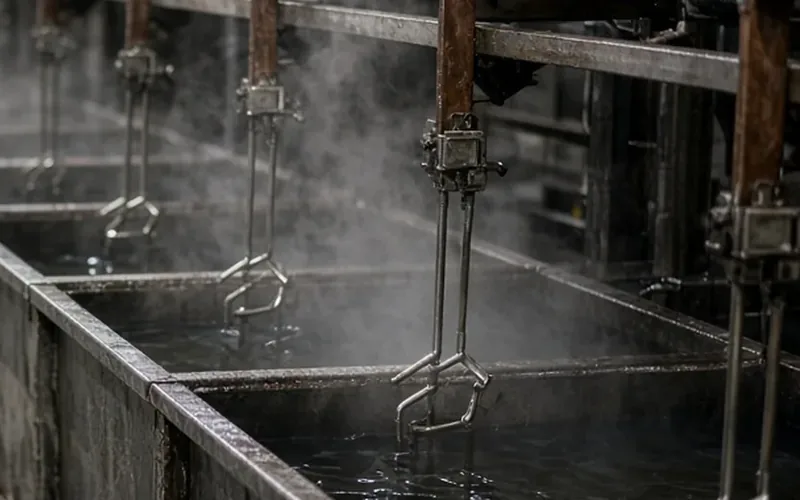
Acidic Effluent
Tube-in-tube heat exchangers for acidic and caustic effluent: cooling or heating low-pH wastewater with chlorides and solids in duplex, AL-6XN or titanium.
+ Learn More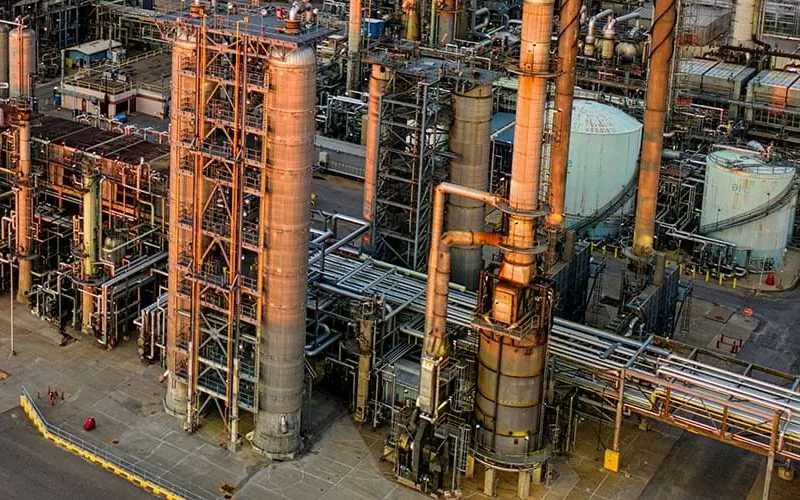
Industrial
Acids, Caustics & Bleach
Tube-in-tube heat exchangers for sulfuric and hydrochloric acid cooling, caustic heating and chlorine dioxide or hypochlorite service in alloy or titanium.
+ Learn More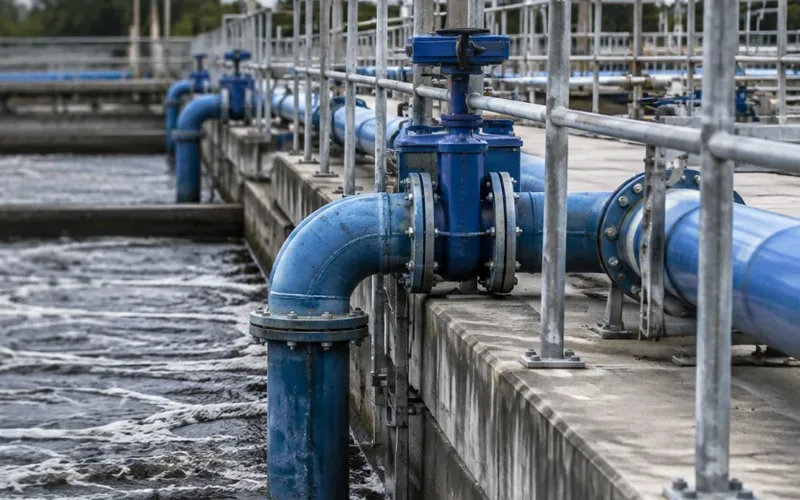
Industrial
Digester Sludge & Biomass
Tube-in-tube sludge heat exchangers for anaerobic digesters, biomass and fermentation broths: hold mesophilic or thermophilic temperature without caking.
+ Learn More
