
1-805-484-2992
Quotes - Engineering - SalesSterilization with Tube-in-Tube Heat Exchangers
Tube-in-tube heat exchangers support ultra-high-temperature (UHT) and aseptic sterilization through true counterflow, delivering precise hold times at 135–150 °C for low-acid products while minimizing thermal degradation and fouling.
Typical Sterilization Applications
- Dairy: UHT milk, cream, condensed milk, infant formula, and flavored dairy beverages.
- Beverages: Aseptic fruit juices, vegetable drinks, plant-based milks, and nutritional beverages.
- Soups & Sauces: Sterilization of low-acid soups, tomato products, cheese sauces, and ready-to-eat meals.
- Food Bases: Sterile processing of broths, purees, gravies, and particulate-containing preparations.
- Pharmaceutical: Sterilization of high-purity water, buffers, media, and parenteral solutions.
- Other: Liquid egg products, pet foods, and viscous nutritional formulations requiring commercial sterility.
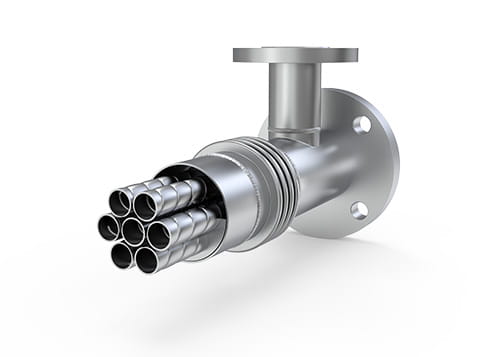
Sanitary / Aseptic Sterilization
Tube-in-Tube Heat Exchangers
- 3-A, EHEDG & FDA Compliant
- Low Shear for Particulates
- Polished 316L, Full Drainability
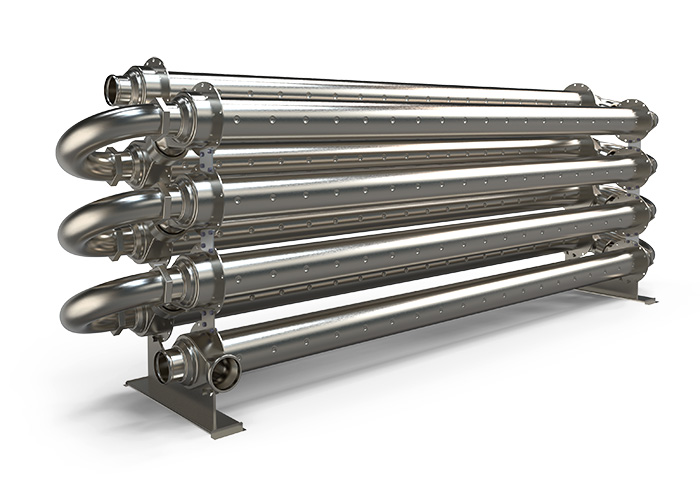
High-Temperature Sterilization
Tube-in-Tube Heat Exchangers
- Handles High Temperatures & Pressures
- Resistant to Thermal Shock
- Easy Mechanical Cleaning
Advantages for Sterilization Processes
Tube-in-tube heat exchangers deliver exceptional performance in sterilization applications by utilizing true counterflow configuration, which maximizes the log mean temperature difference (LMTD) and enables highly efficient heat transfer at elevated temperatures. This design allows precise control of hold times — typically 2–15 seconds at 135–150 °C — ensuring complete commercial sterility for low-acid products while minimizing over-processing and thermal degradation.
The concentric tube geometry provides gentle, low-shear flow paths that preserve product integrity, protecting delicate particulates, fibers, and viscosity in challenging fluids such as soups with chunks, fruit preparations, or dairy-based beverages. Unlike plate or scraped-surface exchangers, tube-in-tube units experience virtually no mechanical shear on the product side, reducing the risk of particle breakup, emulsion instability, or texture damage during high-temperature exposure.
High-temperature and high-pressure capability — often rated up to 30 bar or more — combined with excellent resistance to thermal shock, makes these exchangers suitable for the most demanding UHT and aseptic processes. Rapid temperature ramps and recovery from process interruptions are handled reliably without compromising tube integrity or product safety.
Sanitary and aseptic versions feature electropolished 316L stainless steel surfaces, full drainability, no internal dead zones, and hygienic fittings that meet 3-A, EHEDG, and FDA requirements. This construction prevents microbial harborage, supports validated sterilization-in-place (SIP), and ensures consistent aseptic conditions throughout production runs. Optional corrugated or dimpled inner tubes can be incorporated to increase turbulence, significantly improving heat transfer coefficients for highly viscous or fouling-prone products without sacrificing gentle handling.
The compact, modular design occupies minimal floor space and allows easy scalability by adding or removing tube sections to match production volumes. Installation is straightforward, with flexible layout options for integration into existing aseptic lines. Clean-in-place (CIP) and SIP cycles are highly effective due to the smooth, fully drainable flow paths and accessible geometry, resulting in shorter turnaround times and reduced water/chemical usage.
Fouling is minimized through optimized velocity profiles and the absence of complex internal structures, leading to longer production runs between cleaning events. Energy efficiency is enhanced by the ability to use product-to-product regeneration sections, recovering heat from hot sterile product to preheat incoming cold product and reducing utility consumption by up to 70–90% in well-designed systems.
Product quality remains consistently high: flavor, color, nutritional value, and mouthfeel are better preserved compared to batch retorting or less efficient continuous systems. These advantages make tube-in-tube heat exchangers the preferred solution for UHT milk, cream, plant-based beverages, infant formula, low-acid soups, ready-to-eat sauces, aseptic juices, nutritional drinks, and pharmaceutical sterile solutions where reliability, regulatory compliance, and product excellence are non-negotiable.