
1-805-484-2992
Quotes - Engineering - Sales316L Stainless Steel in Tube-in-Tube Heat Exchangers
316L stainless steel is the workhorse grade for tube-in-tube exchangers in corrosive environments. Molybdenum addition boosts resistance to pitting, crevice corrosion, and chlorides compared to 304L, while low carbon prevents intergranular attack after welding.
Key Applications for 316L Stainless
- Pharmaceutical & biotech: WFI, CIP solutions, media prep, and buffer heating/cooling.
- Food & dairy: Brine chillers, whey processing, and high-chloride product lines.
- Marine & coastal: Seawater-cooled exchangers and desalination pretreatment.
- Chemical & water treatment: Dilute acids, chlorides, and reverse osmosis streams.
- HVAC & process cooling: Glycol, brine, and seawater loops with moderate corrosivity.
Material Advantages
316L Stainless
- PREN ~25
- Superior Chloride Resistance
- Excellent Weldability
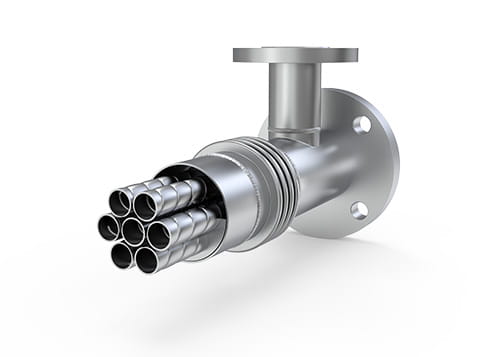
Corrosion Performance
316L Stainless
- Resists Pitting in Brines
- Good in Organic Acids
- Suitable for CIP/SIP
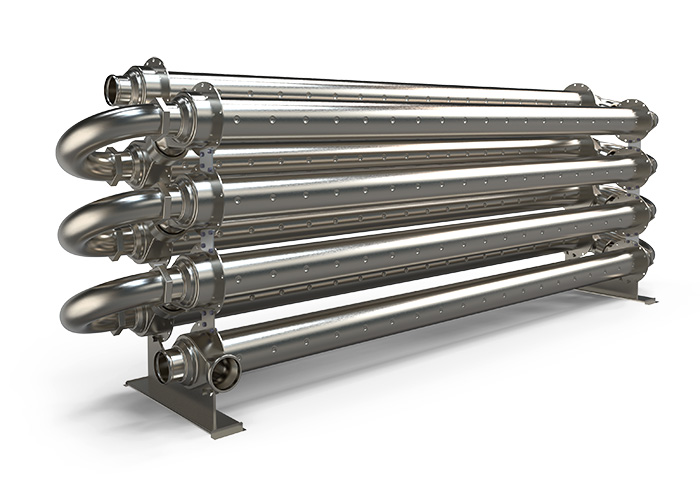
The Benefits of 316L Stainless Steel in Tube-in-Tube Heat Exchangers
316L stainless steel delivers balanced corrosion resistance and cost in tube-in-tube designs. Molybdenum improves performance in chloride-containing fluids, extending service life over 304L in many applications.
Low carbon ensures resistance to sensitization during welding or thermal cycling. Excellent cleanability and polishability meet stringent hygienic requirements in pharma and food.
Pairs effectively with counterflow for high thermal efficiency in clean or moderately fouling services. Robust against common process chemicals and sanitizing agents.
Cost-effective upgrade from 304L with broader applicability; readily available in sanitary tubing sizes. Maintains pressure ratings with standard wall thicknesses.
Proven in pharmaceutical WFI loops, dairy brine systems, seawater heat recovery, chemical dilution lines, and coastal HVAC — providing durability, sanitary compliance, and economical operation.