
1-805-484-2992
Quotes - Engineering - SalesA sound grade when the product is salt-free
18 percent chromium, 8 percent nickel, no molybdenum
304L is the classic 18-8 austenitic stainless: about 18 percent chromium and 8 percent nickel, with carbon held low so welded joints keep their corrosion resistance. It forms tube, ferrules and U-bends easily, polishes to a sanitary finish and costs less than 316L. On a tube-in-tube it is offered as the alternative to the 316L standard on sanitary units, and it is a common jacket material when the annulus carries steam, hot water or glycol.
It is a sound choice where chlorides are low and stay low: sugar syrups, plain fruit and vegetable purees without added salt, many juices, unsalted dairy mixes, hot water heating and condensate. In those duties the molybdenum in 316L buys little. Purchasing teams like 304L for the saving; plant engineers should weigh that saving against every recipe the line will run over its life, not only the first product on the schedule.
Without molybdenum, 304L has noticeably less resistance to chloride pitting and crevice corrosion. Salt, brine, vinegar-and-salt sauces, chloride-bearing well water and heavy use of chlorinated sanitizers all expose that gap. That is the main reason most food duties still specify 316L even where the first product would be fine on 304L: the price difference on the product tube is small next to replacing an exchanger after a recipe change.
Request a Quote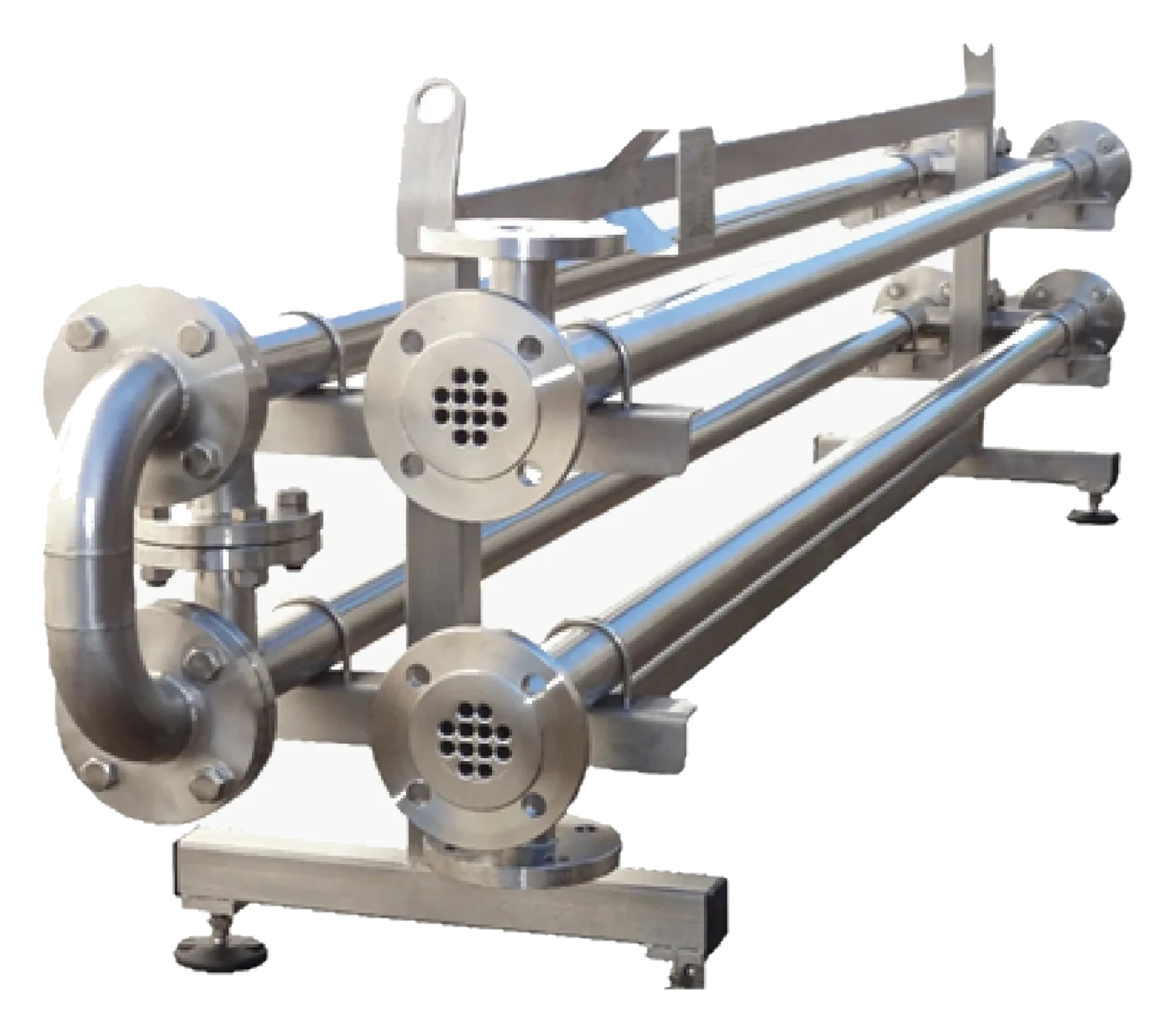
Chromium and nickel, no molybdenumThe 18 percent chromium and 8 percent nickel give 304L sound general corrosion resistance; the missing molybdenum is why chlorides find it first.
304L at a glance
Properties and typical limits of 304L product and jacket tubes on a tube-in-tube. Treat the chloride line as a warning sign, not a number to design to.
| Property | Detail |
| Composition | About 18% chromium, 8% nickel, low carbon, no molybdenum |
| PREN | Roughly 18 to 20, the lowest rung of the stainless ladder |
| Sanitary finish | Polished or electropolished, the same options as 316L |
| Good duties | Low-chloride foods, sugar syrups, hot water, condensate, glycol |
| Poor duties | Salt brines, salted sauces, seawater, hot chloride streams |
| Welding | Low carbon resists sensitization at tube and ferrule welds |
| Common role | Product tube on salt-free duties; jacket on many sanitary units |
Duties where 304L is fine
Choose 304L when the product, and everything else that touches it, stays low in chloride for the life of the line. A dedicated syrup heater, a hot water section heating a plain puree, a jacket carrying steam condensate: none of them stresses the grade. The CIP program matters too, and standard caustic washes with nitric or phosphoric acid rinses at normal strength are well within its capability.
- Sugar syrups, honey and liquid sugar
- Unsalted fruit and vegetable purees
- Hot water, steam and glycol on the annulus side
- Dedicated lines with a fixed recipe
Duties where it is not
Avoid 304L where salt is part of the product or the cleaning. Brines pit it at temperature, salted and acidified sauces attack welds and crevices, and hard or chlorinated water drying on a hot surface concentrates chloride under the deposit. Pitting in a product tube often shows first as a pinhole leak into the annulus, which on a sanitary unit is also a contamination path between product and utility.
- Pickle, olive and cheese brines
- Ketchup, mustard and vinegar-salt dressings
- Seawater or brackish cooling water
- Long or hot chlorinated sanitizer exposure
Deciding between 304L and 316L
Why most food plants pay for 316L
The saving is real but small. On a sanitary tube-in-tube, the alloy premium on the product tube is a modest share of the total price, because fittings, polishing, welding, inspection and documentation cost much the same in either grade. Against that, a plant that later adds a salted product, switches to a chlorinated sanitizer or changes its water source can turn a 304L unit into a leaking one. Many engineers simply standardize on 316L for every product-contact surface and keep 304L for duties that will never change.
Using 304L where it makes sense
There are good places for the grade. The jacket of a sanitary unit carrying steam, hot water or glycol is the most common, and it holds cost down without touching the product. Industrial utility duties such as condensate, demineralized water and clean glycol loops are another. Dedicated lines - a syrup room, or a juice plant that will never handle brine - can use 304L product tubes, with a clear record kept of why the choice was made.
What to tell us
To judge 304L properly we need the chloride content of the product, the CIP and sanitizer chemistry with concentrations and temperatures, the water used for rinsing and on the service side, and the maximum wall temperture. If any of those are unknown, we will size on 316L and show the 304L option with its limits stated, so the decision is made with eyes open.
Call and talk it through with an engineer: 1-805-484-2992
Is 304L enough here?
For most clear and pulpy fruit juices without added salt, yes; their organic acids are mild for austenitic stainless. Watch for juices blended with vegetable components, added salt or high-chloride process water. If the same line will also run tomato or vegetable juice with salt, specify 316L for the product tube from the start rather than after the first pinhole.
Sanitary standards accept 300-series stainless for product-contact surfaces, and 304L is used on many sanitary units. Acceptance is not the issue; suitability for the product is. A unit that meets every sanitary design rule can still pit if the grade does not suit the chemistry, so the grade is chosen on the product and the cleaning program, not on the standard alone.
Usually, and it is a common pairing. Steam, hot water, chilled water and glycol are low in chloride and kind to 304L, so the jacket can be the lower-cost grade with no risk to the product. Check the service water, though: brackish or heavily chlorinated cooling water, or a glycol that has degraded and turned acidic, can attack a 304L jacket.
Related
Heat Exchangers
2205 Duplex
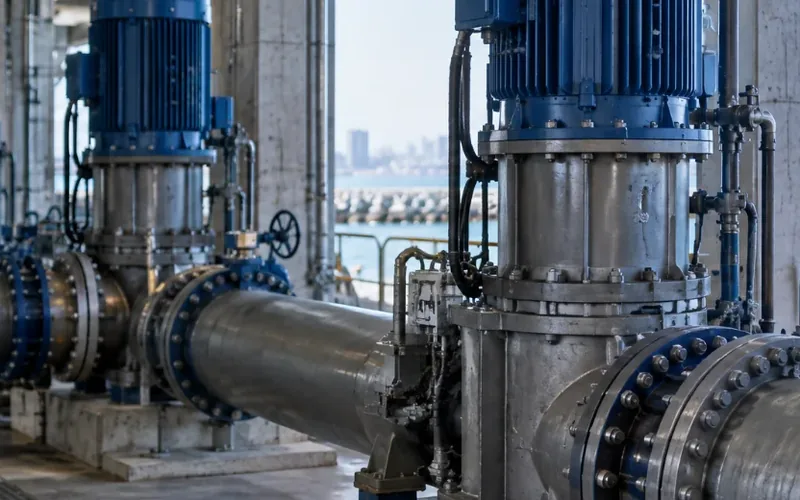
2205 duplex tube-in-tube heat exchangers: about twice the yield strength of 316L and strong chloride cracking resistance for brines and produced water.
+ Learn More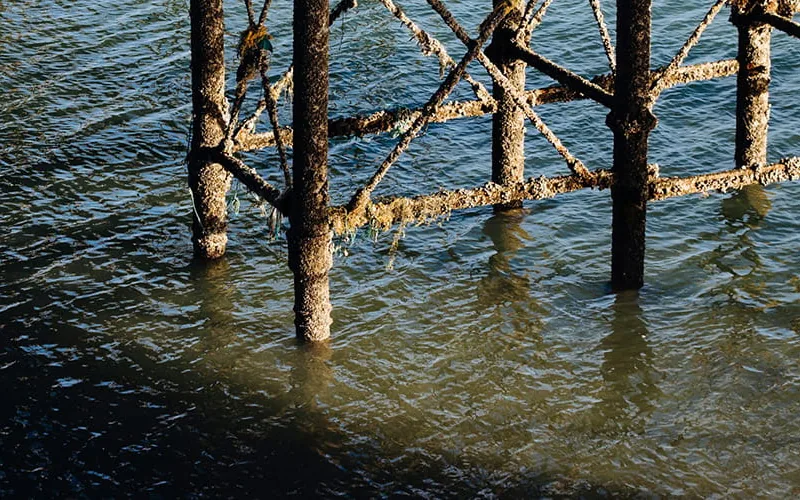
Heat Exchangers
AL-6XN
AL-6XN super-austenitic tube-in-tube heat exchangers for seawater, high-chloride brines and acidic chloride streams, and when titanium is the better pick.
+ Learn More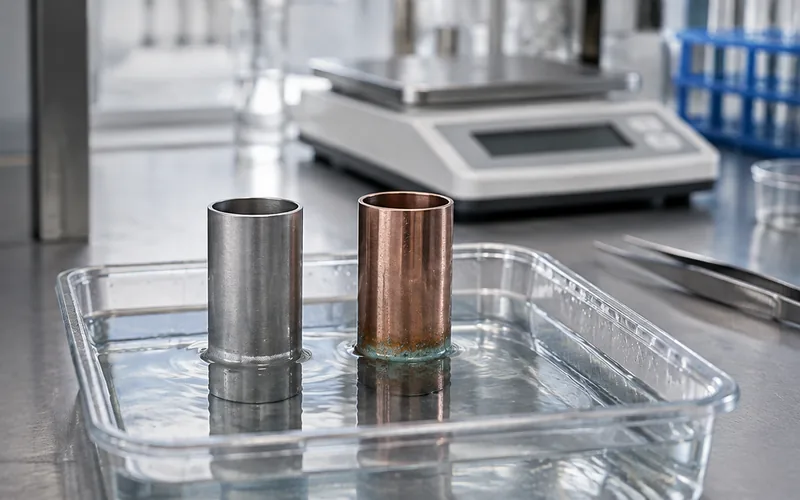
Heat Exchangers
Titanium
Titanium tube-in-tube heat exchangers for seawater, chloride brines, wet chlorine and oxidizing acids - and the reducing acids and fluorides to avoid.
+ Learn More