
1-805-484-2992
Quotes - Engineering - SalesSame axis, two channels, one decision
Concentric, coaxial, tube-in-tube and double pipe all describe one geometry: two channels sharing a centerline, a round one inside and an annular one around it. The names drift by industry. Process engineers tend to say concentric or tube-in-tube, equipment catalogs often say coaxial, and pipe-size industrial units are called double pipe. What matters for your duty is not the name but which of the two channels carries the product, and how that channel is sized.
Most units put the product in the inner tube, because a round bore passes pieces and is simple to clean. The annulus is the better product path in a narrower set of cases: a shear-sensitive product that should see a wide, gentle channel rather than a fast core; a product flowing at a far higher rate than the service fluid, where the larger annular area keeps velocity down; or a clean, high-pressure service fluid that is better contained in the small inner tube.
The catch with an annular product path is the gap. An annulus is narrow in one direction even when its flow area is large, so a particle that fits the inner tube may not fit the gap. Annular flow also has two walls, and usually only one transfers heat, so the film coefficient depends on the ratio of the two diameters. Both points are settled during sizing, before the side is fixed.
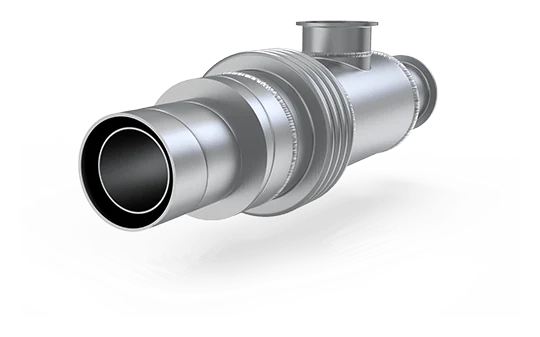
Every concentric unit starts with one question - which channel carries the product, and does its narrowest dimension pass what the product carries?
Inner tube for pieces, annulus for gentle or high-flow duty
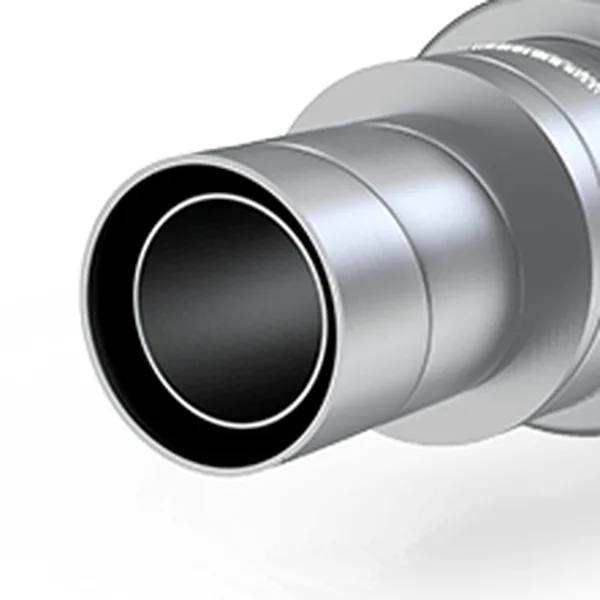
Product in the inner tube
- Round bore passes the largest pieces
- Simple to inspect and clean in place
- Service fluid surrounds the product
- First choice for particulates and fibers
- Small diameter holds pressure with thin wall
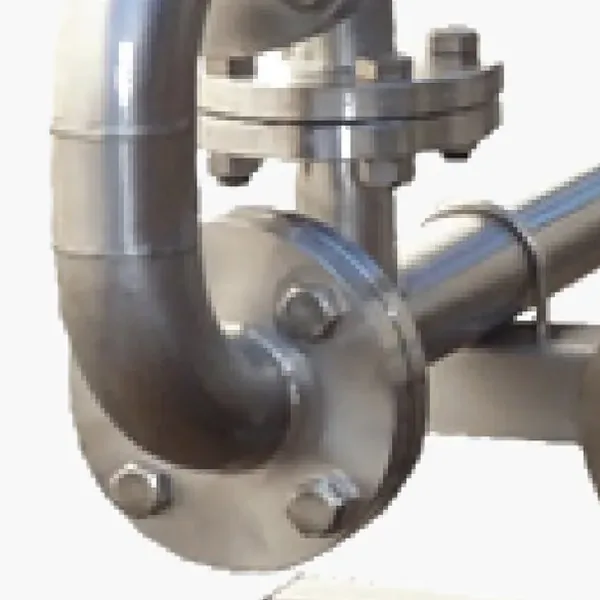
Product in the annulus
- Wide, slow channel for shear-sensitive product
- Lower velocity for a high product flow
- Clean service fluid contained in the center
- Gap checked against the largest particle
- Film coefficient set by the diameter ratio
Choose Per Duty




Sizing points for a concentric unit
The geometry is defined by two diameters and a length. These are the quantities we work through on every concentric design, whichever channel carries the product.
| Sizing point | Detail |
| Inner diameter | Sets velocity and pressure drop in the center channel |
| Annular gap | Half the difference between jacket bore and inner tube outside diameter |
| Diameter ratio | Governs the annulus film coefficient |
| Hydraulic diameter | Four times flow area over wetted perimeter, for the annulus Reynolds number |
| Product side | Inner tube for pieces; annulus for gentle, high-flow or clean duties |
| Flow direction | True counterflow for the closest approach and a temperature cross |
| Connections | Tri-clamp in sanitary builds; flanged or threaded in industrial |
| Length | Built up in sections to meet the duty within allowable pressure drop |
Choosing the product side
Sizing the annular gap
The gap is half the difference between the jacket bore and the outside diameter of the inner tube. For the Reynolds number and pressure drop the figure that matters is the hydraulic diameter, four times the flow area divided by the wetted perimeter, which for an annulus works out to the jacket bore minus the inner tube's outside diameter. A narrow gap raises velocity and film coefficient; a wide one lowers pressure drop and passes larger particles. With product in the annulus, we start from the largest particle and the allowable pressure drop and accept the heat transfer that results.
When the annulus should carry the product
Three duties point that way. A shear-sensitive product, such as an emulsion that can break or a live culture that should not be worked hard, travels more gently through a wide annular channel than through a narrow, fast core. A product flowing at many times the service rate fits the larger annular area without excessive velocity. And when the service fluid is the high-pressure stream, containing it in the small inner tube keeps the wall thin. Outside these cases the inner tube is the default.
Keeping the tubes concentric
An annulus behaves as designed only while the inner tube stays on the jacket's centerline. If it sags or bows, the gap opens on one side and closes on the other; flow favors the wide side, the narrow side runs slow, and a product in the annulus fouls or overheats there. Long runs therefore need the inner tube supported at intervals, and the supports must be shaped so they do not trap product or fiber. Differential thermal growth between the tubes is allowed for at the same time.
- An uneven gap means uneven velocity around the annulus
- Slow zones foul first and clean last
- Supports must not snag fibers in the product path
- Differential growth is absorbed at the returns
Coaxial and concentric questions
No. Coaxial and concentric both mean two tubes sharing one axis, and tube-in-tube is the same thing again. The words differ by industry, not by design. What changes from one unit to the next is the diameters, the materials, the connections and which channel carries the product, and those are what we size.
Not inherently, but an annulus has more places where velocity can drop, especially if the inner tube runs off center. A sticky or fouling product placed there needs a gap and velocity chosen to keep the whole cross-section moving. For heavily fouling streams the inner tube is usually the better side, because it can be rodded clean.
Use the hydraulic diameter, which for an annulus is the jacket bore minus the outside diameter of the inner tube, together with the velocity in the annular flow area and the fluid's viscosity at temperture. Below about 2,100 the flow is laminar. Many viscous products in an annulus stay laminar, which is why their film coefficient is low.
Swapping which fluid runs where is possible in principle, since both channels are continuous, but the unit was sized, rated and finished for one arrangement. The product side carries the sanitary finish or the corrosion-resistant alloy, and the pressure rating may differ between channels. Decide the product side at inquiry rather than in the field.
It can, and electropolished 316L with a drainable layout suits high-purity work. But for a clean, thin fluid at low pressure a plate exchanger often does the job for less money. The concentric geometry pays off when the fluid adds a difficulty: high pressure, a close temperature cross, a need for zero gaskets in the product path, or solids.
Related

Heat Exchangers
Ultra-Coil
Ultra-Coil coiled tube-in-tube heat exchangers: close temperature approach and low hold-up volume in a compact footprint for skids and point-of-use duty.
+ Learn More
Heat Exchangers
Tubular vs Plate & Shell
Difference between plate and tubular heat exchangers, and shell-and-tube: viscosity, particles, fouling, pressure, cleaning, footprint and cost compared.
+ Learn More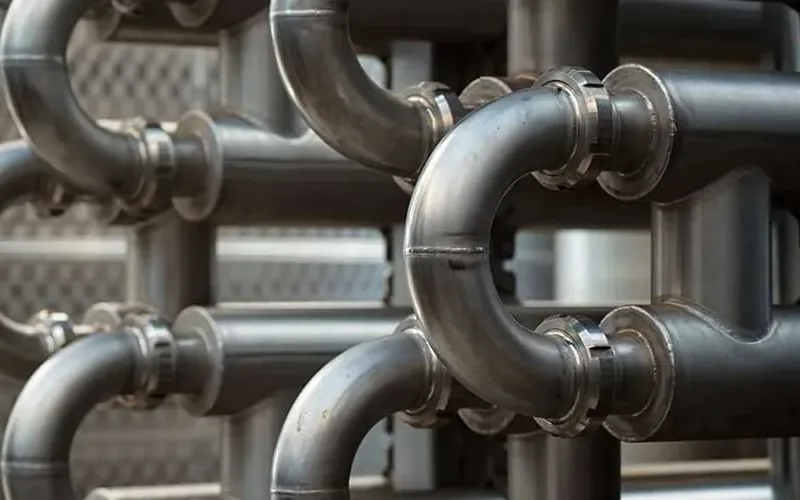
Heat Exchangers
Tube-in-Tube
Tube in tube heat exchanger with one full-bore product tube in a jacket, so pieces and fibers pass intact. Sanitary or industrial builds, sized to duty.
+ Learn More
