
1-805-484-2992
Quotes - Engineering - SalesConcentration and temperature choose the metal
Strong process chemicals are predictable in one useful way: their corrosion behavior is well mapped. Sulfuric acid, hydrochloric acid, caustic soda, sodium hypochlorite and chlorine dioxide each have a known envelope of concentration and temperature inside which a given alloy survives. The design work is placing your duty on that map honestly, including start-up, upsets and the dilution step where the chemistry is at its most aggressive. A tube-in-tube lets the alloy budget go only to the tube that touches the chemical.
Chemical and pulp plants run these streams through heating and cooling loops everywhere: acid cooling after dilution or absorption, caustic heating for cleaning and extraction stages, and bleach-plant chemistry that must be held at a set temperature to react on time. Flows are often small to moderate and pressures can be high, which is territory a double pipe or tube-in-tube has served for a long time. Round tubes carry pressure efficiently, and a welded product side keeps a hazardous chemical away from gaskets.
This page covers the corrosion side of those duties: which metal survives which chemical, and how the exchanger is laid out so a leak is found before it matters. Hot black, green and white liquor in the recovery cycle, where temperature and scaling dominate rather than chemistry, has its own page in the high-temperature section.
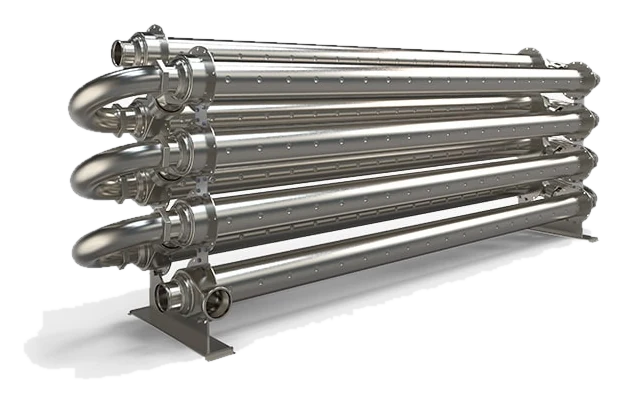
Welded tube-in-tube
- Chemical contained by welds, not elastomer seals
- Alloy or titanium on the wetted tube only
- Heavy wall leaves a margin for slow general attack
Gasketed plate
- Every plate gasket is a potential acid leak path
- Hot caustic and oxidizers shorten gasket life
- Thin plates carry little corrosion allowance
Chemical service and the usual starting alloy
A first pass at material selection by chemical. Final selection depends on exact concentration, temperature, impurities and velocity, which is why we ask for all four before quoting.
| Chemical | Detail |
| Dilute sulfuric acid | Aggressive to ordinary stainless; AL-6XN or high-nickel alloys depending on strength and temperature |
| Strong sulfuric acid | Carbon steel only when cold and slow; a cooler needs alloy chosen for temperature and velocity |
| Hydrochloric acid | Attacks stainless at almost any strength, and titanium when hot; nickel-molybdenum alloys for most duties |
| Caustic soda | Stainless at moderate temperature; nickel alloys for hot, concentrated caustic |
| Sodium hypochlorite | Titanium; stainless pits quickly in it |
| Chlorine dioxide | Titanium is the common choice in bleach-plant service |
| Wet chlorine | Titanium, provided it stays wet; dry chlorine attacks titanium |
| Service side | Steam, hot water, cooling or chilled water in a carbon steel or stainless jacket |
Acid cooling
Diluting a strong acid, or absorbing a gas into it, releases heat, and the acid comes out hotter and more corrosive than either feed. Cooling it immediately in counterflow against tower or chilled water pulls the temperature back into the range where the chosen alloy is comfortable. The hot inlet is the critical spot, so the first section can be specified in a higher alloy than the sections that follow it.
- Sulfuric acid after dilution
- Hydrochloric acid leaving absorbers
- Pickling acid make-up and recovery
- Acid recirculation loops held at temperature
Caustic and bleach heating
Caustic extraction, caustic cleaning and bleaching stages run hot so they react on time. Steam in the annulus is the usual heat source, but the wall must not run so hot that caustic concentrates against it, and carbon steel that sees hot caustic under stress can crack. Oxidizing bleach chemistry such as chlorine dioxide or hypochlorite moves the inner tube to titanium.
- Caustic soda for extraction stages
- Hot caustic for cleaning circuits
- Chlorine dioxide and hypochlorite solutions
Corrosion rules for acid and bleach duties
Oxidizing or reducing changes everything
Titanium and stainless both depend on an oxide film. Oxidizing chemicals such as chlorine dioxide, hypochlorite, wet chlorine and nitric acid keep that film healthy, which is why titanium is close to immune in bleach-plant service. Reducing acids, hot hydrochloric and mid-strength sulfuric among them, strip the film instead, and the same titanium tube can corrode quickly. Nickel-molybdenum alloys are made for that reducing side. Knowing which side of the line your stream sits on, including during upsets, is the first question on every acid duty.
Temperature at the wall, not in the bulk
Corrosion rate follows metal temperature, and on a heating duty the wall runs hotter than the bulk fluid. A caustic stream at 180 F in the bulk can see a wall well above that next to condensing steam. Hot water or tempered steam in the annulus keeps the wall closer to the product temperature. On cooling duties the reverse happens: a cold wall can drop a dissolved salt out of solution or condense an acid gas against the metal. We check both the bulk and the wall against the alloy's limits.
Leaks you find before they matter
A leak between a corrosive chemical and the service water must be caught before it contaminates the utility loop. On welded tube-in-tube designs the product tube is the only barrier, so monitoring the service side - conductivity or pH on the return water - is cheap insurance. A hydrostatic test at planned shutdowns confirms the inner tube is still sound, and straight sections with flanged ends can be inspected or replaced one at a time rather than retubing a bundle. Send the chemical, its strength and its temperature, and we will size the unit and name the alloy.
Call and talk it through with an engineer: 1-805-484-2992
Acid and bleach service questions
Chlorine dioxide is a strong oxidizer, and titanium's oxide film thrives in oxidizing conditions, so the tube resists both general attack and chloride pitting in bleach-plant service where stainless pits through. The caution is the opposite chemistry: hot reducing acids and fluorides attack titanium, and dry chlorine gas reacts with it. Confirm the stream stays wet and oxidizing before you specify it.
At low temperature and moderate concentration it often can. As caustic gets hotter and stronger, stressed carbon steel becomes prone to caustic cracking, so welds need stress relief or the tube moves to stainless or a nickel alloy. Send the concentration and the maximum metal temperature, including the effect of the steam side, and we will tell you where your duty sits.
In the tube, nearly always. The inner tube is then the only part that needs the expensive alloy, it is the easiest surface to inspect, and any leak goes in to the utility side where it can be detected. Putting acid in the annulus would make the jacket alloy as well and roughly double the metal that has to resist the chemical.
Related
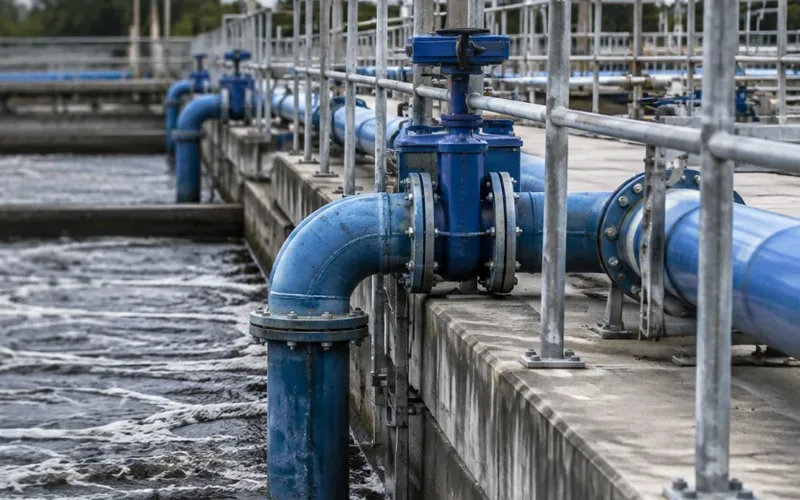
Industrial
Digester Sludge & Biomass
Tube-in-tube sludge heat exchangers for anaerobic digesters, biomass and fermentation broths: hold mesophilic or thermophilic temperature without caking.
+ Learn More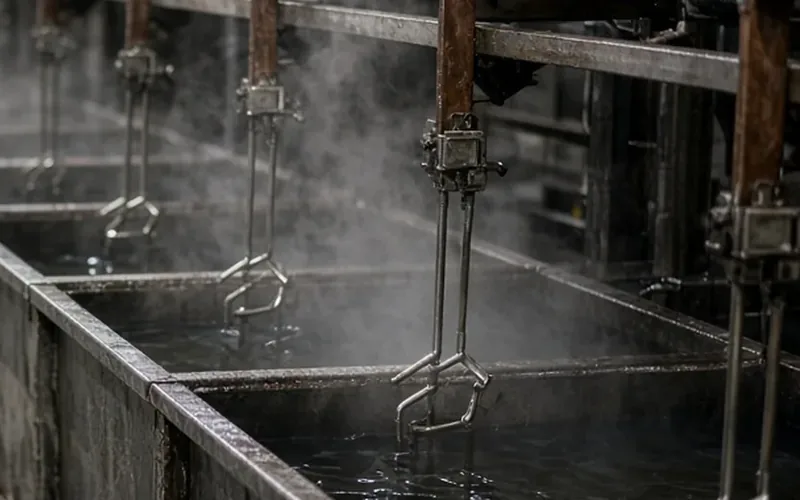
Industrial
Acidic Effluent
Tube-in-tube heat exchangers for acidic and caustic effluent: cooling or heating low-pH wastewater with chlorides and solids in duplex, AL-6XN or titanium.
+ Learn More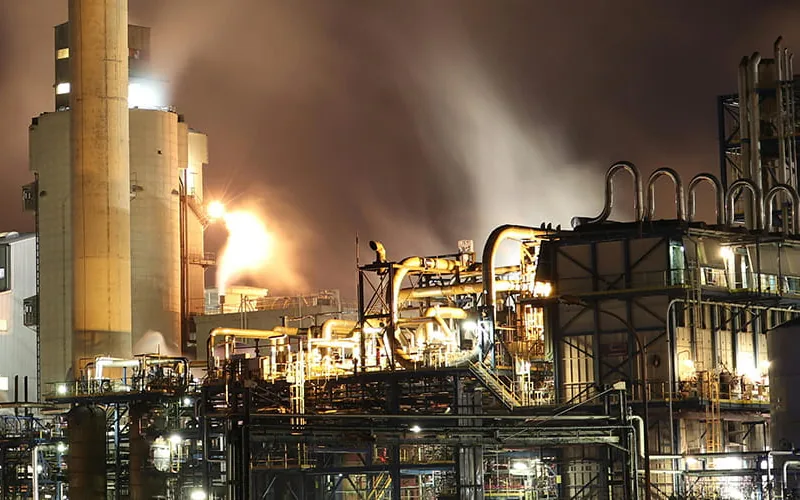
Industrial
Corrosive & Abrasive
Tube-in-tube heat exchangers for corrosive and abrasive fluids: match the alloy to the chemistry, design against erosion and keep acids away from gaskets.
+ Learn More
