
1-805-484-2992
Quotes - Engineering - SalesWaste Streams with Tube-in-Tube Heat Exchangers
Tube-in-tube heat exchangers are built for challenging waste streams containing high dry solids, fibers, rags, grit, and variable rheology. Large unobstructed passages prevent plugging and bridging, while robust construction withstands abrasion, corrosion, and thermal cycling in wastewater, sludge, and effluent applications.
Typical Waste Stream Applications
- Municipal Wastewater: Sludge heating for anaerobic digestion, pasteurization of biosolids, and pre-dewatering temperature control.
- Industrial Effluents: Cooling/heating of high-BOD/COD streams, chemical waste, food processing wastewater, and pulp/paper black liquor.
- Anaerobic Digestate: Post-digestion cooling, heat recovery, and pasteurization of digestate before land application or dewatering.
- Septage & Grease: Thermal treatment of septage, FOG (fats, oils, grease) emulsions, and high-viscosity waste streams.
- Landfill Leachate: Heating/cooling of leachate for ammonia stripping, evaporation, or biological treatment optimization.
- Other: Mining tailings water, oilfield produced water, and industrial sludge with fibers or grit.
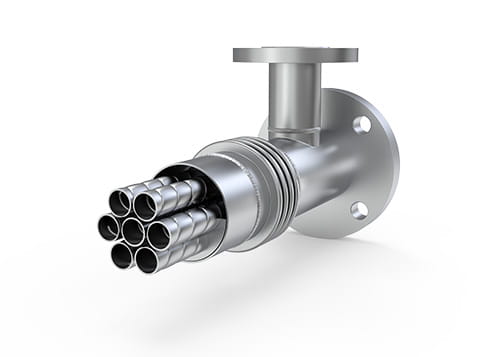
Wastewater Duty
Tube-in-Tube Heat Exchangers
- Fiber & Rag Resistant Design
- High Solids Handling
- Full Mechanical Cleaning Access
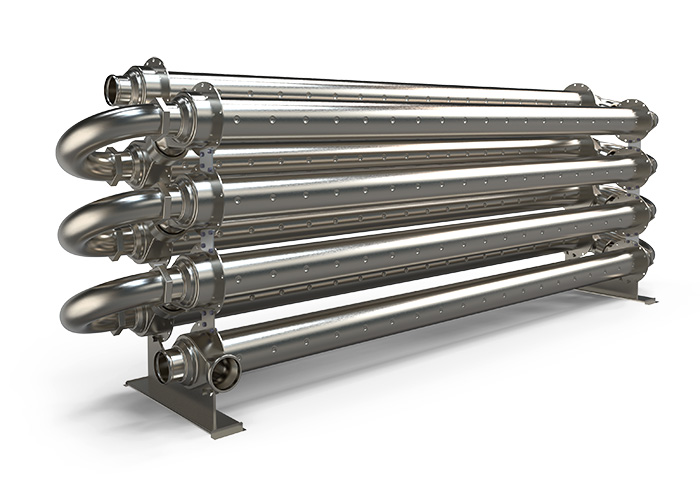
Heavy Duty Sludge
Tube-in-Tube Heat Exchangers
- Abrasion & Corrosion Resistant
- Thick-Wall Construction
- Easy Tube Replacement
Advantages for Waste Streams
Tube-in-tube heat exchangers handle waste streams reliably due to wide, straight-through passages that resist plugging from rags, fibers, hair, grit, and high dry solids — far superior to plate or shell-and-tube designs prone to fouling and blockage.
Low shear preserves floc structure in sludge; controlled velocity prevents settling while enabling effective heat transfer. True counterflow maximizes efficiency for sludge heating (digestion optimization) and cooling (post-pasteurization or dewatering).
Robust materials — 316L, duplex, super duplex, or lined options — resist corrosion from acidic effluents and abrasion from grit/sand. Thick-wall tubing withstands pressure surges and thermal shock common in waste processes.
Modular layout supports easy expansion and retrofitting in treatment plants. Full mechanical cleaning access handles severe fouling; CIP effective when solids are manageable. Regeneration sections recover heat, reducing energy costs.
Proven in municipal sludge digestion, industrial wastewater, digestate pasteurization, leachate treatment, and FOG processing, these exchangers extend run times, minimize downtime, lower maintenance, and ensure consistent performance in abrasive, variable, high-solids waste applications.