
1-805-484-2992
Quotes - Engineering - SalesWhy products with pieces end up in a tube
Narrow channels and contact points are where hygienic lines lose time
A gasketed plate moves product through a narrow corrugated gap held open by many small contact points. Milk and clear juice run through it well. Put orange pulp, diced carrot or strands of mango fiber into the same gap and they catch on those points, build a mat, and pressure drop climbs until the line stops for an early clean. A full-bore round tube offers nothing for them to catch on, so the run ends when the wall fouls, not when the channel plugs.
Hygienic processing adds a second test: the product path must be cleaned without being opened, and it must drain dry. A tube-in-tube passes both by its shape. The bore is one smooth channel from inlet clamp to outlet clamp, the U-bend returns are swept by cleaning flow, and a bank pitched toward its drain empties with the pump off, so no product or rinse water stands in a pocket overnight.
This section covers the sanitary lines where those two tests decide the equipment: cultured dairy and desserts, soups and prepared foods with pieces, fruit and vegetable products, pulpy beverages and low-acid foods for aseptic filling, plus a page on the particle question that runs through every one of them.
Request a Quote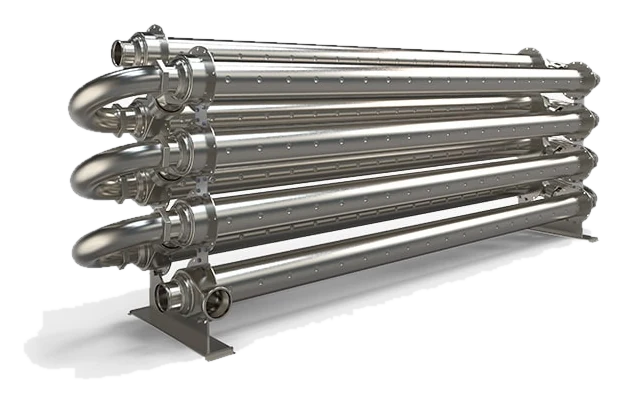
Construction in which every product-contact surface is smooth, drains completely and is reached by cleaning solution in place, so residue and microorganisms have no sheltered spot to survive between runs.
Hygienic lines and where each one starts
Each line below has its own page covering the products, the design choices and the questions buyers on that line raise before they specify a unit.
| APPLICATION | TYPICAL PRODUCTS | WHAT DECIDES THE DESIGN |
| Dairy | Stirred yogurt, puddings, concentrates | Shear on a broken curd, viscosity build in starch desserts and burn-on of high-solids milk products |
| Soups and prepared foods | Chili, stews, ready meals | Keeping vegetable, bean and meat pieces whole while the gravy is cooked, held and cooled quickly |
| Foods with solids | Any recipe carrying pieces | Largest piece against the bore, solids fraction, settling and heat reaching the center of a piece |
| Fruit and vegetable | Purees, tomato, fruit preparations | Fiber and pulp load, acidity and the hot-break or cold-break temperature profile |
| Beverages | Pulpy juice, smoothies, oat drinks | Juice sacs and fiber that a plate would trap, plus hot-fill heating and cooling |
| Aseptic and UHT products | Low-acid foods with particulates | Sterilizing temperature, back pressure against boiling and a product side that is steamed in place |
Three ways a hygienic line fails, and the tube answer
Plugging. The first failure is mechanical. A product carrying pieces larger than the narrowest gap in the exchanger will eventually lodge, and in a plate pack that gap is small. The cure is not a bigger pump; it is a channel sized to the piece. A single full-bore tube passes pieces up to a large fraction of its diameter, while a multi-tube bundle suits fine pulp and small particles that will never bridge its smaller bores.
Burn-on. The second failure is thermal. Starch, protein and sugar stick to a wall that runs much hotter than the bulk product, and the deposit insulates the wall and changes the flavor and color of what passes it. Counterflow lets the heating medium run only a modest margin above the product along the whole length, and hot water in the jacket instead of direct steam keeps that margin small on sensitive recipes. Velocity in the bore scours a film before it hardens.
An incomplete clean. The third failure is the one an auditor finds. Gasket grooves, threaded fittings, dead legs and level runs that hold a puddle are where residue survives CIP. A welded tube bank with its clamp joints at the ends has none of those inside the product path, and because the bore is uniform, the cleaning velocity that reaches the first tube also reaches the last.
Call and talk it through with an engineer: 1-805-484-2992
Sanitary materials and finishes
316L is the default product-contact material in this section because its molybdenum content resists the pitting that salt, acidic sauces and chlorinated sanitizers cause. 304L costs less and suits low-salt, low-chloride products such as many dairy desserts. Electropolishing lowers surface roughness beyond a mechanical polish and helps on sticky, sugary or high-protein products that would otherwise cling to the wall between cleaning cycles.
Utilities on the jacket side
Hot water is the usual heating medium for protein and starch products because its temperature is easy to hold close to the product. Steam heats faster and suits robust products or the final stage of a high-temperature line. Cooling runs on tower water, chilled water or glycol, often in two stages, with the colder fluid saved for the end where the product approaches its target.
Cleaning in place
The CIP flow is set to give scouring velocity in the bore, which is usually more than the production flow. Caustic at temperature lifts protein and fat, an acid step removes mineral film, and a final rinse is checked at the outlet. Because the bank drains completely between steps, rinse water does not dilute the next chemical, and the cycle can be validated with swabs at the clamp ends.
Growing the line later
Length is the sizing variable on a tube-in-tube, so a line that needs more duty for higher flow or a thicker recipe can add sections in series, as long as the pump can supply the extra pressure drop. Where a single long bank would excede it, a second bank runs in paralell. Leaving room on the frame and in the piping costs little at the start.
Hygienic line questions
Yes, if it is sized for the largest piece and the most viscous product on the schedule. The bore is chosen for the biggest particle and the length for the hardest heat-transfer case. The usual mistake is sizing for the high-volume product and later adding a chunky seasonal recipe that the bore cannot pass without damaging pieces.
Not routinely. A welded product path is cleaned and verified in place, and inspection is usually by borescope through the clamp ends or by swabbing at the connections. Units can be built with clamped U-bend returns where a plant wants to see into every tube, at the cost of more joints to clean, inspect and maintain.
The smooth bore and complete drainage are what make allergen changeovers manageable. Product is pushed out with water, the bank is cleaned in place, and there are no gasket grooves inside the product path where a previous recipe can hide. Verify the clean with swabs at the clamp ends and testing of the final rinse before the next product starts.
Often that is the best arrangement. The plate keeps running clear, thin products where it is efficient, and a tube-in-tube takes the recipes with pulp, pieces or real viscosity that shorten the plate's runs. Both can share a CIP circuit if it is sized for the higher cleaning flow the tube bank needs.
Related
Sanitary
Dairy
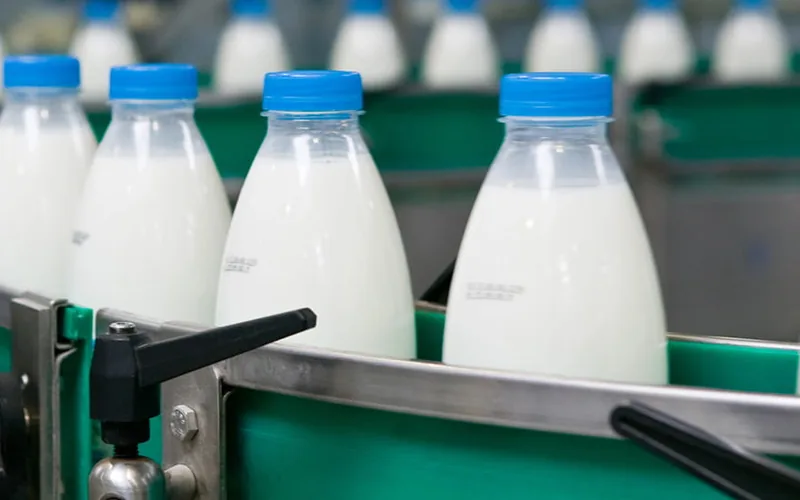
Tube-in-tube heat exchangers for dairy: stirred yogurt after the break, puddings, cheese sauce, fruit preparations and high-solids milk concentrates.
+ Learn More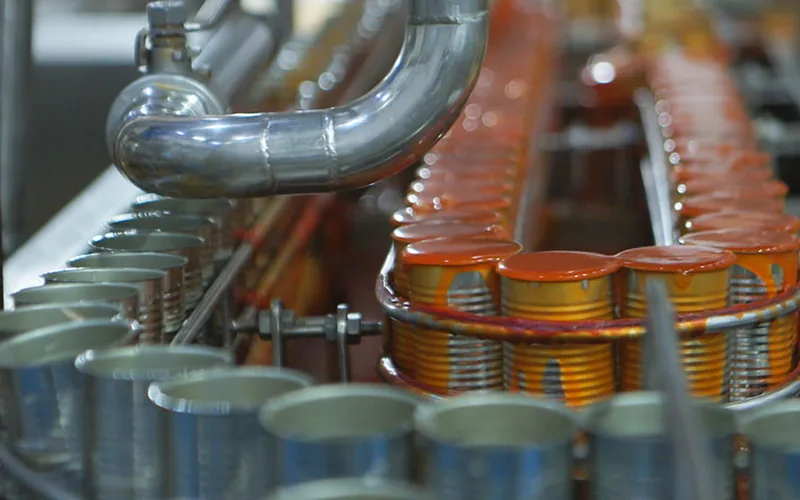
Sanitary
Soups & Prepared Foods
Prepared food heat exchangers for soups, chili, stews and ready meals with pieces: cook, hold and cool beans, vegetables and meat without breaking them.
+ Learn More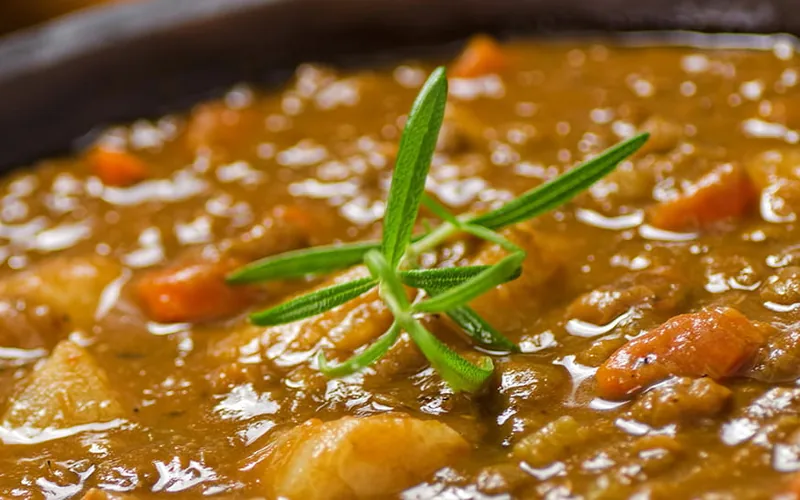
Sanitary
Foods with Solids
Heat exchangers for particulates in food: particle size against the bore, solids fraction, settling, fragile pieces and heat reaching the core of a piece.
+ Learn More
