
1-805-484-2992
Quotes - Engineering - SalesKraft liquors are hot, caustic and quick to scale
The kraft recovery cycle moves several hot liquors around a mill, and every one of them is hard on a heat exchanger. Black liquor gets thicker and stickier as it is concentrated. Green liquor carries dregs and lays down carbonate scale. White liquor is hot caustic with sulfide. Digester circulation heaters warm cooking liquor at pressure, and any fiber that slips past the screens rides along. Exchangers in this service fail by scaling, plugging or caustic cracking, rarely by running out of surface.
A tube-in-tube or double pipe heater keeps the liquor in a single full-bore inner tube with steam or hot condensate in the annulus. There are no small parallel tubes for scale to close one at a time, and no tubesheet face where fiber and dregs can collect. Sections are flanged, so a fouled leg can be opened and hydroblasted without pulling a bundle out of a crowded mill building.
The hot liquor duties are the subject here: temperature, scaling and the materials that survive them. Bleach plant chemistry, chlorine dioxide and the acid side of a mill are corrosion problems first, and they sit on the Acids, Caustics and Bleach page in the Corrosive and Abrasive menu.
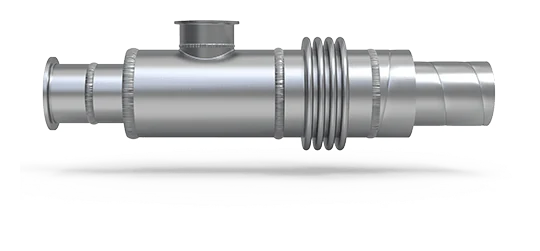
Tube-in-tube
- One liquor path, scale cannot divert flow
- Flanged legs opened and hydroblasted
- Duplex wall resists caustic cracking
Shell-and-tube
- Scale closes small tubes one by one
- Fiber and dregs build on the tubesheet
- Bundle pulled to restore duty
Liquor duty reference
Each liquor fouls and corrodes in its own way. These are the points we check first when a mill sends a heater duty.
| Liquor or item | Detail |
| Weak black liquor | Low solids from the washers; fiber carryover and soap |
| Heavy black liquor | High solids, kept hot to stay pumpable; viscosity climbs steeply |
| Green liquor | Smelt dissolved in weak wash; dregs and carbonate scale |
| White liquor | Hot sodium hydroxide and sulfide; caustic cracking risk |
| Digester circulation | Cooking liquor heated at digester pressure, fiber present |
| Heating medium | Steam or hot condensate in the annulus |
| Materials | 2205 duplex common; 304L or 316L by liquor and temperature |
| Cleaning | Hydroblasting through flanged returns, or acid or weak-liquor wash |
Scale: what forms and where
Calcium carbonate is the common scale in black liquor heaters and digester circulation heaters, and it grows fastest where the wall is hottest. At high black liquor solids, sodium salts begin to come out of solution as well. Green liquor adds its own carbonate deposits plus fine dregs that settle in slow zones. In each case a full-bore tube keeps scale from diverting flow, and velocity slows its growth.
- Limit the wall-to-liquor temperature difference
- Keep velocity up in the hottest sections
- Plan cleaning on rising pressure drop
Metal for hot caustic liquors
Carbon steel served liquor heaters for decades, but hot, strong caustic can crack it at stressed welds and its corrosion allowance is consumed faster as temperature rises. Austenitic stainless resists general corrosion better but can crack in hot caustic with chlorides present. 2205 duplex has become the common choice for hot liquor service: it resists caustic cracking and its strength allows a thinner wall at digester pressure.
- 2205 duplex for white liquor and digester heaters
- 316L or 304L on cooler, weaker liquors
- Carbon steel jacket on the steam side
- Stress relief where carbon steel stays in caustic
Liquor heater design in practice
Black liquor viscosity and temperature
Black liquor is a viscous fluid that pretends to be water at low solids. Weak liquor from the washers flows easily; after the evaporators, heavy black liquor is so thick at ambient that mills keep it hot, often above its atmospheric boiling point, just to pump it. Its viscosity rises steeply with solids and falls quickly with temperature, so a heater sized on a single viscosity figure is almost always wrong at one end. Measured data across the solids and temperature range is worth having before the bank length is fixed.
Digester circulation heating
Circulation heaters lift cooking liquor to cooking temperature with medium-pressure steam, at digester pressure on the liquor side. Fiber carried in the circulation flow and calcium carbonate scale are the main threats, and both are worse in a heater with many small parallel tubes. A tube-in-tube heater has a single liquor path that fiber cannot hang up in, and its flanged returns allow a section to be hydroblasted during a short outage. Pressure on both sides puts the unit firmly in ASME Section VIII territory, with National Board registration where the mill's jurisdiction requires it.
Cleaning cycles and sizing data
Liquor heaters are cleaned by acid wash, by circulating hot weak liquor or water to soften deposits, or by hydroblasting through the opened returns. Design the piping for whichever method the mill already uses. To size a heater, send liquor type and solids range, flow, inlet and outlet temperatures, steam pressure, liquor-side design pressure and the material your mill specifies for that liquor today.
Call and talk it through with an engineer: 1-805-484-2992
Liquor heater questions
Because scale or fiber closes the small tubes unevenly. Once a few tubes restrict, flow shifts to the open ones, the restricted tubes run slower and hotter at the wall, and they scale faster still until they plug. Duty falls in steps. A single-path tube-in-tube heater cannot divert flow that way, so scale grows evenly and slowly and pressure drop warns you early.
Steam is usual because the mill has it and it heats quickly, but steam at high pressure drives a hot wall and faster carbonate scaling. Lower-pressure steam, or hot condensate, keeps the wall-to-liquor difference smaller and extends the run between cleanings. The right choice weighs the surface added by a smaller temperature difference against the downtime saved.
In most mills, yes. Weak black liquor and digester circulation flows carry fiber that slips past the screens, especially during upsets. A full-bore inner tube with smooth returns passes it, while tubesheet faces and baffles in a bundle collect it. Tell us how much fiber your screens let through on a bad day, not just on a normal one.
On cooler, weaker liquors carbon steel can still make sense with a corrosion allowance and stress-relieved welds. On hot white liquor and digester circulation duties, caustic cracking and faster corrosion usually make duplex the lower lifetime cost. We can quote both so the mill compares the price difference with the expected replacement interval for its own liquor.
Digester circulation and heavy black liquor duties run hot enough that the liquor side is pressurized to stay liquid, and the steam side is at medium pressure. The wall is therefore designed at a high metal temperature on both sides, which sets wall thickness, flange class and allowable stress. Send the mill's actual design temperatures and we size to those, not to a generic figure.
Related
Industrial
Resins & Heavy Viscous
Tube-in-tube heat exchangers for resins, adhesives, inks, greases and bitumen emulsions: heating to pump, thermal oil service and laminar-flow sizing.
+ Learn More
Industrial
Oil & Gas
Tube-in-tube and double pipe heat exchangers for produced water, crude preheat, amine and glycol loops and condensate, in carbon steel to 2205 duplex.
+ Learn More
Industrial
Hot Effluent Heat Recovery
Recover heat from hot, dirty effluent to preheat clean water: tube-in-tube heat recovery exchangers with a cleanable dirty side and true counterflow.
+ Learn More