
1-805-484-2992
Quotes - Engineering - SalesPipe-size strength for high-pressure duties
A double pipe exchanger is the concentric geometry built from pipe rather than tube. One pipe runs inside another, the ends are flanged or threaded, and straight legs are usually joined in pairs by a return bend into what the trade calls a hairpin. Hairpins stack and connect in series or parallel to build the surface a duty needs. It is the industrial form of the design and has long been the standard answer for small-to-medium duties at high pressure.
Round pipe carries internal pressure efficiently, so wall thickness stays reasonable where a flat plate or a large shell would need heavy construction. That is why double pipe is chosen for process fluids at 1500 psi and beyond, for hot oils and heat transfer fluids above 600 F, and for streams that are dirty, corrosive or both. Material runs from carbon steel through 316L, 2205 duplex, AL-6XN, titanium and high-nickel alloys, chosen separately for each side.
The limits are scale and footprint. Each hairpin adds a modest amount of surface, so a very large clean duty turns into a long stack of pipe where a shell-and-tube would cost less. Double pipe earns its place when pressure, fouling, a temperature cross or a small flow rate make a large shell awkward.
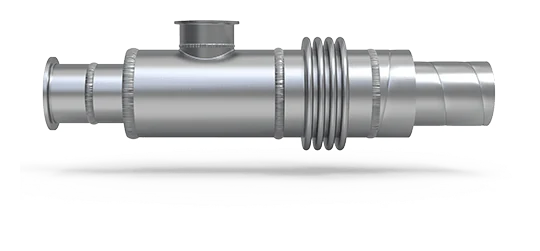
When pressure climbs past what a gasketed plate will hold, round pipe carries it with a wall you can still weld, inspect and afford.
Flanged, threaded or welded; carbon steel through high alloys
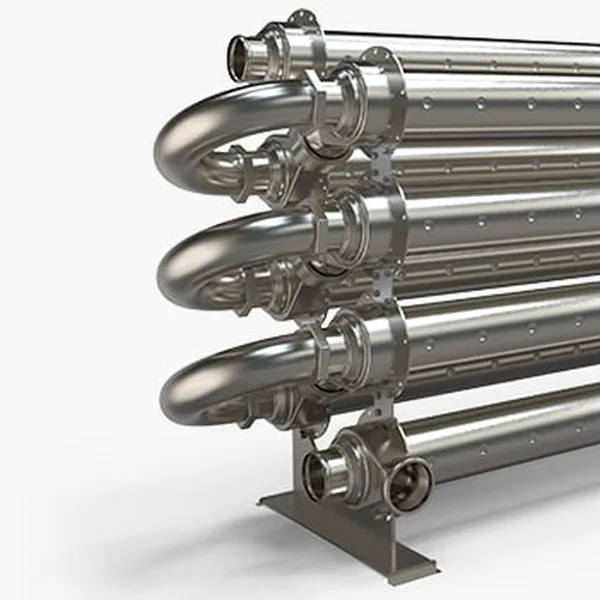
Rated for hard industrial service
- Pressure capability to 1500+ psi
- Temperatures above 600 F
- ASME Section VIII design with U stamp
- National Board registration where required
- Hydrostatic test above design pressure
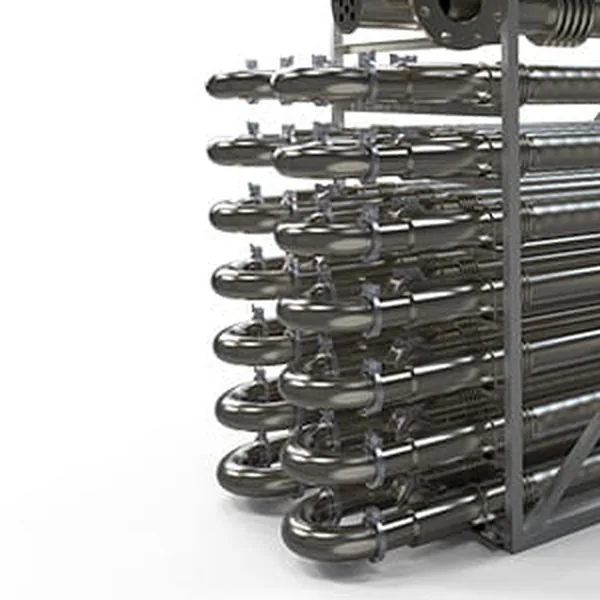
Easy to open and clean
- Flanged ends give access to the inner pipe
- Straight legs that can be rodded through
- Dirty stream placed on the cleanable side
- Hairpins added or removed as duty changes
- Material chosen separately for each side
Built To Order




Double pipe construction options
Industrial double pipe units are quoted to the stream and to the code. These are the choices made on almost every inquiry.
| Option | Detail |
| Construction | Pipe inside pipe, straight legs paired into hairpins |
| End connections | Flanged or threaded; welded where access is not needed |
| Pressure | To 1500+ psi on the rated side |
| Temperature | Above 600 F with thermal oil or hot process streams |
| Materials | Carbon steel, 316L, 2205 duplex, AL-6XN, titanium, high-nickel alloys |
| Arrangement | Hairpins in series for temperature change, in parallel for flow |
| Cleaning | Rodding, or pulling the inner pipe on units designed for it |
| Code | ASME Section VIII, U stamp, National Board registration |
| Enhancement | Corrugated inner pipe optional for viscous laminar service |
Where double pipe earns its place
Which stream goes on which side
The higher-pressure stream usually belongs in the inner pipe, because a small diameter holds pressure with the least wall. The dirtier stream belongs where it can be cleaned, which is normally the inner pipe too, since its bore can be rodded straight through once the ends are opened. When one stream is both high pressure and corrosive, only the inner pipe needs the expensive alloy; the outer pipe can often stay carbon steel with a milder service fluid. That split is one of the strongest cost arguments for the design.
Temperature cross and close approach
Each hairpin runs in pure counterflow, so the cold stream can leave hotter than the hot stream leaves. A single shell with baffles and multiple tube passes cannot do that without several shells in series. For heat recovery between two process streams, or for cooling a hot oil close to the cooling-water inlet temperature, a series of hairpins gets there in a compact stack.
- Hairpins in series add temperature change
- Parallel banks share a high flow rate
- Counterflow lets the cold outlet rise above the hot outlet
- Thermal oil in the outer pipe for duties above 600 F
Thermal expansion and the hairpin
Inner and outer pipes run at different temperatures and grow by different amounts. In a hairpin the return bend lets each leg expand without loading the joints, which is one reason the arrangement is so common in hot service. Straight single-leg units with both ends fixed need an expansion allowance designed in. We check the temperature difference between the pipes at startup, at full duty and during cleaning, because the worst case is not always normal operation.
Duties that suit a hairpin bank
Typical double pipe inquiries are small, hard duties: cooling a high-pressure process fluid or hydraulic oil, preheating crude or a heavy oil, glycol regeneration in a gas plant, cooling a corrosive stream against cooling water through a titanium inner pipe, or recovering heat between two dirty streams. What they share is a flow too small, a pressure too high or a stream too dirty for a large shell to make sense. Send the duty and both fluids, and we will size the hairpin bank around them.
Double pipe buying questions
Industrial builds are designed to 1500+ psi, and the limit for a given unit comes from the pipe size, wall schedule, material and design temperature. Smaller diameters reach higher pressures with less wall. Tell us the maximum operating pressure and temperature on each side and we will design to them under ASME Section VIII, with a hydrostatic test above design pressure.
Hairpin describes the arrangement; double pipe describes the construction. A double pipe exchanger is one pipe inside another, and when two straight legs are joined by a return bend the result is a hairpin. Most double pipe units are built that way because the bend saves space and absorbs thermal expansion, but straight single-leg units exist too.
On units designed for it, yes. Flanged ends give access to the inner pipe so it can be rodded or brushed straight through, and some designs allow the inner pipe to be withdrawn. Specify that need at inquiry, because a fully welded unit built for maximum pressure cannot be opened the same way.
When the duty is large, clean and at modest pressure. Each hairpin adds only a modest amount of surface, so a big clean duty becomes a long stack of pipe and the shell-and-tube wins on cost per square foot. Double pipe wins when pressure, fouling, a temperature cross or a small flow rate make a shell awkward.
Double pipe is the industrial form. For a food or pharmaceutical product the same concentric principle is built as a sanitary tube-in-tube in polished 316L with tri-clamp ends, drainable and built to 3-A. Tell us the product and the pressure, and we will match the build to the duty rather than force a flanged pipe unit into a hygienic plant.
Related
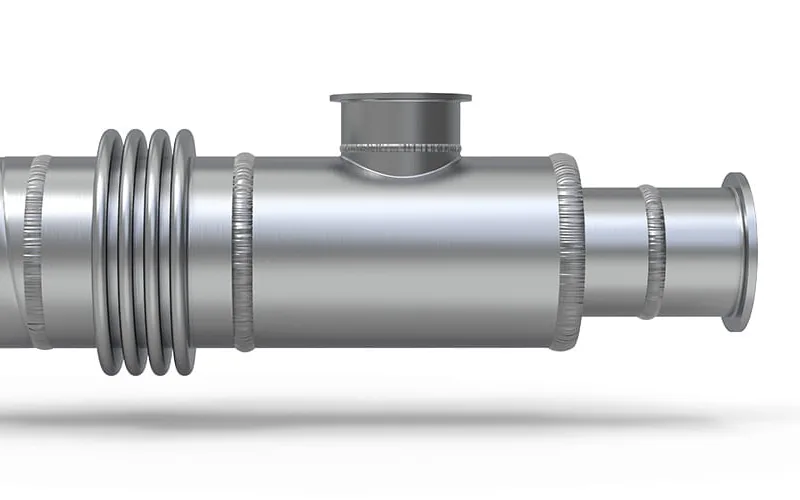
Heat Exchangers
Concentric Tube
Concentric tube heat exchanger with coaxial channels: how the product side, annular gap and flow are chosen, including product in the annulus.
+ Learn More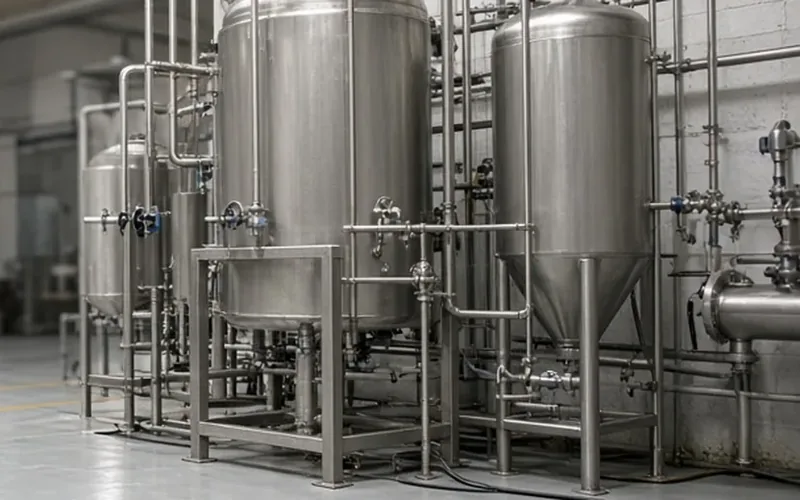
Heat Exchangers
Ultra-Coil
Ultra-Coil coiled tube-in-tube heat exchangers: close temperature approach and low hold-up volume in a compact footprint for skids and point-of-use duty.
+ Learn More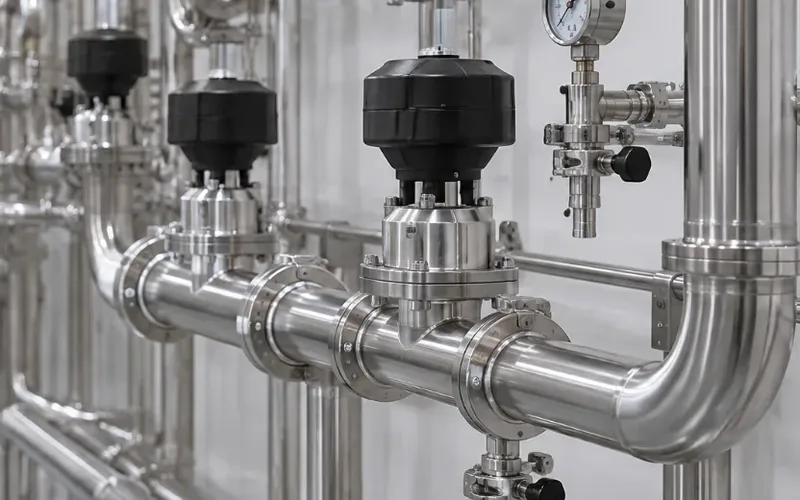
Heat Exchangers
Tubular vs Plate & Shell
Difference between plate and tubular heat exchangers, and shell-and-tube: viscosity, particles, fouling, pressure, cleaning, footprint and cost compared.
+ Learn More
