
1-805-484-2992
Quotes - Engineering - SalesThe dairy products a plate should not see
Cultured, starch-thickened and high-solids dairy lines
Milk, cream and whey run well on plates, and most dairies keep them there. The tube-in-tube earns its place further down the line, after the product has changed: a set curd broken into stirred yogurt, a vanilla pudding thickened with starch, cheese sauce, sweetened condensed milk, caramel and dulce de leche, and the fruit preparations that go into cups and ice cream. These are heavy, often shear-sensitive and sometimes full of pieces, and they find the narrow gaps of a plate pack quickly.
Plate and shell-and-tube dairy duties such as milk pasteurization, cream and whey are covered on our dairy heat exchanger site. Everything on this page is a tube-in-tube duty, picked because the product is too thick, too fragile or too lumpy for those designs. The common thread is gentle handling: stirred yogurt loses body each time it is worked hard, and a pudding that scorches on a hot wall puts brown specks in the cup.
Units for these lines are 316L as standard with sanitary clamp ends, built to 3-A when the plant asks for it, and laid out to drain completely so a cultured product never sits in a pocket between runs. Hot water rather than steam is the usual heating medium on protein and starch recipes, and chilled water or glycol does the cooling.
Request a Quote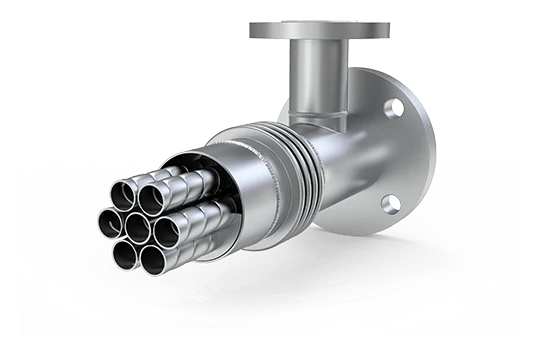
Stirred yogurt loses body with every hard shear
Yogurt is shear-thinning and partly thixotropic: its viscosity drops as it is worked and recovers only slowly in the cup. A cooler that keeps wall shear low and flow even protects the texture the culture built.
Dairy duties on tube-in-tube
Cultured products
- Cooling stirred yogurt after the break
- Drinkable yogurt and kefir before filling
- Sour cream and cultured dips
- Fresh cheese and quark bases
Desserts and sauces
- Starch puddings and custards, heated then cooled
- Cheese sauce on its way to hot fill
- Caramel and dulce de leche
- Rice pudding with whole grains
Concentrates and preps
- Sweetened condensed milk cooling
- Fruit-on-the-bottom preparations with pieces
- Variegates and ripples for ice cream
- High-solids mixes carrying inclusions
Matching the design to the dairy product
The right geometry follows the product's most difficult property: pieces call for a full bore, smooth thick products for more surface per foot, and compact skids for a coil.
| PRODUCT / DUTY | DESIGN | WHY IT FITS |
| Stirred yogurt after the break | Tube-in-Tube | A single full bore keeps wall shear low and gives an even velocity profile through the whole cooler |
| Fruit preparation with whole pieces | Tube-in-Tube | Strawberry halves and peach dice pass a full bore intact instead of bridging between small tubes |
| Smooth drinkable yogurt | Multi-Tube | Drinkable yogurt carries no pieces, so several smaller bores add surface and keep the bank short |
| Puddings and custards | Triple-Tube | A thin layer of starch product is heated and cooled from both sides, so less length is needed |
| Kefir or dairy drink on a compact skid | Ultra-Coil | Coiled tube-in-tube puts close-approach cooling into a small frame for skid builders |
Designing a yogurt and dessert cooler
Start with the temperatures that matter. Stirred yogurt typically leaves the fermentation tank at about 105 F to 110 F. Some plants cool it all the way to storage temperature in one pass; others cool it partway, often to around 70 F, so it can build viscosity in the cup before it goes to the cold room. Which route the plant runs changes the length of the cooler and the coolant it needs, and a two-stage design with chilled water first and glycol last is common on larger lines.
Keep the shear gentle and even. A broken yogurt coagulum is a gel in pieces. High velocity, sudden contractions and pumps run fast all thin it, and part of that loss never comes back. The cooler is sized for a moderate velocity in a full bore, with long-radius returns and no steps between sections, and the positive displacement pump feeding it runs slowly. Pressure drop is calculated from the viscosity of the actual product after the break; a figure from a supplier spec sheet rarely matches what leaves the tank.
Starch desserts are a heating problem first. A pudding or custard thickens sharply once its starch gelatinizes, so the viscosity at the heater outlet can be many times the viscosity at the inlet. The heater is designed around that rise, with hot water in the jacket holding the wall only a modest margin above the product to stop burn-on. The cooler that follows then handles the thickest product on the line.
Call and talk it through with an engineer: 1-805-484-2992
Running dairy lines day to day
Cleaning out cultured product
Protein and fat from cultured products leave a film that needs caustic at temperature followed by an acid step. The bore is uniform, so a CIP flow that reaches scouring velocity in one tube reaches it in all of them, and the bank drains so rinse water does not weaken the next chemical. Fruit sugar and starch rinse out easily; scorched milk solids do not, which is why the heater is designed to avoid them.
Inclusions and fruit pieces
Fruit preparations for cups and ice cream carry pieces the consumer can see, so a mangled strawberry is a quality complaint. The bore is chosen against the largest piece in the recipe, and velocity is held high enough to keep pieces suspended but low enough not to tumble them against the wall. Soft, skin-on fruit such as blueberries sets the limit more often than large firm dice.
Hold-up and product recovery
Concentrated dairy product is worth recovering at the end of a run. A drainable bank can be pushed out with water into a recovery tank, and the smooth round bore leaves little film on the wall. The mixed zone between product and water stays short because everything moves through one channel rather than spreading across a pack of plates.
Pressure and the pump
Condensed milk and puddings at cooling temperature can push the pressure drop of a long cooler toward the limit of a sanitary clamp joint. Sizing checks the pump outlet pressure on the coldest, thickest case, and where it runs too high the cooler is split into parallel banks or given a larger bore. Pump and exchanger are sized together, never one after the other.
Yogurt and dessert lines
Usually not well. A yogurt cooler is sized for gentle shear with chilled water on the jacket, while a pudding heater is sized for a large viscosity rise with hot water. One bank doing both compromises each duty. Plants that make both products typically buy two banks on a shared frame and clean them on the same CIP circuit.
Any cooler shears the product to some degree; the question is how much. A full bore at moderate velocity shears less than a plate pack with its narrow gap and contact points. If texture loss has been a problem, send us a sample taken after the break so its viscosity and shear behavior can be measured before the design is set.
It helps a great deal. The largest piece, how firm it stays after cooking and the viscosity of the syrup carrying it all set the bore and the length. A jar of product as made, with a note of the nominal piece sizes, is enough to start, and it prevents a design built on an assumed viscosity.
Yes. It is one of the heavier dairy duties, and its viscosity climbs steeply as it cools, so the cooler is often split into stages or parallel banks to keep pressure drop in range. Lactose crystal size depends on how the product is cooled and seeded, so the cooling profile is agreed with the plant before sizing.
Related
Sanitary
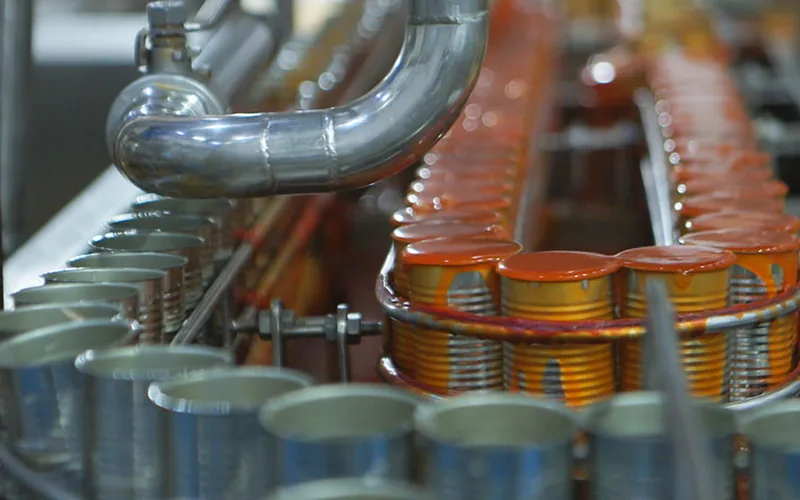
Soups & Prepared Foods
Prepared food heat exchangers for soups, chili, stews and ready meals with pieces: cook, hold and cool beans, vegetables and meat without breaking them.
+ Learn More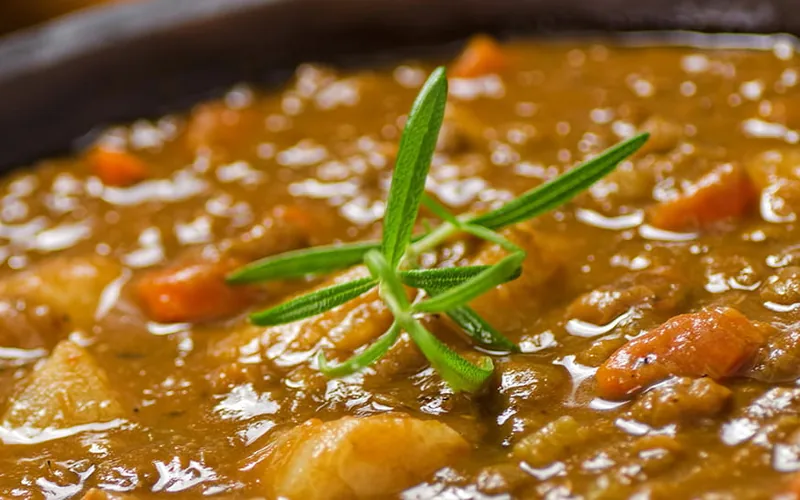
Sanitary
Foods with Solids
Heat exchangers for particulates in food: particle size against the bore, solids fraction, settling, fragile pieces and heat reaching the core of a piece.
+ Learn More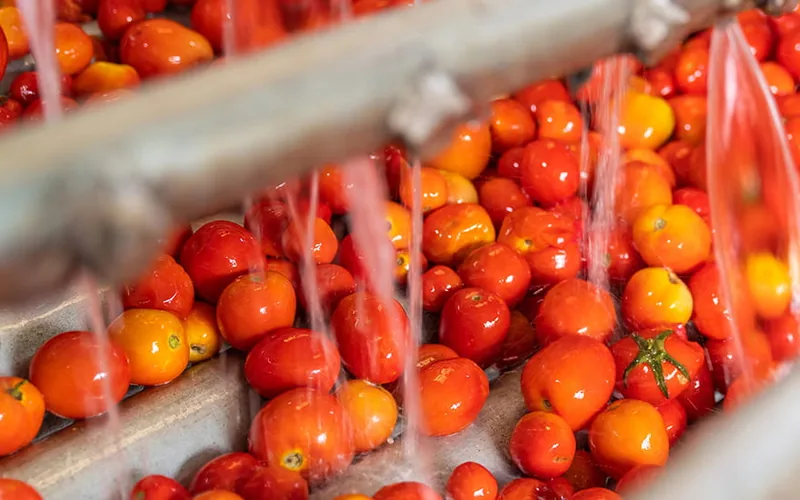
Sanitary
Fruit & Vegetable
Fruit puree heat exchangers in tube-in-tube form for purees, fruit preparations, tomato hot break and vegetable purees: pulp passes, 316L takes the acid.
+ Learn More
