
1-805-484-2992
Quotes - Engineering - SalesWhy a safety standard belongs on a purchase
Occupational health and safety as supplier risk
ISO 45001 is the international standard for occupational health and safety management, the successor to OHSAS 18001. It requires an organization to identify the hazards in its work, control them, involve the people doing the work, investigate incidents and improve over time, with an independent auditor checking that the system runs. It does not rate a heat exchanger. It describes how carefully the work around one is planned and carried out.
Producing and testing tube-in-tube exchangers involves real hazards: welding fume, long and heavy hairpin sections to lift and turn, grinding and polishing, pressure testing and pickling chemicals for alloy surfaces. A serious incident during your build is first a human problem and then a schedule problem, because work stops while it is investigated. A managed safety system lowers the odds of both.
For buyers, ISO 45001 mostly shows up in supplier qualification. Many companies now score vendors on safety as well as quality and price, and some require a recognized safety management system before a supplier is approved or sends anyone to site. Having one in place shortens that approval.
Request a Quote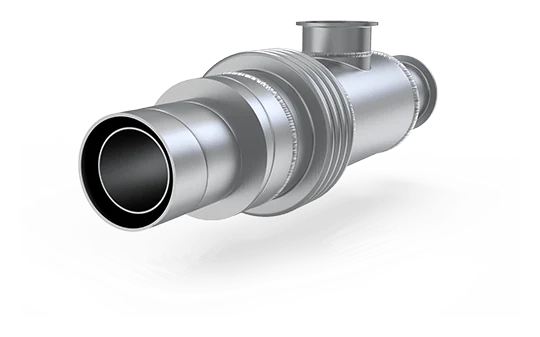
The international standard for occupational health and safety management systems: hazard identification, risk control, worker participation, incident investigation and continual improvement, verified by independent audit.
Where ISO 45001 touches your order
The standard is about the supplier's people, but several of its requirements reach the buyer. These are the points that typically come up.
| Area | Detail |
| Supplier approval | A recognized safety system in place for vendor qualification |
| Hazard control | Lifting, welding, grinding and pressure testing planned and controlled |
| Pressure testing | Written procedures, exclusion zones and staged pressurization |
| Site visits | People briefed on your plant rules before they arrive |
| Subcontractors | Safety expectations passed on to subcontractors and carriers |
| Incidents | Reported, investigated and closed with recorded actions |
| Improvement | Safety performance reviewed by management and acted on |
Safety in supplier scoring
Supplier scorecards increasingly weigh safety alongside on-time delivery and quality. A vendor without a safety management system often needs extra questionnaires, document reviews or audits before approval. A certified ISO 45001 system gives your supplier quality team a recognized answer and keeps the exchanger purchase from waiting on paperwork.
Pressure testing done safely
A hydrostatic test stores energy in the water and steel, and a pneumatic test stores far more. A managed system fixes the procedure: venting air before pressurizing, raising pressure in stages, using calibrated gauges and keeping people clear. Those controls protect whoever runs the test and, along the way, the unit being tested.
Visits to your plant
Start-up help, inspections or meetings at your site bring a supplier's people into your safety program. A supplier working under ISO 45001 already plans visits around hazard briefings, protective equipment and permit rules, which makes the job of your contractor safety coordinator easier. Fewer surprises at the gate also means the visit spends its time on the exchanger rather than on paperwork and escorts.
Steadier schedules
Safety and delivery are linked more closely than they look. Lost-time incidents, investigations and regulatory visits all take people and equipment off the work. A supplier with fewer of them is more predictable, which matters when an exchanger is the last item holding up a skid or a line start-up.
Keeping it practical
What to ask a supplier
Ask whether the safety management system is certified to ISO 45001, how incidents are tracked, and what is expected of their people when they visit your site. If your company uses a contractor prequalification service or it's own questionnaire, send it with the inquiry so it is completed alongside the quote rather than after award. Early answers keep the safety review off the critical path.
- Is the safety management system certified to ISO 45001?
- How are incidents and near misses recorded and followed up?
- What briefing and protective equipment do visiting staff bring?
- Will your own prequalification questionnaire be completed with the quote?
What the standard does not cover
ISO 45001 says nothing about the pressure rating, hygiene or thermal performance of the exchanger. Those come from ASME, 3-A, your specification and the sizing. Nor does it replace your own plant rules for installing and operating the unit. Read it as evidence of how carefully the supplier runs its work.
Call and talk it through with an engineer: 1-805-484-2992
Safety management questions
No law requires it of an equipment supplier. It is a voluntary standard that buyers choose to ask for, usually through supplier qualification or corporate responsibility programs. Where your company does require it, the requirement normally sits in the approved-vendor criteria rather than in the equipment specification.
ISO 45001 replaced OHSAS 18001 as the recognized standard. It puts more weight on leadership involvement, worker participation and planning around risks and opportunities, and it shares a common structure with ISO 9001, which makes the two systems easier to run together and to audit side by side.
It covers the supplier's own people wherever they work, including visits to your site, but your plant rules govern work inside your fence. Installation by your own staff or an installing contractor falls under their safety programs. Agree in advance who does what on site so responsibilities are clear before anyone arrives.
Indirectly, yes. A shop floor that loses people to injuries, or stops work while an incident is investigated, slips schedules in ways no expediting call can fix. A managed safety system does not promise a date, but it removes one of the less visible causes of a late exchanger, which is why some buyers weigh it during vendor selection.
Related
Sizing & Selection
ASME
ASME Section VIII tube-in-tube and double pipe heat exchangers: when a U stamp applies, MAWP, the hydrostatic test, data reports and which side is coded.
+ Learn More
Sizing & Selection
National Board
What National Board registration adds to an ASME stamped tube-in-tube heat exchanger: the NB number, a registered data report and jurisdiction acceptance.
+ Learn More
Sizing & Selection
3-A
3-A sanitary standards for tube-in-tube heat exchangers: product-contact finish, drainability, cleanability, materials, elastomers and the 3-A symbol.
+ Learn More
